Apple is taking CarPlay to an entirely new level with a huge announcement at WWDC 2022. In what it called a “sneak peek,” Apple showed off an entirely new generation of CarPlay that expands beyond infotainment and becomes the car’s entire interface, from a gauge cluster screen to the center stack and including every car function.
Almost every car from the past handful of years has CarPlay, and it’s one of the most-requested features from car buyers. Even still, it’s a pretty disjointed experience that transports you to an entirely different interface and leaves you jumping back and forth to the car’s own operating system anytime you want to perform “car” functions and not entertainment functions. With this shift, that all goes away: Apple wants to make CarPlay the only interface in your car.
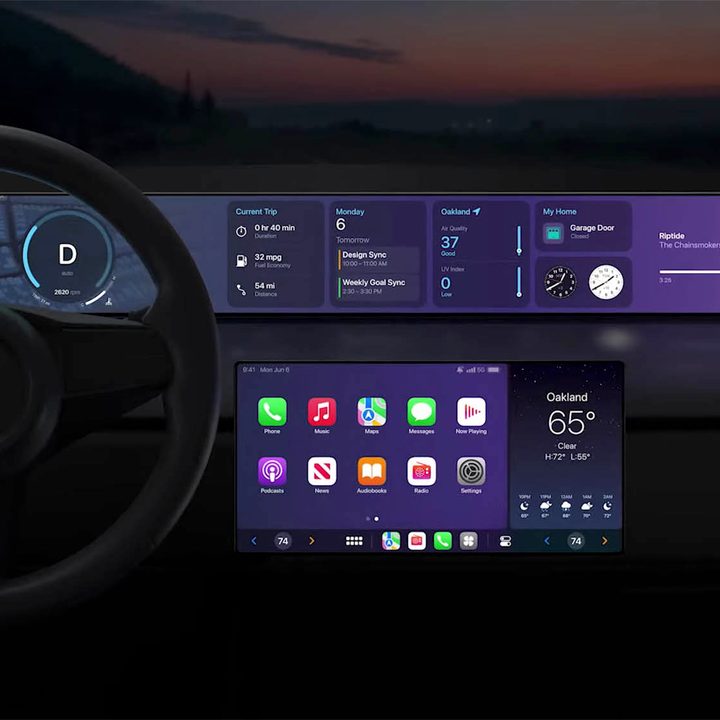
This announcement picks up on a huge trend in the automotive industry, as cars move away from physical switches and dedicated gauges, instead opting to use a giant screen — or multiple distinct screens — to display information. This has been the case from inexpensive models from Kia and VW, up to the latest and most expensive Mercedes models — and of course, Tesla has had a war on physical buttons from Day 1.
Physical switches are going away, leaving a lot of work to do to recreate these experiences in software — and carmakers are realizing there’s an incredible amount of work to do here. That’s work that Apple thinks it is better poised to handle, and it’s hard to blame them; I trust Apple (or Google for that matter) to make a user interface far more than any car company.
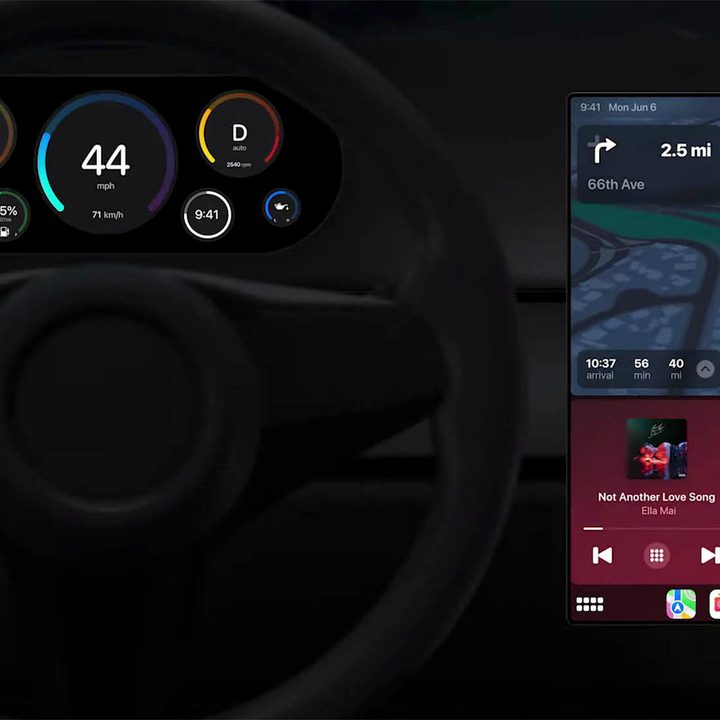
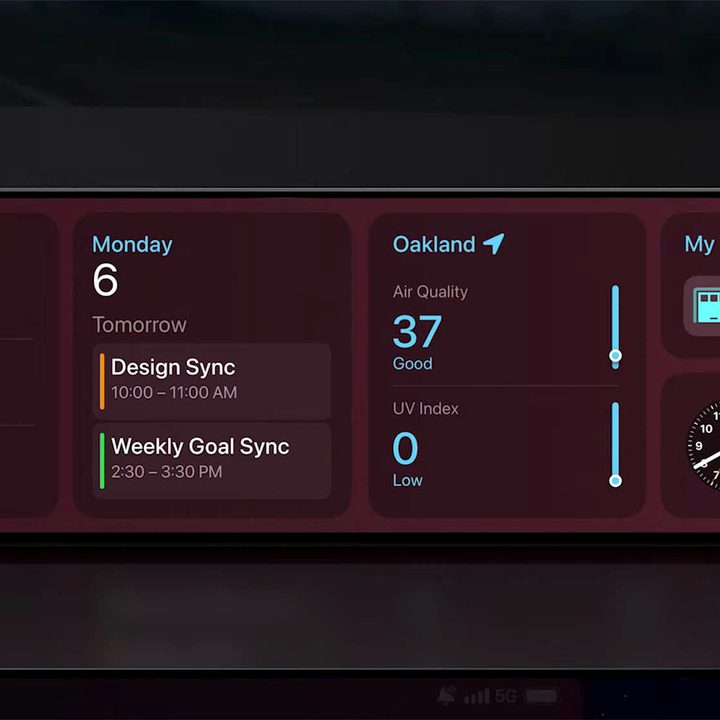
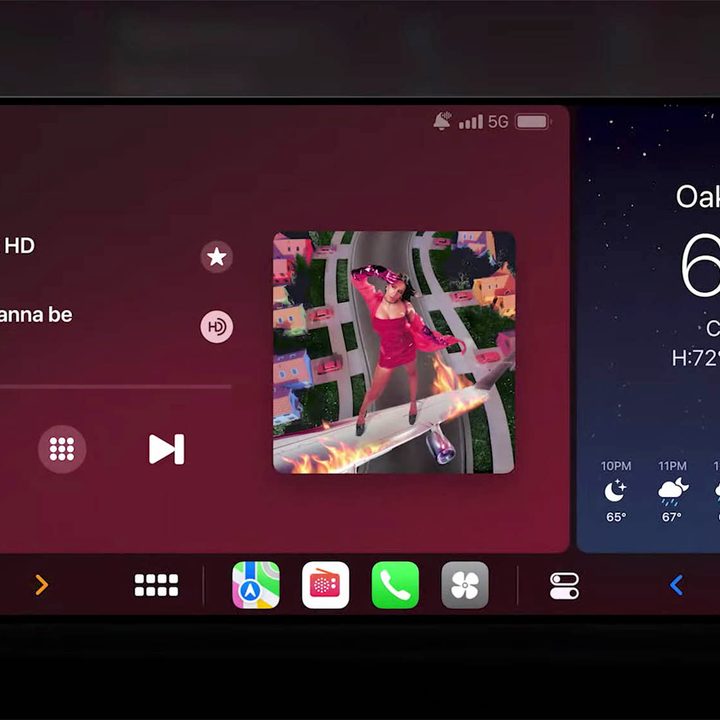
In typical Apple fashion, what it had to show off in this concept makes you think that this physical button-free world could work out alright. The gauge cluster and information displays are all clear, simple, and information-filled — all with the same iOS-like styling we know and (in many cases) love. Apple showed a variety of potential interfaces, with a large main screen providing a home screen-like layout with large widgets and buttons, or a smaller widescreen showing an array of smaller tiles fanned out across the center.
Unlike CarPlay today, these interfaces show all of the typical “car” information right alongside what you’d get from CarPlay today. So you can see trip and fuel information, right alongside Apple Maps route guidance and upcoming calendar appointments. It pulls together seamlessly — at least in Apple’s curated demo, of course.
In the gauge cluster, Apple highlighted some of the iOS-like customization options, which can bring all sorts of information (or lack thereof) to the screen in front of you depending on your personal tastes or driving mode. And of course, because this is all tied back to your connected iPhone, the experience can be customized just for your desires and needs, not by what the carmaker has picked as the default.
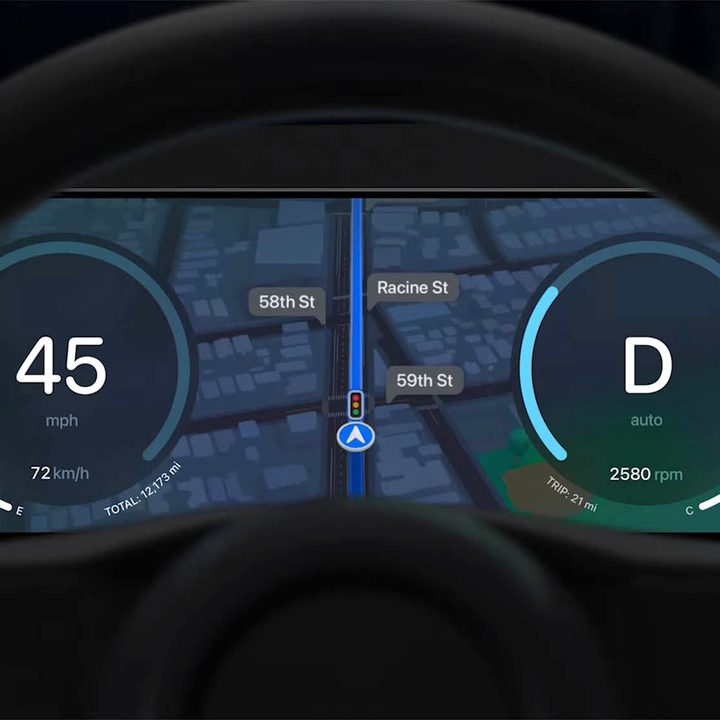
This is also a shot across the hood of Google, which has already made the leap from just offering a phone-tethered Android Auto interface to Android Automotive, which is a whole-car operating system. Android Automotive actually provides a good road map for how this could go for Apple.
One of the many questions coming out of this announcement is what level this is running on the car. Android Automotive runs natively on the car’s chipset as the entire operating system for the vehicle, but it isn’t clear from what Apple’s showing today whether it intends to do the same. That would necessitate CarPlay becoming more of a “CarOS” of sorts, rather than just projecting an interface from your iPhone. And frankly, I’m not sure carmakers or car buyers would put that much faith in Apple to provide a tethered iPhone connection that’s stable and consistent enough to show you your gauge cluster and fuel level. For this sort of thing to work properly, it almost has to run natively on the car itself and just use your phone for personalization.
Apple said that this new interface will be shown in actual vehicles with a variety of partners by the end of 2023. On the partner slide, it showed Land Rover, Mercedes, Porsche, Nissan, Ford, Lincoln, Audi, Jaguar, Acura, Volvo, Honda, Renault, Infinity, and Polestar. Among the many other details we don’t yet have, we don’t know whether this full CarPlay interface will be coming to cars from each of these companies, or if it will just be a refreshed version of the infotainment-only experience.
I expect Apple will have one or two keynote-worthy announcements of partnerships to launch a couple of car models with the full next-generation CarPlay interface, and the rest of these brands will simply show a better projected CarPlay experience.
I’m incredibly skeptical that Apple was willing to convince over a dozen carmakers to wholesale give up their entire car interface to the company. Yes, they’re faced with the struggles of building their own interfaces, but at the same time, this is one of the few areas a car company can still brand itself and provide customers a unique (read: locked in) experience that builds loyalty. Giving that over to Apple whole-cloth comes with downsides, too.
It’s also easy to let our minds wander quickly to the long-rumored Apple car, and what this interface could tell us about the expected experience if Apple were to ever make its own.