1. Home
  2. Space
  3. News

Space traveler offers advice to wannabe astronauts

Add as a preferred source on Google

With more crewed lunar missions just a few years away and the first human voyages to Mars on the horizon, it’s surely one of the most exciting times to become an astronaut.

Traveling to space as a job may seem like a pipe dream for most folks, but NASA’s application process is open to one and all, giving those with the right abilities and attitude the chance to make that dream a reality.

Recommended Videos

Samantha Cristoforetti, for example, once said, “I want to be an astronaut.” And today she’s living and working on the International Space Station (ISS).
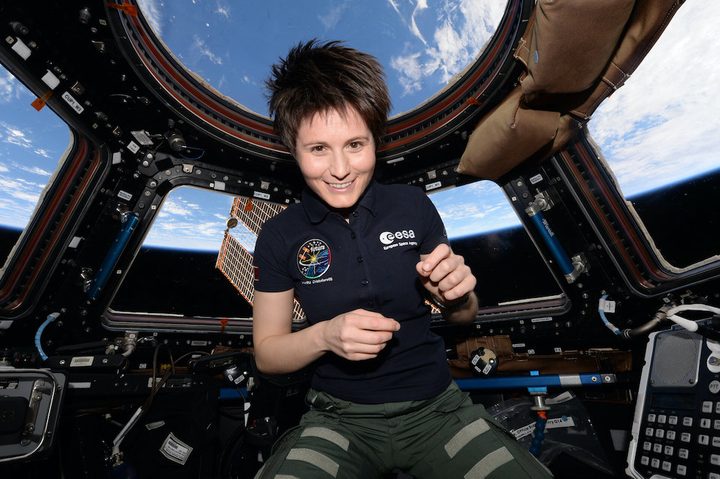
Samantha Cristoforetti aboard the International Space Station.
Samantha Cristoforetti aboard the International Space Station. ESA

Speaking during a press conference with Earth-based reporters on Monday, June 20, Cristoforetti was asked what advice she would give to young people interested in pursuing a career as an astronaut.

The European Space Agency (ESA) astronaut said that to get on the right path toward a space-based job, “it’s important as you grow up to really challenge yourself,” suggesting that it’s always a good idea to “try things that maybe you’re a little bit scared of, or that you think you’re not quite up to yet, because that’s the way that you grow, that’s how you learn your skills, acquire new competence and knowledge.”

Cristoforetti said that taking on new challenges also helps you “build your character, and you understand that you can do hard things,” something that would definitely prepare wannabe astronauts for NASA and ESA’s challenging selection process.

The Italian space traveler added that whenever someone asks her about how to become an astronaut, she always tells them to “try their hand at many different things that can be their main specialty, maybe in a STEM subject, but also in sports, also maybe in volunteering … and expeditions … anything that can develop teamwork skills as that is something that we certainly look for in astronaut candidates.”

Cristoforetti graduated from the Technical University of Munich, Germany, with a master’s degree in mechanical engineering, specializing in aerospace propulsion and lightweight structures and writing her thesis in solid rocket propellants.

She joined the Italian Air Force in 2001 and four years later attended the Euro-NATO Joint Jet Pilot Training program at Sheppard Air Force Base in the U.S., where she earned her fighter pilot wings in 2006.

After being selected for astronaut training in 2009, Cristoforetti traveled to space for the first time in 2015, staying aboard the ISS for 200 days. Her second mission, which got under way in April, involved a flight aboard SpaceX’s Crew Dragon capsule to the ISS for a six-month stay.

Trevor Mogg
Contributing Editor
Not so many moons ago, Trevor moved from one tea-loving island nation that drives on the left (Britain) to another (Japan)…
Space is becoming Bezos and Musk’s next data center site, and we have every reason to worry
The AI boom is coming for the night sky
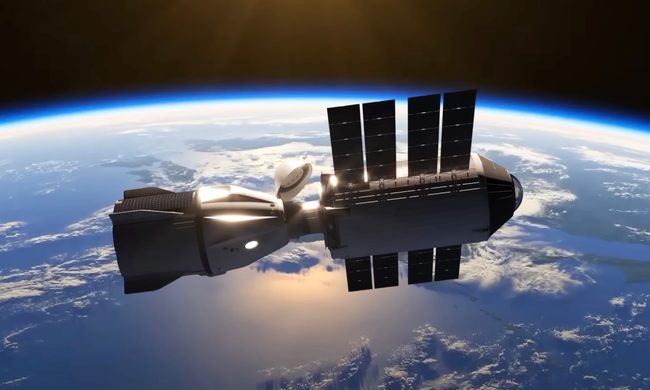
How Vast's space station will look in orbit.

AI data centers already consume vast amounts of electricity and water on Earth, so Silicon Valley has begun looking somewhere considerably more spacious... literally.

Elon Musk's SpaceX and Jeff Bezos' Blue Origin, along with several other companies, have proposed enormous constellations of satellites designed to operate as orbital data centers. However, environmental groups and former space officials are now warning that putting them into orbit at the proposed scale could have severe consequences for Earth's atmosphere and the night sky.

Read more
The first possible exomoon is here, and it makes our Moon look hilariously tiny
Scientists may have found the first exomoon, except this one is the size of Jupiter
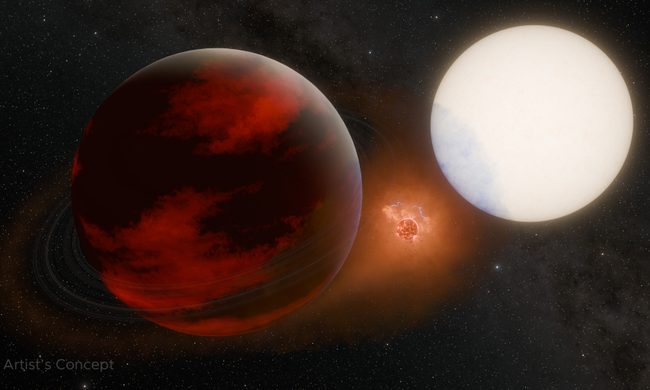
This artist’s concept depicts a potential volcanic moon between the exoplanet WASP-49 b, left, and its parent star. New evidence indicating that a massive sodium cloud observed near WASP-49 b is produced by neither the planet nor the star has prompted researchers to ask if its origin could be an exomoon.

We have already discovered more than 6,000 planets outside of our immediate neighborhood. Yet, finding a moon orbiting one of those distant worlds has proved considerably harder. Astronomers may finally have something close to the real deal, but this particular object stretches the word “moon” almost beyond recognition.

Using the European Southern Observatory’s Very Large Telescope in Chile, researchers detected strong evidence for a moon-like object in the CD-35 2722 system. Further observations are still necessary to confirm the discovery, but it could become the first confidently detected natural satellite outside our solar system. There is still one tiny complication though. This moon is apparently massive.

Read more
China’s answer to SpaceX’s reusable rockets literally catches boosters in a net
SpaceX catches boosters on legs. China just used a net.
Ammunition, Missile, Weapon

SpaceX's playbook for recovering a rocket booster generally involves legs, a precisely controlled vertical landing, and either a concrete pad or a drone ship. 

China just managed to pull off something similar, but in a slightly different way, and on July 10, it tested the method as well.

Read more