1. Home
  2. Space
  3. News

Motorless sailplane for exploring Mars soars like an albatross

Add as a preferred source on Google

The huge success of the Mars helicopter Ingenuity has proven it’s possible to explore other planets from the air, and researchers are working on a variety of flying craft concepts for future planetary missions. To fill in our knowledge of Mars between rovers on the surface and orbiters in space, researchers from the University of Arizona have proposed an experimental sailplane that operates without a motor and that could sail through the Martian air for days at a time.

“You have this really important, critical piece in this planetary boundary layer, like in the first few kilometers above the ground,” said Alexandre Kling, a research scientist in NASA’s Mars Climate Modeling Center, in a statement. “This is where all the exchanges between the surface and atmosphere happen. This is where the dust is picked up and sent into the atmosphere, where trace gases are mixed, where the modulation of large-scale winds by mountain-valley flows happen. And we just don’t have very much data about it.”
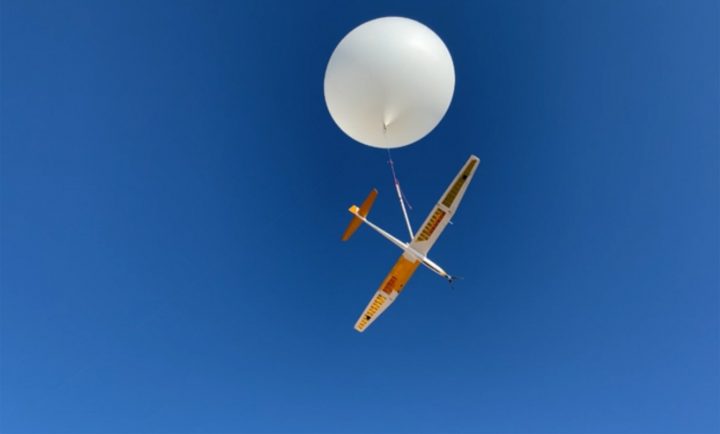
 The team conducted a tethered launch of an early version of the sailplane, in which it descended slowly to Earth attached to a balloon.
The team conducted a tethered launch of an early version of the sailplane, in which it descended slowly to Earth attached to a balloon. Emily Dieckman / University of Arizona

The idea is to fill this gap with a wind-powered sailplane that could glide through the air when there is enough wind, and also use a technique called dynamic soaring when the vertical wind isn’t strong enough to keep it in the air. Similar to the way birds like albatrosses can soar on extremely long journeys, the technique takes advantage of the way higher altitudes tend to have stronger winds, allowing a craft to continue flying by changing both direction and altitude as required.

Recommended Videos

The big advantage of this method is that it doesn’t rely on solar panels, which can get dusty (like those on InSight), or nuclear batteries, which are heavy (like those used in rovers). “These other technologies have all been very limited by energy,” said one of the researchers, Adrien Bouskela. “What we’re proposing is just using the energy in situ. It’s kind of a leap forward in those methods of extending missions. Because the main question is: How can you fly for free? How can you use the wind that’s there, the thermal dynamics that are there, to avoid using solar panels and relying on batteries that need to be recharged?”

Sailplanes could be released from small satellites called CubeSats or carried into the atmosphere by balloons. The team has run a test of the concept on Earth using a balloon, and this summer, they plan to perform more tests at high altitudes of 15,000 feet above sea level, where the air is thinner and is more analogous to the atmosphere of Mars.

The concept is detailed in a paper in the journal Aerospace.

Georgina Torbet
Georgina has been the space writer at Digital Trends space writer for six years, covering human space exploration, planetary…
Space is becoming Bezos and Musk’s next data center site, and we have every reason to worry
The AI boom is coming for the night sky
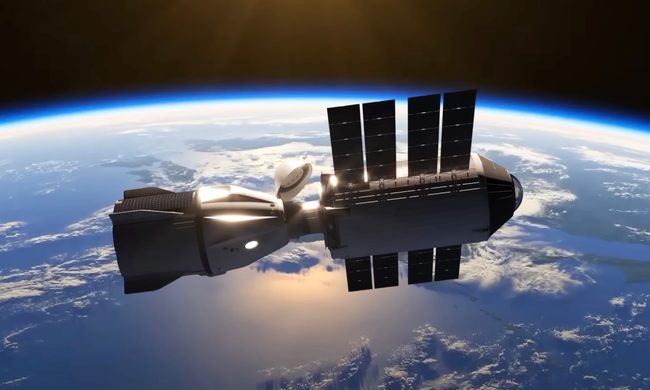
How Vast's space station will look in orbit.

AI data centers already consume vast amounts of electricity and water on Earth, so Silicon Valley has begun looking somewhere considerably more spacious... literally.

Elon Musk's SpaceX and Jeff Bezos' Blue Origin, along with several other companies, have proposed enormous constellations of satellites designed to operate as orbital data centers. However, environmental groups and former space officials are now warning that putting them into orbit at the proposed scale could have severe consequences for Earth's atmosphere and the night sky.

Read more
The first possible exomoon is here, and it makes our Moon look hilariously tiny
Scientists may have found the first exomoon, except this one is the size of Jupiter
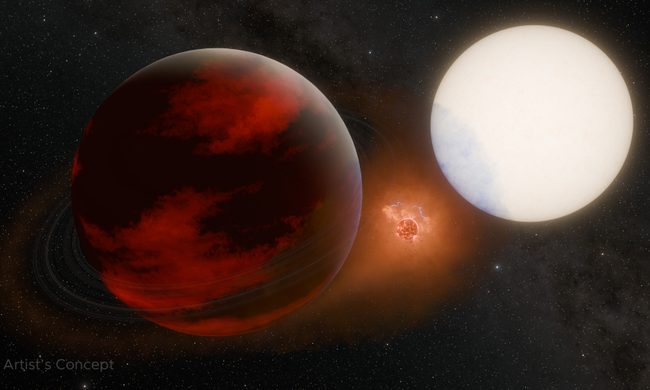
This artist’s concept depicts a potential volcanic moon between the exoplanet WASP-49 b, left, and its parent star. New evidence indicating that a massive sodium cloud observed near WASP-49 b is produced by neither the planet nor the star has prompted researchers to ask if its origin could be an exomoon.

We have already discovered more than 6,000 planets outside of our immediate neighborhood. Yet, finding a moon orbiting one of those distant worlds has proved considerably harder. Astronomers may finally have something close to the real deal, but this particular object stretches the word “moon” almost beyond recognition.

Using the European Southern Observatory’s Very Large Telescope in Chile, researchers detected strong evidence for a moon-like object in the CD-35 2722 system. Further observations are still necessary to confirm the discovery, but it could become the first confidently detected natural satellite outside our solar system. There is still one tiny complication though. This moon is apparently massive.

Read more
China’s answer to SpaceX’s reusable rockets literally catches boosters in a net
SpaceX catches boosters on legs. China just used a net.
Ammunition, Missile, Weapon

SpaceX's playbook for recovering a rocket booster generally involves legs, a precisely controlled vertical landing, and either a concrete pad or a drone ship. 

China just managed to pull off something similar, but in a slightly different way, and on July 10, it tested the method as well.

Read more