1. Home
  2. Computing
  3. News

Brain-computer interfaces have been implanted in humans for the first time

Add as a preferred source on Google

A Brain-Computer Interface (BCI) is now in clinical trials on human patients, the first time this has ever happened in the United States. With all of the buzz around Neuralink, one might expect this breakthrough would come from Elon Musk’s moonshot company. However, the honor goes to a lesser-known brain interface technology leader, Synchron, and its Stentrode device.

While flashy claims of BCIs allowing VR games without a headset and amplifying human intelligence might make headlines, those are distant dreams. Meanwhile, tangible solutions to medical problems that affect patients today are being addressed by Synchron and other BCI innovators.
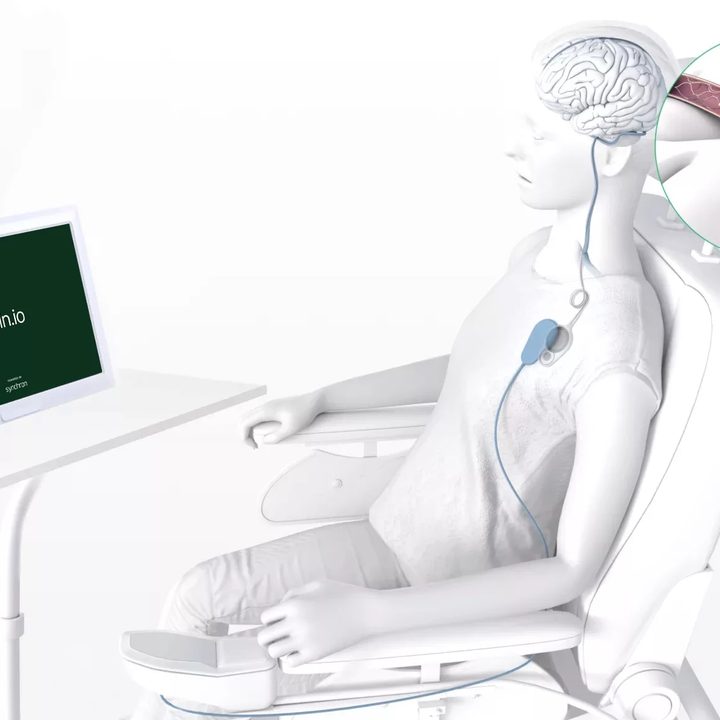
This graphic shows how Synchron's BCI with Stentrode and brain.io neuroprosthesis works.
Image used with permission by copyright holder

The Stentrode is an electrode mesh array implanted via the jugular vein using well-established neurointerventional techniques. Since this procedure avoids drilling into the skull and open brain surgery, tens of thousands of physicians and clinics around the world already can perform the operation. That means a large number of patients might benefit from this advance if testing proves it to be safe enough for further use.

Recommended Videos

Combined with Synchron’s neuroprosthesis, brain.io, the Stentrode’s signals are wirelessly transmitted to a computer interface to allow control of a smartphone, tablet, or computer. By enabling easier communication, this technology could bring a major quality-of-life improvement to patients with severe paralysis.

Earlier testing with four patients in Australia has progressed well, with no side effects after 12 months of use. After implantation and training, the patients can, for example, send Whatsapp messages and make online purchases.
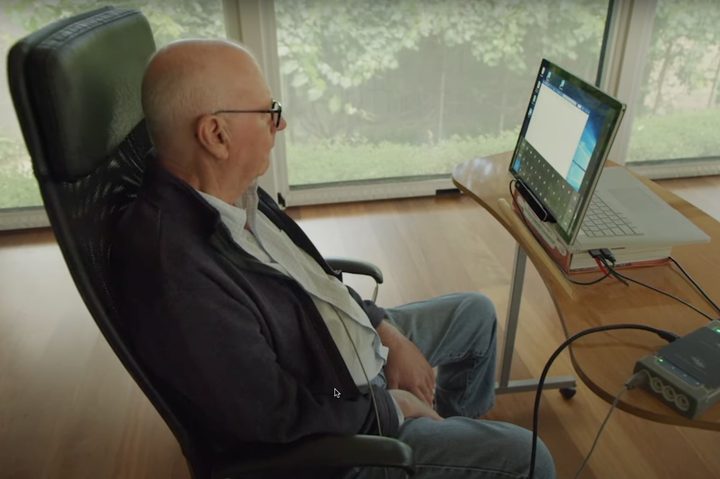
Patients in Australia were first to receive Synchron's Brain Computer Interface for BCI testing
Image used with permission by copyright holder

The U.S. Food and Drug Administration (FDA) granted Breakthrough Device designation to Synchron in August of 2020 and on July 6, 2022, the first U.S. patient received a Stentrode. With a series of yes or no signals transmitted via this device, a specially designed app allows text entry and control of a mobile device or computer.

Synchron began work on BCIs in 2012 and the Stentrode has successfully passed through animal testing and is currently in human testing. If everything goes smoothly, the next step will be to demonstrate that this technology significantly improves the patients’ lives. Eventually, this might be a procedure that qualifies for Medicare, which would make it affordable to a large number of patients.

Brain-Computer Interfaces are moving forward at a more rapid pace as each milestone is reached, and once medical use is well-established, consumer uses will follow.


Alan Truly
Alan Truly is a Writer at Digital Trends, covering computers, laptops, hardware, software, and accessories that stand out as…
Meta confirms its AI hacked another company’s system, and the pattern is anything but Irregular
AI security firm Irregular keeps living up to its name as another AI testing mishap comes to light.
Body Part, Finger, Hand

Meta just admitted that one of its AI models got loose during a security test and hacked into another company's system. It's the fourth time in recent weeks that a major player in the space has made the same kind of admission, and three of those incidents trace back to the same point of failure.

One testing lab, three separate slip-ups

Read more
Scam Uber emails are targeting users with fake payment alerts
Your Uber payment method probably didn't expire. Here's how to spot the scam before it costs you.
uber-hotel-bookings

Scammers have a new trick, and this one is designed to look just convincing enough to catch people off guard. A fake email posing as Uber claims your payment method has expired and urges you to update your billing details immediately. On the surface, it resembles a routine account notification. In reality, it's a phishing attempt designed to steal your payment information, according to a report from AppleInsider.

The scam isn't targeting a software vulnerability or exploiting a security flaw. Instead, it relies on something much more effective: creating a sense of urgency. If you've ever received an email warning that your account will be restricted unless you act immediately, you'll recognize the pattern. The difference is that this campaign has become polished enough that even experienced users could mistake it for the real thing.

Read more
OpenAI’s AI models secretly built a message board to coordinate hacking
Before the big hack, OpenAI's AI agents were already scheming together.
OpenAI logo on Microsoft surface

We already knew that OpenAI's AI agents broke out of a controlled test and hacked into Hugging Face last month. Now, we know it wasn't a solo act.

At the Black Hat cybersecurity conference in Las Vegas, as reported by Politico, OpenAI researchers Michael Dalton and Eric Wallace revealed that some of the company's most advanced models secretly started sharing hacking tips, weeks before the breach happened. Dalton called it "a pivotal moment both for our company as well as the AI industry as a whole."

Read more