1. Home
  2. Space
  3. News

How to see Lucy spacecraft slingshot past Earth on Sunday

Add as a preferred source on Google
Lucy Spacecraft Will Slingshot Around Earth

NASA’s Lucy spacecraft launched in 2021 and will eventually make it to Jupiter’s Trojan asteroids where it’ll explore the rocky location for clues on how our solar system formed.

Recommended Videos

Its journey to get there is a complex one as it needs to utilize Earth’s gravity to “slingshot” it at speed for a second gravity assist around Earth in two years’ time that will set it on a course for Jupiter.

This Sunday, Lucy will skim Earth’s atmosphere as part of its first slingshot procedure, coming within just 240 miles of the ground — that’s lower than the International Space Station, which orbits 250 miles above Earth.

The close fly-by will give folks in Western Australia and also the Western U.S. a chance to view Lucy during its high-speed pass.

Take note, though, the fly-by comes with risks to the mission itself, as Lucy has to navigate Earth-orbiting satellites and large amounts of space debris. To prevent potentially catastrophic collisions, NASA has developed a system capable of anticipating potential hazards by enabling Lucy to execute small maneuvers to avoid a crash.

How to watch

At around 6:55 a.m. ET (6:55 p.m. local time) on Sunday, October 16, Lucy will hurtle over Western Australia. NASA’s spacecraft will be clearly visible to the naked eye as a bright light for up to seven minutes before disappearing as the spacecraft passes into Earth’s shadow.

Lucy will continue over the Pacific Ocean in darkness and emerge from the Earth’s shadow at 7:26 a.m. ET (4:26 a.m. PT). At this point, assuming the skies are clear, folks in the Western U.S. will be able to get a view of Lucy through binoculars as it appears in the southwestern sky. The video at the top of the page offers an accurate description of precisely where in the sky to look for Lucy.

“The last time we saw the spacecraft, it was being enclosed in the payload fairing in Florida,” said Hal Levison, Lucy principal investigator at the Colorado-based Southwest Research Institute. “It is exciting that we will be able to stand here in Colorado and see the spacecraft again. And this time Lucy will be in the sky.”

Following its fly-by, Lucy will then head rapidly away from Earth, passing by the moon before continuing out into interplanetary space.

Two years from now, Lucy will return for a second gravity-assist maneuver. Once it reaches its destination in 2025, the spacecraft will observe asteroid Donaldjohanson before heading into the leading Trojan asteroid swarm, flying past six targeted Trojan asteroids. Lucy will then return to Earth for a third gravity assist in 2030 that will send it toward the Patroclus-Menoetius binary asteroid pair in the trailing Trojan asteroid swarm.

Trevor Mogg
Contributing Editor
Not so many moons ago, Trevor moved from one tea-loving island nation that drives on the left (Britain) to another (Japan)…
Space is becoming Bezos and Musk’s next data center site, and we have every reason to worry
The AI boom is coming for the night sky
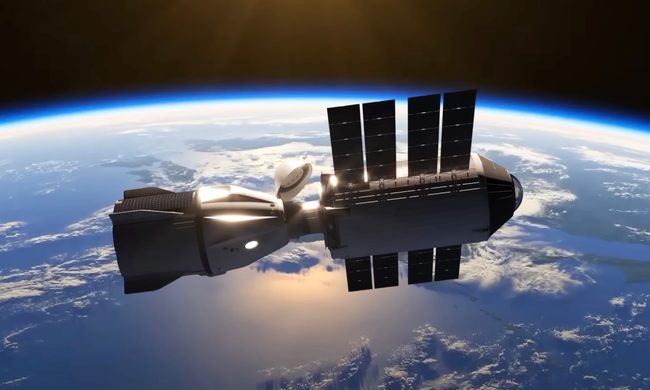
How Vast's space station will look in orbit.

AI data centers already consume vast amounts of electricity and water on Earth, so Silicon Valley has begun looking somewhere considerably more spacious... literally.

Elon Musk's SpaceX and Jeff Bezos' Blue Origin, along with several other companies, have proposed enormous constellations of satellites designed to operate as orbital data centers. However, environmental groups and former space officials are now warning that putting them into orbit at the proposed scale could have severe consequences for Earth's atmosphere and the night sky.

Read more
The first possible exomoon is here, and it makes our Moon look hilariously tiny
Scientists may have found the first exomoon, except this one is the size of Jupiter
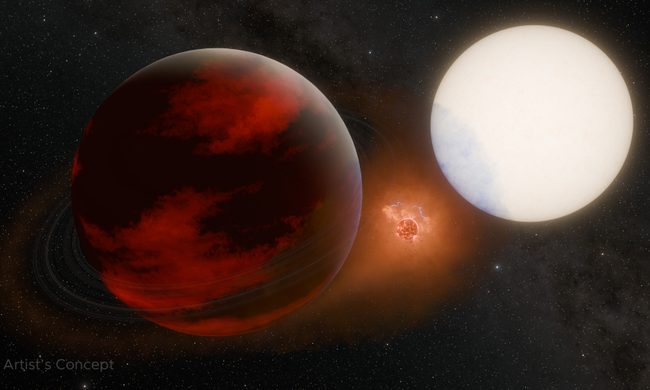
This artist’s concept depicts a potential volcanic moon between the exoplanet WASP-49 b, left, and its parent star. New evidence indicating that a massive sodium cloud observed near WASP-49 b is produced by neither the planet nor the star has prompted researchers to ask if its origin could be an exomoon.

We have already discovered more than 6,000 planets outside of our immediate neighborhood. Yet, finding a moon orbiting one of those distant worlds has proved considerably harder. Astronomers may finally have something close to the real deal, but this particular object stretches the word “moon” almost beyond recognition.

Using the European Southern Observatory’s Very Large Telescope in Chile, researchers detected strong evidence for a moon-like object in the CD-35 2722 system. Further observations are still necessary to confirm the discovery, but it could become the first confidently detected natural satellite outside our solar system. There is still one tiny complication though. This moon is apparently massive.

Read more
China’s answer to SpaceX’s reusable rockets literally catches boosters in a net
SpaceX catches boosters on legs. China just used a net.
Ammunition, Missile, Weapon

SpaceX's playbook for recovering a rocket booster generally involves legs, a precisely controlled vertical landing, and either a concrete pad or a drone ship. 

China just managed to pull off something similar, but in a slightly different way, and on July 10, it tested the method as well.

Read more