At CES 2023, HP officially announced the Dragonfly Pro Chromebook, the company’s premium new Chromebook. Among its high-end features is a world-first 8-megapixel laptop webcam, which is a jump up from the 5-megapixel webcams found on HP’s other Dragonfly notebooks.
HP’s Dragonfly series has been a part of its commercial portfolio for years; including its Elite Dragonfly Chromebook that launched last year. But this year, the new Intel-powered Chromebook, along with its Dragonfly Pro Windows laptop counterpart, is targeted more toward freelancers, creators, and hybrid workers.
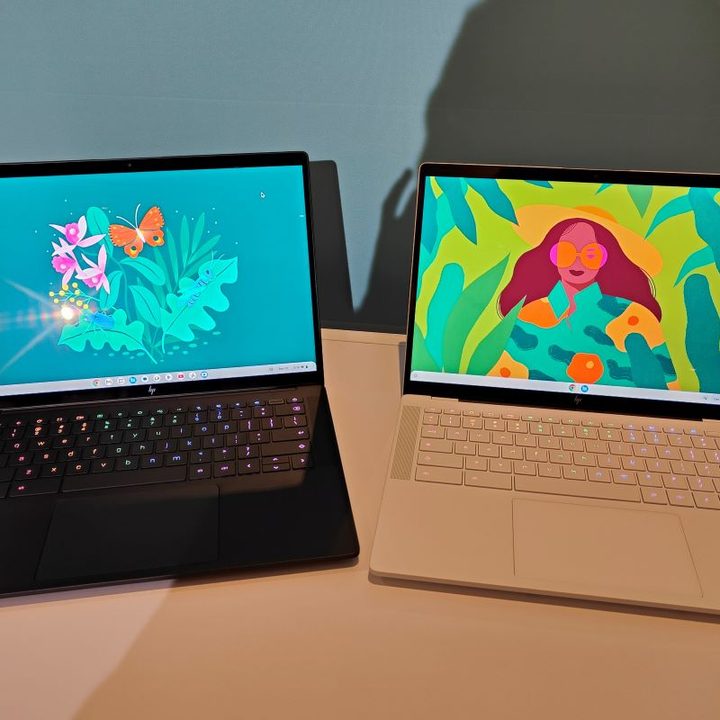
The Dragonfly Pro Chromebook features a bespoke premium design in “Ceramic White” and “Sparkling Black” color options, an all-day battery life, a premium control center experience, a large haptic touchpad, a touchscreen, and a comfortable keyboard.
It’s not quite as small as previous versions of the Dragonfly laptops though. It weighs 3.3 pounds and is 0.7 inches thick, but more screen real estate with its 14-inch screen. Speaking of the display, it’s easily the best you’ll find on a Chromebook — at least on paper. The Dragonfly Pro Chromebook comes with a 14-inch multitouch-enabled IPS display with 2560 x 1600 resolution, 87.6% screen-to-body ratio, 1,200 nits of brightness, and 100% sRGB. HP claims it is the world’s brightest touchscreen display on a Chromebook.
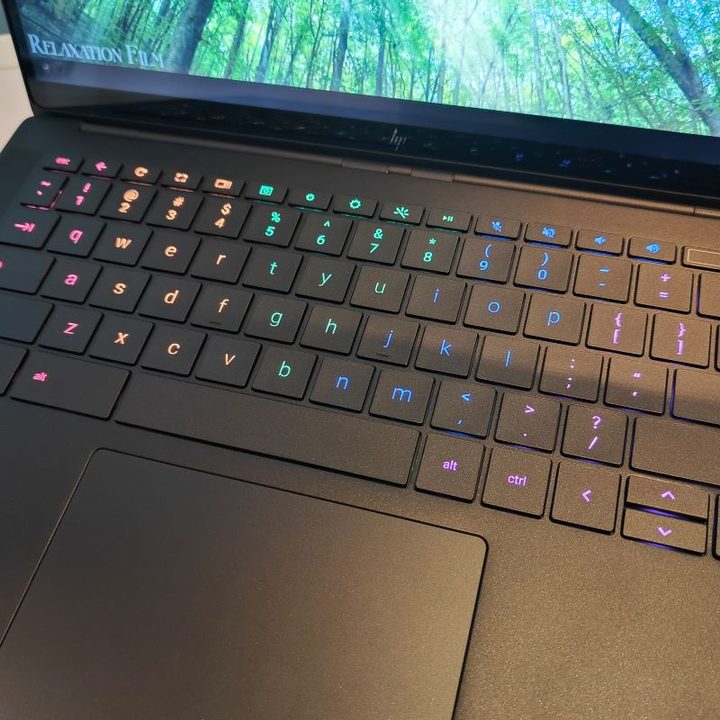
Another first? Well, it’s the first non-gaming consumer Chromebook to feature an RGB backlit keyboard, according to HP. The Dragonfly Pro Chromebook includes a software trick that allows the RGB lighting of the keyboard to change automatically with the background. If the background is red the RGB will be red, if the background is green the RGB will be green.
In terms of performance, the HP Dragonfly Pro Chromebook comes with a standard 16GB LPDDR5 memory and 256GB SSD storage that is non-configurable. Powering the system is a custom 12th-gen Intel Core i5-1235U processor and Intel UHD graphics chip, in addition to the Chrome OS software. With the H1 secure microcontroller, the device includes all the security features of Chrome OS.
Highlight features on the HP Dragonfly Pro Chromebook include its 24/7 concierge support, which comes standard through an application on the device. HP will have agents on hand that will be specifically trained on the Chromebook’s hardware and software, as well as its peripherals.
You can also subscribe to HP’s damage protection add-on as a monthly subscription.
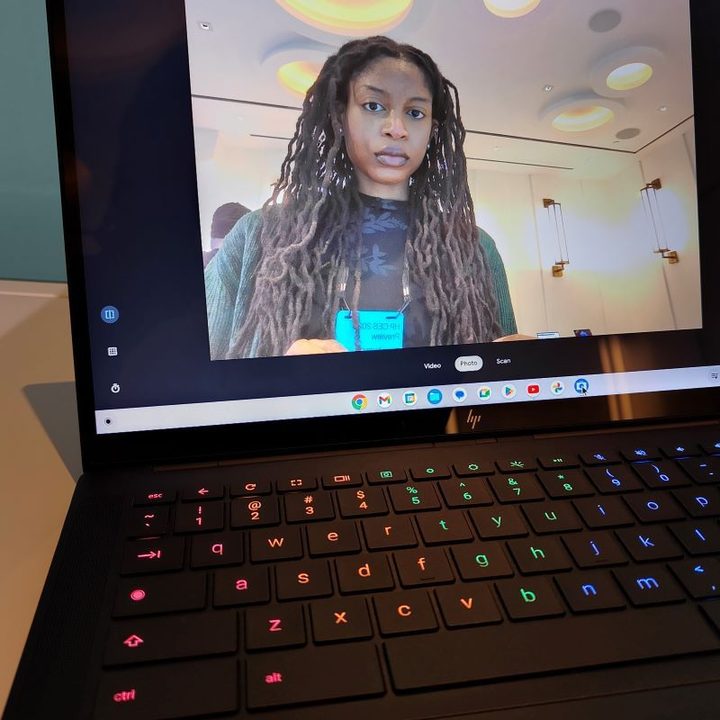
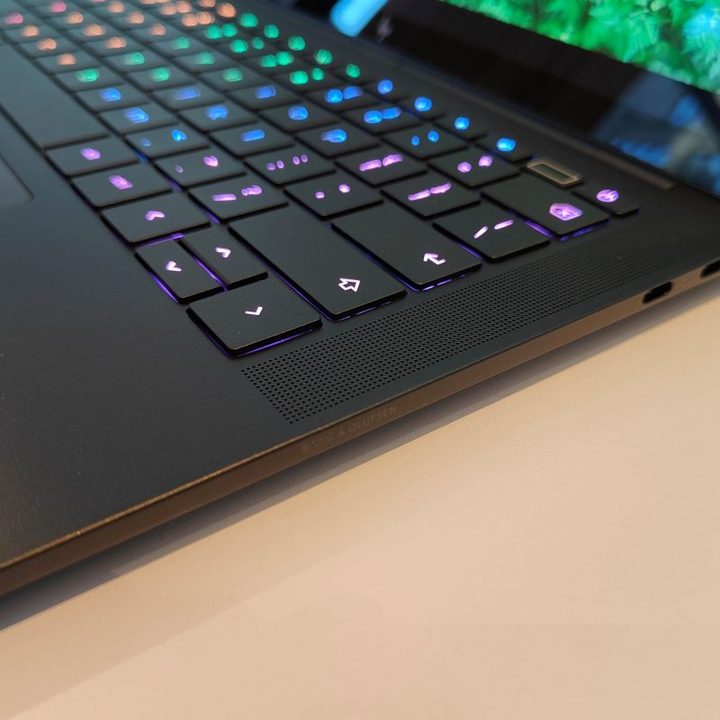
The device features four built-in speakers, two up-firing, and two down-firing with tuning by B&O audio. Its connectivity includes Wi-Fi 6E and Bluetooth 5.2.
Input on the HP Dragonfly Pro Chromebook includes four Thunderbolt-certified USB-C ports, two on each side of the device. Unfortunately, that means it’s lacking a headphone jack. The Chromebook includes a 96-watt USB-C adapter that supports fast charging of 50% in 30 minutes and is charging agnostic with other devices.
In terms of sustainability, HP also noted that the Chromebook is made of 70% recycled metal and 20% recycled plastic.
The HP Dragonfly Pro Chromebook will release in the spring with HP set to share pricing details closer to launch.