HTC has a new flagship headset, and this time, it’s about more than just VR. Like the Meta Quest Pro, the HTC Vive XR Elite is made to do AR just as well as it does VR.
Shortly after the Vive XR Elite was announced, I got a chance to try it out myself. After all, we can talk specs about the headset all we want, but it’s first and foremost an experiential product. So, here’s everything I learned from my firsthand experience in my first try with the new mixed reality headset.

It’s extremely comfortable (mostly)
Even the best VR headsets are notoriously uncomfortable. They’re sweat-inducing and often leave a big mark on your face. But with an XR headset, comfort and ergonomics matter even more because you’re expected to be able to spend longer amounts of time with it on. And while I didn’t get to spend hours with the Vive XR Elite to test that out, this headset was undoubtedly one of the most comfortable I’ve ever tried on.
There’s just a single dial for tightening and loosening on the back, and surprisingly, that’s all this headset really needed. I still managed to get a snug fit that shut out the outside light, and the removable gasket pops in and out with ease.
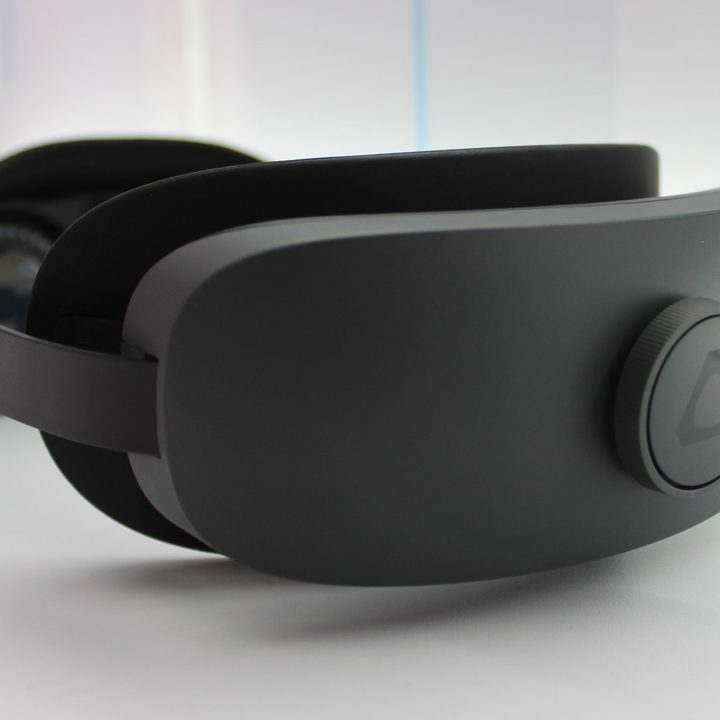
As you probably know, the Vive XR Elite comes with the ability to remove the battery cradle on the back, which dramatically reduces the weight of the headset. It’s also a lot less comfortable this way. Disconnecting the cradle is fairly easy, but using it in “glasses mode” does require employing the end tips, which are meant to wrap around the side of your head.
For my head, the glasses mode wasn’t very comfortable. If you had a smaller head, you might have a different experience — but the one-size-fits-all approach feels a bit limiting (and possibly uncomfortable). But it’s still a pretty incredible engineering feat that the Vive XR Elite can even work like this, though HTC doesn’t imagine this as the primary way of using the headset anyways.
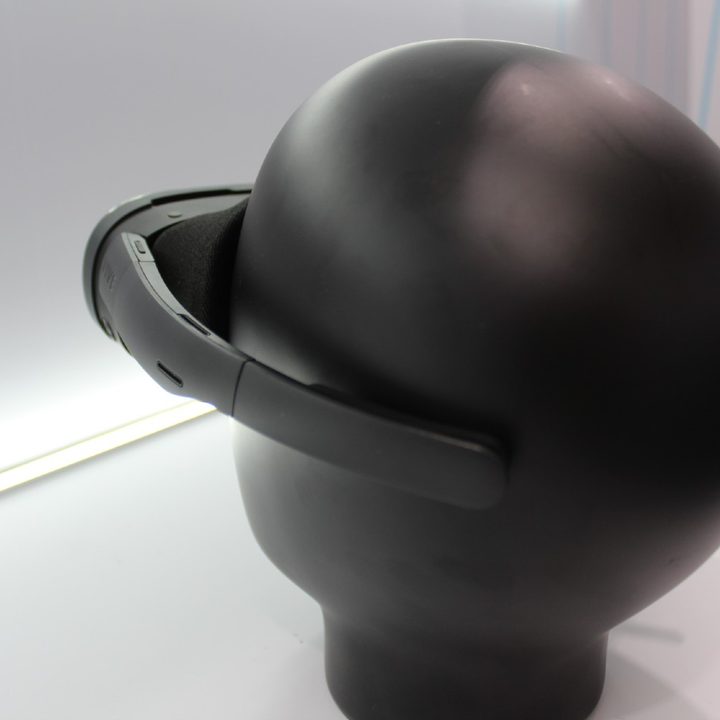
One other note about comfort — the XR Elite doesn’t use a traditional head strap across the top, but it does have a small over-the-head band. It’s stretchy, so it seems like it’s just meant to keep everything in place.
This little band appears to be difficult to remove and reattach, though, and doesn’t show up anywhere in the marketing photos. We’ll have to see if it ends up in the final consumer versions.
Passthrough still needs work
In many ways, the Vive XR Elite is a direct evolution of HTC’s headsets that came before. It takes the VR capabilities of the Vive Focus 3 and mixes it with the lightweight construction and comfort of the Vive Flow. So, it’s really the XR, or extended reality, capability that distinguishes this new headset from the rest.
To create the illusion of true AR, the Vive XR Elite gets full color passthrough using external cameras and depth sensors to give you vision of the world outside your headset. And it’s not bad. I could see my surroundings fairly well, and felt comfortable interacting with the people around me. Clarity is decent enough to feel like I was making eye contact with people, and I was able to more interact with stuff in the real world. Unlike in VR, I didn’t feel completely removed from my surroundings, making it far easier to talk with the people around me or pick up the controllers.
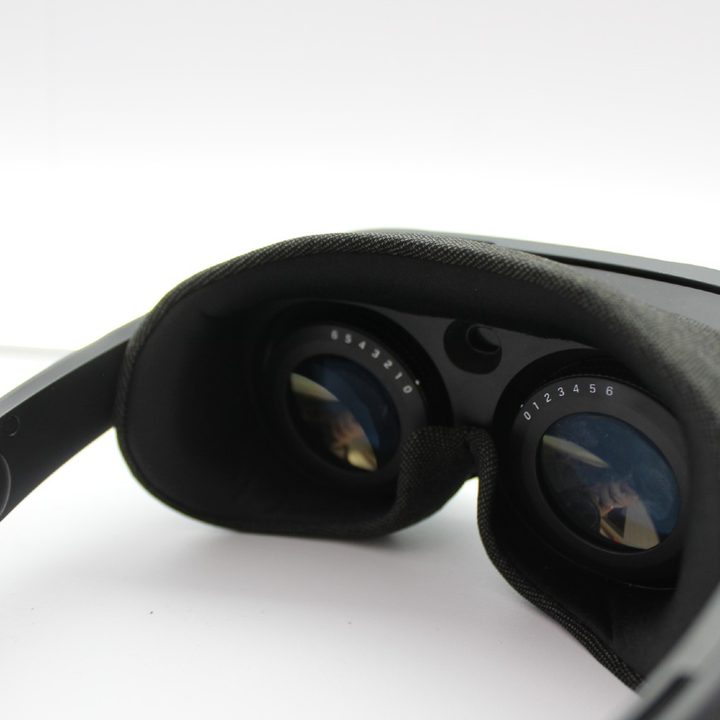
It was pretty neat being able to jump between a fully immersive VR experience and bringing and mixed reality. That was most notable in an app I tried called Gesture VR. I was drawing on a virtual easel, trying to paint the image of a sculpture in the middle of the room. Whether this was in a completely virtual space or in the HTC demo room was completely up to me. Switching between the two was pretty seamless within the app.
But that’s pretty different than a true AR experience. Depth perception felt a bit off, making me feel uncomfortable walking around the busy demo room. And there was some severe distortion around the controllers and my hands. That might be something that gets worked out by the time the final production units ship, but it was pretty distracting.
This is all coming from someone who hasn’t yet used the Quest Pro or similar device, so I don’t have a great idea of how exactly the Vive XR Elite compares. That aside, I didn’t get the sense that I could just live my normal life (even just around my house), and occasionally pop in digital elements. These aren’t AR glasses. If anything, the XR elements feel like more of an add-on to VR than the other way around.
Apps are the elephant in the room
HTC had a number of app demonstrations on hand. I tried three myself, showcasing a mix of creativity, fitness, and games. But here’s the thing — none of these apps are new. Some are new ports to the Viveverse platform, while others are updated versions that have added some XR elements.
My demos started with Rezzil Player, which is a popular sports and fitness app, originally launched on the Quest headsets. Since it’s first and foremost a VR app, the XR elements feel tacked on. Essentially, it’s a VR experience that removes the completely virtual environment (which is really just a background anyways), and replaces it with the passthrough feed of the Vive XR Elite.
Don’t get me wrong — I’m glad HTC has convinced some developers to bring these XR features, but I was hoping this headset would provide a new kind of mixed-reality experience — not just a modification of VR.
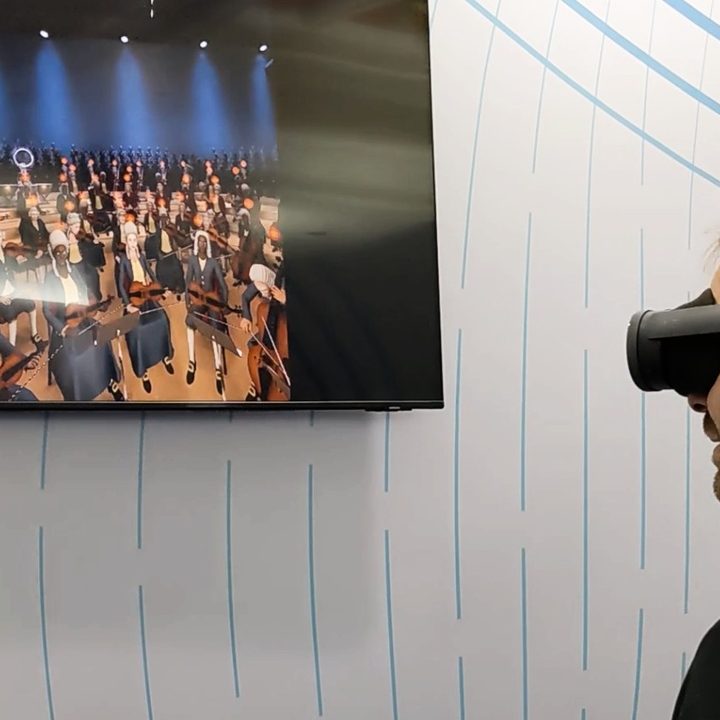
I also tried out Maestro, the Rock Band-like conducting game. Again, this is a newly ported Quest game that’s being brought over to HTC headsets with some XR elements added. But this game’s mixed-reality stuff is even more limited. From what I was shown, the only non-VR aspect was in the training mode when you’re first learning the game. Everything from there on out seemed to be in full VR.
Gesture VR, as mentioned earlier, was the best example of an app that showcased mixed-reality a bit more. It’s a bit more open-ended and collaborative, providing a small hint at the true benefits of what this technology could offer.
To my disappointment, there was not an app made specifically to showcase the mixed-reality capabilities of this headset. Of course, there’s some inherent benefit of mixed-reality in that you’re not completely shut off from the outside world. In some sense, that makes it a more adaptable, approachable, and capable VR headset, but not really a new category of headset.
That’s totally fine, of course. The Vive XR Elite seems like a fantastic VR headset with top-of-the-line specs and ergonomics. But it definitely required an adjustment to my expectations, especially for the $1,100 price. After all, if the passthrough was better and there were more apps to better utilize it, I could see myself feeling very different. But as of now, it’s not quite there.
I could be wrong, but that kind of mixed-reality feels to be a few generations away at this point. We’re still in the early days of this technology — and for now, I’m still left having to use my own imagination for how it might develop in the future.