1. Home
  2. Phones
  3. Mobile
  4. News

Google Meet’s 360-degree virtual backgrounds move with you during video chats

Add as a preferred source on Google

For those with messy bedrooms or who simply want to retain an element of privacy during video chats, various videoconferencing tools have long offered ways to replace the real background with a virtual one.

Now, Google Meet has taken this one step further and launched 360-degree video backgrounds that use your Android or iOS device’s gyroscope to make a virtual background move with you instead of having it as a static image.

Recommended Videos

Current options put you in a temple or on a beach — in other words, locations that are likely to be dramatically different from your home office or living room, or whichever place you usually conduct your video chats from.

Google announced the new feature on its website, and included an example showing a man speaking from a sun-kissed lagoon.

Truth be told, the eye-catching scenery and abundance of movement may prove rather distracting for others in the call, but perhaps that distraction will fade after a short time. Also, we’re assuming that the person with the background won’t really be moving around quite as much as the person in Google’s demonstration clip, which should limit any distraction.

It’s worth noting that an administrator has the ultimate say as to whether those in a call can replace their real backgrounds with virtual ones or use special effects.

Google Meet’s 360-degree video backgrounds are available now on Android and iOS devices for all Google Workspace users, and also for those with personal Google accounts.

In other recent updates to Google Meet, the web giant made improvements to reduce the visual glitches that can sometimes appear between the outer edges of a call participant and their virtual background.

And last month Google also introduced emoji reactions to let call participants react to each others’ contributions.

With so many people switching to remote working during the early stages of the pandemic in 2020, it was rival application Zoom that became the go-to tool for those wishing to make video calls for work. The sudden change in work styles, and the massive success of Zoom, prompted Google and others to revamp their own videoconferencing tools to make them more useful in work and personal settings.

Trevor Mogg
Contributing Editor
Not so many moons ago, Trevor moved from one tea-loving island nation that drives on the left (Britain) to another (Japan)…
Vibecoded apps are flooding Apple’s App Store, and users are getting sick of them
App Store submissions have doubled this year as AI tools make it easier than ever to build an app, but downloads haven't kept pace, and for good reason.
Apple App Store homepage on an iPhone

Apple's App Store is in the middle of its steepest submission surge in years. Developers submitted nearly 600,000 new apps last year, marking a 30 percent jump over the previous year. That number has already doubled to roughly 560,000 new apps in just the first six months of this year, according to estimates from analytics firm Sensor Tower cited by the New York Times. The reason behind the spike is vibecoding, which allows people with no prior development experience to create new apps using AI tools.

A familiar boom, with a twist

Read more
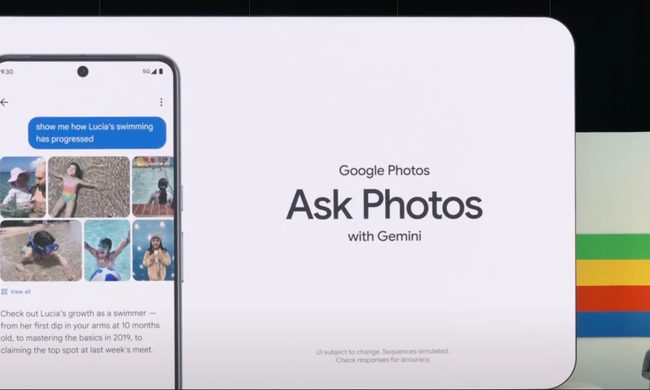
Google Photos adds a quick toggle between AI and classic search
Classic search is finally easier to reach for people who enabled Ask Photos
Google's Ask Photos debut.

Google Photos is giving users an easier way to leave its Gemini-powered search when a simple keyword would do. A new toggle now sits at the top of the results page, letting users switch between Ask Photos and classic search without digging through settings.

The change appears to address feedback from people who opted into Ask Photos but wanted a quicker way to return to classic search when Gemini was slower or less useful for a straightforward query.

Read more
Snapseed Camera now lets Android users save original photos and add geotags
Google updates Snapseed Camera with geotag support and non-destructive photo editing
Snapseed App

Google appears to be quietly turning Snapseed into something more than just a photo editing app. Over the past few weeks, the company has been steadily adding new capabilities to Snapseed Camera, its standalone camera app for Android. The latest update introduces two practical features that many smartphone users have come to expect from modern camera apps: the ability to save an untouched copy of every image for future editing and support for embedding location data directly into photos.

Neither feature is flashy, but together they make Snapseed Camera a more capable photography tool, particularly for users who like experimenting with filters without permanently altering their original shots. According to a report by 9to5Google, the features are rolling out with Snapseed Camera version 4.1.1.x on Android.

Read more