
Researchers from Linköping University in Sweden made a groundbreaking development: they created a functional transistor out of wood.
This new transistor could pave the way for much more sustainable computing. One day, it could even enable electronic control of living plants — but there’s a major catch.
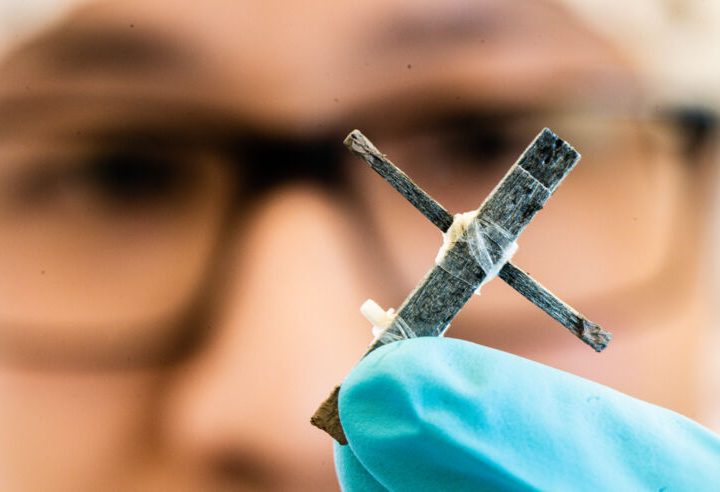
A transistor is a key component in all kinds of electronic devices, including powerful processors. It can act as an amplifier or a switch.
Typically, transistors are made out of silicon, which has a number of advantages. Silicon does well even when faced with high temperatures, offering thermal stability. Silicon is also widely available. Transistors are also sometimes made out of germanium, but silicon is much more widespread.
A research team from Linköping University in Sweden managed to use not silicon, but wood for creating a working transistor. They published their findings in a paper titled “Electrical current modulation in wood electrochemical transistors.”
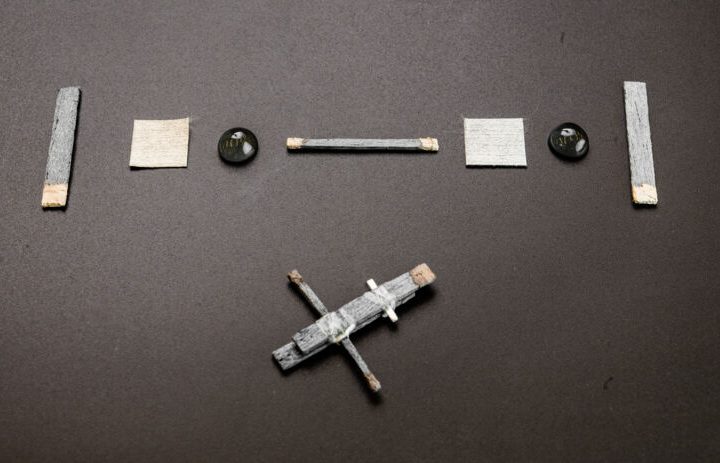
The wood electrochemical transistor (WECT) itself was made out of special conductive wood. To create this type of wood, they had to remove a component called lignin and then replace it with a conducting polymer. Next, they used three pieces of this conductive wood to create the WECT.
The transistor works, and that in itself is pretty amazing. And hey, electronic control of living plants sounds pretty cool all on its own, so even for that alone, it’s a huge discovery. However, silicon can rest easy — there’s no way that the WECT will replace the silicon transistors anytime soon, or even ever.
For one, it’s way too big. Silicon transistors are measured in nanometers, but the WECT measures 3 centimeters. It also only has a switching frequency of just under a hertz. Not a megahertz, not a gigahertz, but just a hertz. Today’s technology requires much more power from its transistors.
According to Moore’s Law, the number of transistors in a microchip is meant to double every year, thus increasing the speed and capability of said chips. This is why, among other reasons, transistors are a hot topic that requires continuous research if chipmakers are planning to continue chasing Moore’s Law.
Simply put, there are limits to how much silicon can do for us, and according to some, those limits are approaching fast. This is what leads scientists to explore other options when it comes to making chips, such as graphene or even honey.
While WECT can’t help with the scaling problem of silicon at all, it creates a much more sustainable and biodegradable alternative that could find its uses in the future. This wooden transistor is not going to revolutionize computing, but it does prove that it can be done, which opens the door to further discoveries down the line.


