The budget smartphone market is a bustling space right now, with great phones from Nokia and Samsung making big waves. Motorola is the unofficial king of the budget smartphone, but its throne is looking quite shaky right now. That might be why it’s decided to remix some classics this year, releasing new versions of the Moto G 5G and Moto G Stylus.
While there are definitely some improvements in the 2023 versions of both phones, Motorola has also made some cutbacks for both, making these new versions remixes of past classics rather than pure upgrades. Here’s everything you need to know about the Motorola Moto G 5G (2023) and Moto G Stylus (2023).
Moto G 5G (2023)
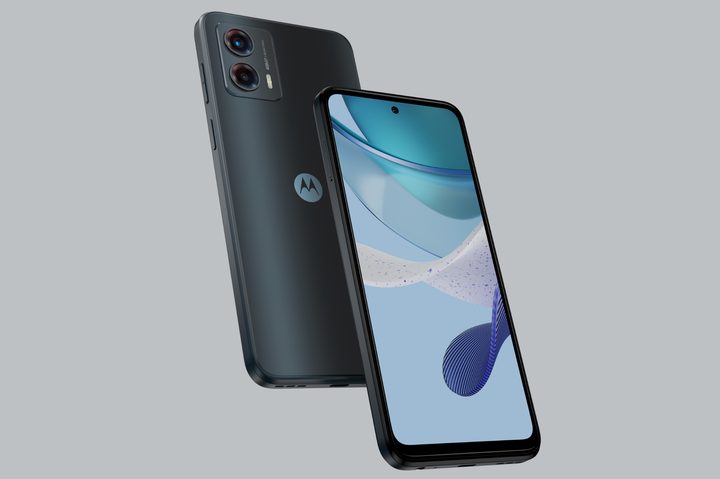
The Moto G has long been the jewel in Motorola’s budget crown, and that isn’t looking likely to change. This year’s big change is an upgrade in display tech, boosting the device’s refresh rate from 90Hz to 120Hz. That boost in display smoothness puts the Moto G on par with flagship phones like the Samsung Galaxy S23 and Pixel 7 Pro — and is a serious boost for the device.
The 6.5-inch LCD display has a 720p resolution, the same as last year’s model, and it also comes with twin stereo speakers powered by Dolby Atmos. While the resolution won’t be the crispest, the dual speakers and large screen should mean the Moto G is a good device for watching videos and movies.
The Moto G 5G (2023) is powered by the Qualcomm Snapdragon 480+ 5G processor, which should provide decent performance, even if it’s not likely to be conquering the latest 3D games. Base storage starts at 64GB, and there’s a choice to upgrade it to 128GB. This is a small downgrade on the previous version, which offered a 256GB variant, but 128GB is likely to be enough for most people.
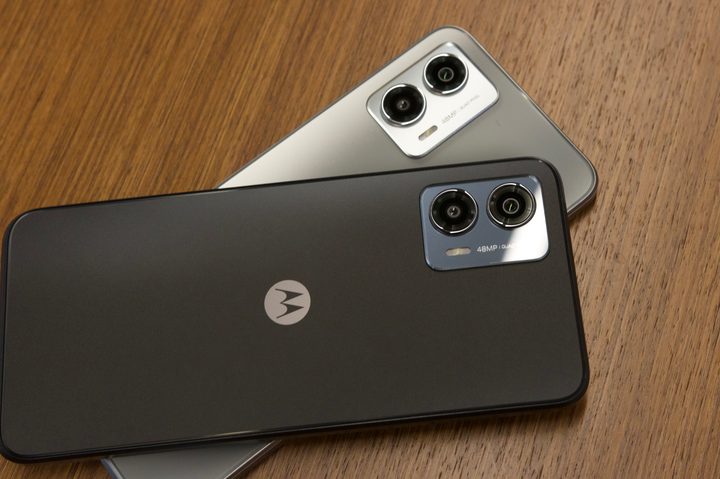
The camera has had a remix, too. Gone is the depth lens from last year’s model, leaving the phone with a dual-camera setup comprised of a 48-megapixel main lens and a 2MP macro lens. The main camera seems to be a revert to 2021’s Moto G, replacing the 50MP lens from last year. While technically a downgrade in resolution, it’s likely to be a fairly small one (and might not be noticeable).
The battery is unchanged, but that’s a very good thing. The Moto G Power (2022) sported three days of battery life on its 5,000mAh cell, and it’s likely we’ll see similar performance from the new Moto G 5G. Charging speed has seen an increase from 10W to 15W. Less time on the charger is always a good thing, and this is a very welcome change for Moto G fans.
The Moto G 5G will launch with Android 13, and in typical Motorola fashion, it’ll only see one upgrade to Android 14. Motorola’s record when updating budget phones is not great, and that’s not changed at all with this year’s Moto G. It’s especially noteworthy when Samsung has committed to two years of major Android upgrades on its Galaxy A14 5G.
The Moto G 5G (2023) will be available starting on May 25 from Best Buy, Amazon, and Motorola. Prices will start from $250, and it’ll be available on T-Mobile, Metro by T-Mobile, AT&T, and a number of smaller carriers to boot. It won’t be available on Verizon, so Big Red fans will have to look elsewhere for a reasonably priced budget phone.
Moto G Stylus (2023)
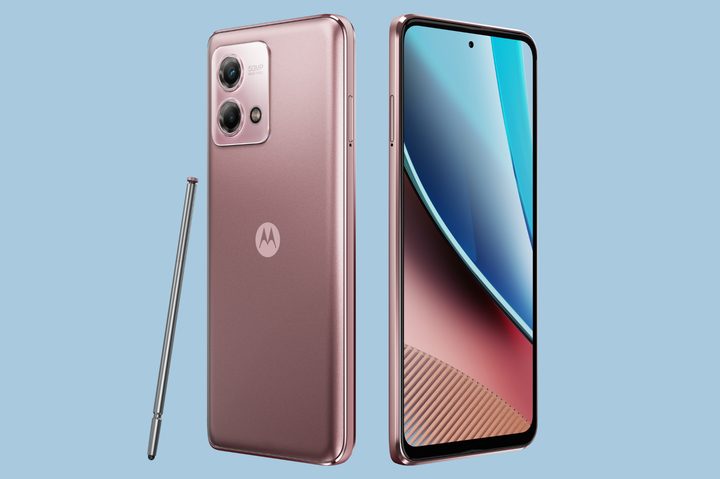
One of the few stylus-equipped phone ranges still available, the Moto G Stylus fills a niche outside of just its price. As you might expect, the stylus is the star here, and you can use it to jot down notes in Motorola’s Moto Notes app, sketch, or draw and share animations with friends through Live Messages. The stylus stores inside the phone when not in use, so it’s tougher to lose than you might expect.
The Moto G Stylus has the same 90Hz refresh rate as last year, but the display is now 720p rather than 1080p. The screen size has dropped to 6.5 inches, though, so the drop in resolution may not be as noticeable. Other areas have seen downgrades, too, including 4GB of RAM and 64GB of base storage. The previous 128GB of storage is still available but at an extra cost. The Mediatek Helio G85 processor is on the dated side, having previously been used in the 2021 Moto G phones, so it would be best not to expect too much from it. While performance is likely to be fine, playing the latest games may be beyond it. There’s also no 5G, which is a disappointment. Instead, it’s possible Motorola will release a specific 5G version of the Stylus later this year, as it did last year.
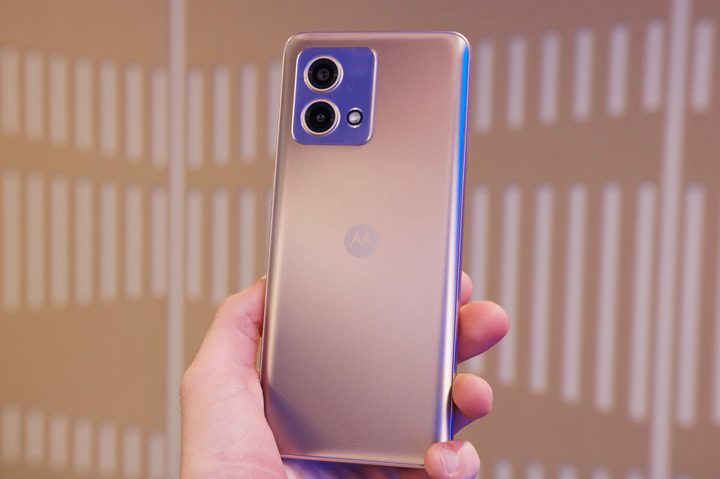
The camera is a 50MP main lens paired with a 2MP macro lens, and it supports slow-motion video of up to 120 frames per second. The Moto G Stylus (2023) has the same 5,000mAh battery as the Moto G 5G, so it’s likely the battery life will be similarly excellent — and the G Stylus has also seen a bump up to 15W fast charging as well. The battery and stylus are likely to be a serious reason to buy the phone, so keep an eye out for our review.
Like the Moto G above, the G Stylus will also be launching with Android 13, and Motorola is again only offering one major software update to Android 14.
The Motorola Moto G Stylus (2023) will be available on May 5 from Amazon, Best Buy, and Motorola. Like the Moto G (2023), the G Stylus will be available on a number of U.S. carriers, but not Verizon. Prices will start from $200.