Intel is expected to introduce its new range of 14th-gen desktop processors later this year. While we don’t have a whole lot of official information yet, a new leak now suggests that one can expect a considerable boost in the core count for the cheaper processors in the lineup.
According to the information shared by Red Gaming Tech, Intel’s upcoming 14th-gen range will be referred to as “Raptor Lake Refresh” instead of the previously rumored Meteor Lake series. The new 14th-gen range of CPUs is expected to feature the same architecture and core design as the existing 13th-gen Raptor Lake CPUs — but with some minor tweaks.
Intel is expected to increase the core count for a majority of its upcoming CPU product segments. Essentially lower-tiered CPUs under the Core-i3 range (Core i3-14100/14100F and Core i3-14300) may be getting up to six performance cores, which is a big improvement over the existing 13th-gen lineup that offers four performance cores. This will definitely make the Core i3 lineup a more formidable option in the future, especially for gamers in the budget segment.
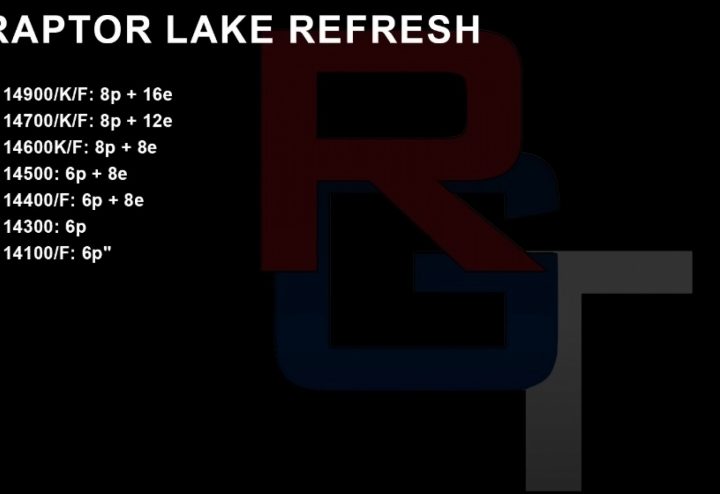
As for the Core i5 lineup, the 14600K and 14600KF are expected to feature eight performance cores and eight efficiency cores, which is two more performance cores than the current i5-13600K series. The Core i5-14500 and i5-14400 will feature six performance cores and eight efficiency cores, thus adding four more efficiency cores compared to their last-generation counterparts. We can also expect a big increase in multi-threaded performance across all i5 CPUs while the Core i5-14600K will be as good as the existing i7-13700K in terms of core and thread count.
Moving up the ladder, Intel’s 14th-gen Core i7-14700K is expected to feature eight performance cores and twelve efficiency cores, which means it will have four additional efficiency cores when compared to the Core i7-13700K.
Not a lot will be changing for the top-tier Core i9 product lineup as the 14th-gen processors appear to have the same core count. Enthusiasts can, however, expect higher clock speeds with the Core i9-14900K offering boost speeds of up to 6GHz and the Core i9-14900KS going up to 6.2GHz.
It should be noted that this still qualified as just a rumor, so we’ll have to wait until later this fall to get the official details from Intel.