1. Home
  2. Space
  3. News

A solar eruption was detected on Earth, the moon, and even Mars

Add as a preferred source on Google

When you think of the dangers of the sun, your mind most likely turns to the global threat of climate change. But the sun is active and difficult to predict, and it doesn’t just pump out a steady stream of heat and radiation — sometimes it gives off huge ejections that can have serious effects on Earth. Scientists recently reported on one such solar event that was detectable not only on Earth, but also on the moon and Mars.

The solar event, called a coronal mass ejection, occurred on October 28, 2021. A significant amount of plasma erupted from the sun’s corona, spreading out as it traveled through the solar system to the extent that it reached both Earth and Mars even when they were on opposite sides of the sun, 150 million miles apart. The event was imaged by various spacecraft including NASA and the European Space Agency (ESA)’s SOHO solar mission. To see an animation of the coronal mass ejection, you can head over the ESA’s website.
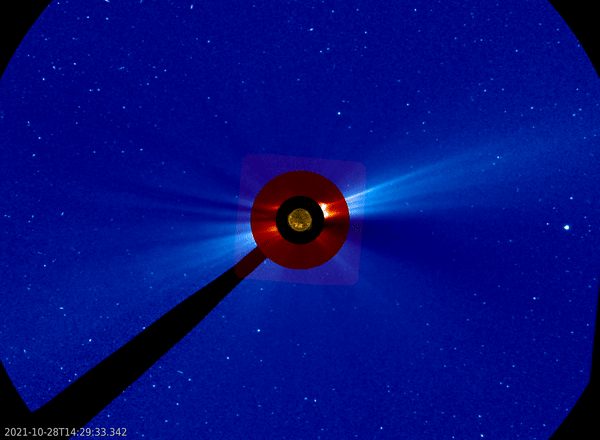
A coronal mass ejection as seen by SOHO on 28 October 2021. This event is an example of a rare ‘ground level enhancement’. During these events, particles from the Sun are energetic enough to pass through the magnetic bubble that surrounds Earth and protects us from less energetic solar outbursts. This was only the 73rd ground level enhancement since records began in the 1940s, and none have been recorded since.
A coronal mass ejection as seen by SOHO on October 28, 2021. This event is an example of a rare ground level enhancement. During these events, particles from the sun are energetic enough to pass through the magnetic bubble that surrounds Earth and protects us from less energetic solar outbursts. This was only the 73rd ground level enhancement since records began in the 1940s, and none have been recorded since. SOHO (ESA & NASA), CC BY-SA 3.0 IGO

The issue with such coronal mass ejections is that they send out energetic particles that can be dangerous to both people and electronics when they reach Earth. Our planet has a magnetic field that largely protects those of us on the ground from this radiation, but it can be dangerous for those living and working in space.

Recommended Videos

It’s particularly important to understand how this radiation affects the human body as space agencies plan future crewed missions that travel far out of low-Earth orbit, such as to the moon or Mars. The radiation can also effect satellites and have an impact on communications, in a phenomenon called space weather.

In the case of the 2021 event, it was useful for researchers to see how the radiation from this solar event affected the environment on Mars, as measured by orbiting missions like the Trace Gas Orbiter (TGO) and by rovers like Curiosity. It gives information on how much protection future crews will need if they are to survive there.

“Space radiation can create a real danger to our exploration throughout the solar system,” said TGO project scientist Colin Wilson in a statement. “Measurements of high-level radiation events by robotic missions is critical to prepare for long-duration crewed missions. Thanks to data from missions like ExoMars TGO, we can prepare for how best to protect our human explorers.”

The research is published in the journal Geophysical Research Letters.

Georgina Torbet
Georgina has been the space writer at Digital Trends space writer for six years, covering human space exploration, planetary…
Space is becoming Bezos and Musk’s next data center site, and we have every reason to worry
The AI boom is coming for the night sky
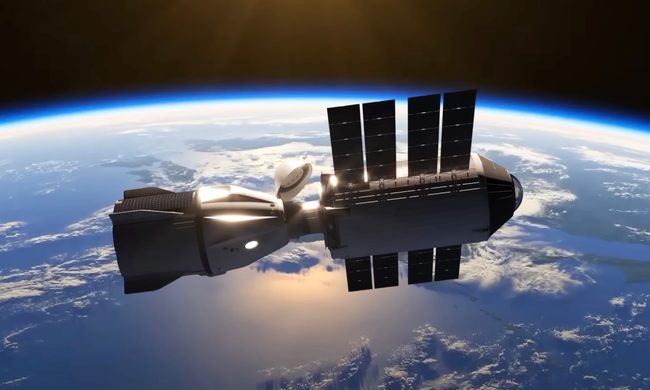
How Vast's space station will look in orbit.

AI data centers already consume vast amounts of electricity and water on Earth, so Silicon Valley has begun looking somewhere considerably more spacious... literally.

Elon Musk's SpaceX and Jeff Bezos' Blue Origin, along with several other companies, have proposed enormous constellations of satellites designed to operate as orbital data centers. However, environmental groups and former space officials are now warning that putting them into orbit at the proposed scale could have severe consequences for Earth's atmosphere and the night sky.

Read more
The first possible exomoon is here, and it makes our Moon look hilariously tiny
Scientists may have found the first exomoon, except this one is the size of Jupiter
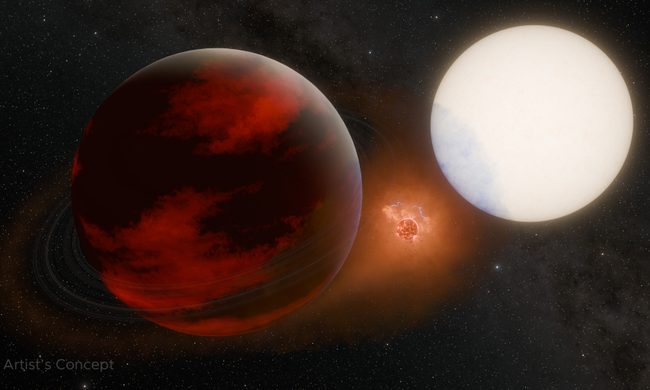
This artist’s concept depicts a potential volcanic moon between the exoplanet WASP-49 b, left, and its parent star. New evidence indicating that a massive sodium cloud observed near WASP-49 b is produced by neither the planet nor the star has prompted researchers to ask if its origin could be an exomoon.

We have already discovered more than 6,000 planets outside of our immediate neighborhood. Yet, finding a moon orbiting one of those distant worlds has proved considerably harder. Astronomers may finally have something close to the real deal, but this particular object stretches the word “moon” almost beyond recognition.

Using the European Southern Observatory’s Very Large Telescope in Chile, researchers detected strong evidence for a moon-like object in the CD-35 2722 system. Further observations are still necessary to confirm the discovery, but it could become the first confidently detected natural satellite outside our solar system. There is still one tiny complication though. This moon is apparently massive.

Read more
China’s answer to SpaceX’s reusable rockets literally catches boosters in a net
SpaceX catches boosters on legs. China just used a net.
Ammunition, Missile, Weapon

SpaceX's playbook for recovering a rocket booster generally involves legs, a precisely controlled vertical landing, and either a concrete pad or a drone ship. 

China just managed to pull off something similar, but in a slightly different way, and on July 10, it tested the method as well.

Read more