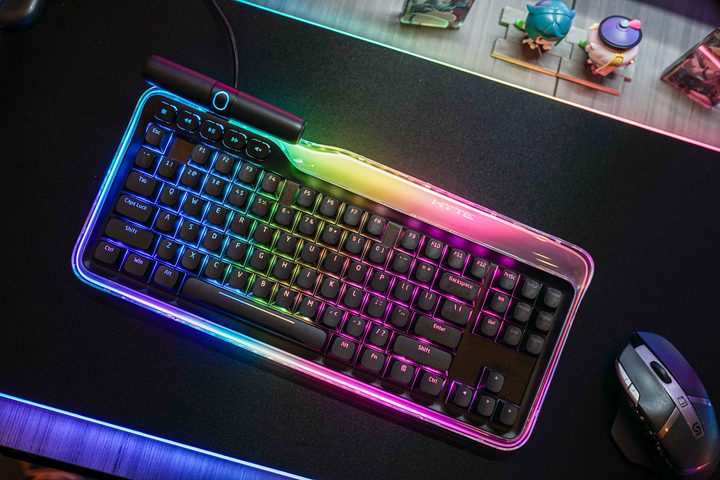

I didn’t cover a ton of keyboards at CES 2024 because, frankly, they’re not too exciting for the most part. Hyte made me do a double take, though. Its new Keeb keyboard is, without a doubt, one of the strangest, most exciting keyboards I’ve ever seen. And I can’t wait for it to start shipping.
Hyte isn’t the name you think of when it comes to peripherals — in fact, this is its first peripheral ever. The company known for PC cases is expanding its horizons with the Keeb, and it seems focused on bringing the same unique design that we’ve seen with its PC cases over the past few years to other components.
The elephant in the room for the Keeb is the polycarbonate shell. The Crystal Bubble, as it’s called, houses an array of RGB LEDs that wrap your keyboard in light, not only around the keycaps, but also around the bottom of the keyboard. You can customize these LEDs through Hyte Nexus as well.
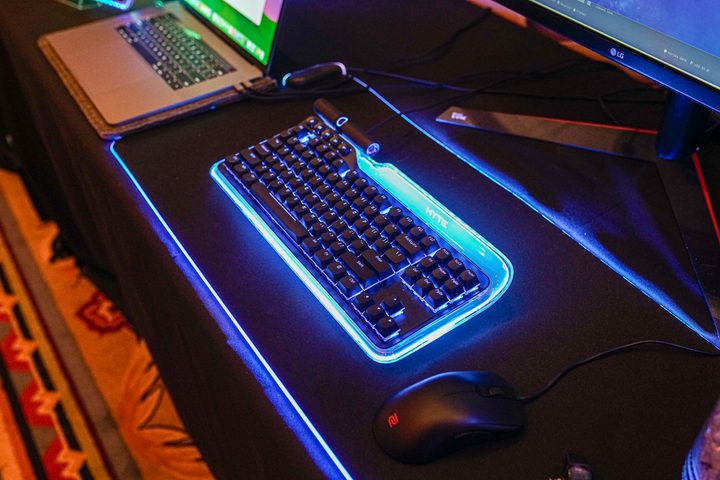
It’s one of the most unique looks you can find on a keyboard. The shell is transparent, so you can see through it when the LEDs are off. What was shocking was how well the RGB filled out the keyboard. It fades toward the edges, but it still looks like the keys are floating on a bed of RGB light.
It’s a stunning keyboard visually, that’s for sure, but Hyte is backing up the looks with some enthusiast flourishes. This is a gasket-mounted keyboard, similar to what we’ve seen from the HyperX Alloy Rise and Asus ROG Azoth. This provides a little bit of give when you’re typing, placing the plate where you insert key switches between gaskets.
It sounds and feels excellent. No doubt there’s room for customization here — Hyte pointed out a set of screws on the bottom to allow you to take the keyboard apart — but the feel out of the box is great. It’s that low thonk that you expect out of a high-end keyboard, devoid of the nasty pinging or clickiness you find on cheaper gaming keyboards.
Outside of the gasket mount, Hyte includes hot-swap support for your key switches. The preinstalled switches are still solid, however. They’re Hyte’s own Fluffy Lavender switches, which are linear switches with an actuation force of 40 grams. Think a Cherry MX Red. The big deal here is that Hyte lubricates them with Krytox 205G0 — the gold standard for enthusiast keyboards.
It’s far more than just switches and a mount that helps Hyte achieve that great sound. Inside the board, there are four layers of sound dampening. These run on both sides of the PCB, at the top plate, and on the bottom of the shell, helping keep the sound deep and satisfying. On top of that, Hyte is using Durock V2 stabilizers, also lubricated with Krytox 205G0, so keys like the space bar don’t wobble.
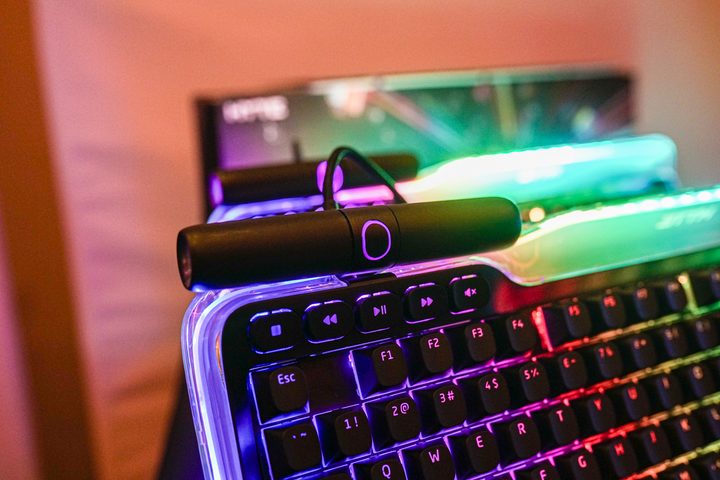
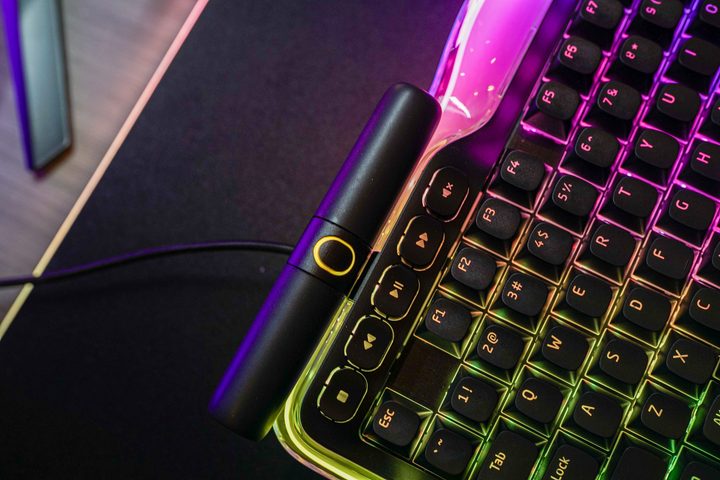
Hyte could’ve stopped there, but there’s more. The dedicated media keys use a tactile switch and have a unique feel. They’re on a hinge, so you know when you’re pressing a media key versus the other keys. There’s also a large media roller near these keys that you can use for volume control, LED brightness, and so much more. Hyte tells me the wheel is remappable, and you can even assign it for fine mouse detail in digital painting applications. The company says it plans on expanding this wheel with different accessories in the future as well.
There’s no doubt that the Hyte Keeb isn’t for everyone with its unique look. But it’s still a hell of a keyboard, and I can’t wait to get a closer look at it. Thankfully, I shouldn’t have to wait long. Hyte says the keyboard runs $180 and is available in the U.S. and Canada now. The expected delivery date is currently February 15.