1. Home
  2. Space
  3. News

How to watch the first crewed flight of the Starliner spacecraft

Add as a preferred source on Google
NASA Live: Official Stream of NASA TV

[UPDATE: The first crewed launch attempt on Monday, May 6, was scrubbed two hours before liftoff due to an issue with the Atlas V rocket. Several other target dates have also been scrapped to give engineers more time to fix a number of issues. NASA is now hoping to launch the Starliner on the morning of Wednesday, June 5. This article has been adjusted to include the new schedule.]

Recommended Videos

NASA and Boeing Space are making final preparations for the first crewed launch of the CST-100 Starliner spacecraft, with liftoff targeted for Wednesday, June 5.

In a highly anticipated mission, a ULA Atlas V rocket will launch the Starliner and NASA astronauts Butch Wilmore and Suni Williams from the Kennedy Space Center in Florida. Read on for the precise launch time and how you can watch a live broadcast of the early stages of the mission.

Wilmore and Williams will stay aboard the space station for about a week to test the Starliner spacecraft and its subsystems before NASA certifies the transportation system for rotational missions to the orbital outpost as part of the agency’s Commercial Crew Program.

NASA started using SpaceX’s Crew Dragon for crewed flights in 2020 and the addition of the Starliner will give the agency more flexibility when it comes to planning crewed flights to the ISS.

The first crewed flight has been a long time coming as the Starliner has faced a number of issues and delays during its development. On its maiden test flight in 2019, the vehicle failed to reach the ISS in a mission that surfaced a slew of technical problems. A second test flight in 2022 managed to dock with the station, though several more issues with the spacecraft had to be addressed following that mission.

Now NASA and Boeing are just about ready to test the spacecraft with astronauts on board.

How to watch

NASA is aiming to launch the Starliner from the Kennedy Space Center in Florida at 10:52 a.m. ET on Wednesday, June 5.

Launch coverage will begin at 6:45 a.m. ET on the NASA+ streaming channel, NASA Television, the NASA app, YouTube, and the agency’s website. You can also watch the broadcast via the video player embedded at the top of this page.

While launch coverage on NASA+ will end shortly after the Starliner reaches orbit, NASA Television will provide a live stream of the spacecraft docking with the ISS on the following day, along with the hatch opening and welcoming remarks with the ISS Expedition 71 crew.

We will update this article with any further changes to the launch schedule, though you may also want to keep an eye on Boeing Space’s social media feed for the very latest news regarding the mission.

Trevor Mogg
Contributing Editor
Not so many moons ago, Trevor moved from one tea-loving island nation that drives on the left (Britain) to another (Japan)…
Space is becoming Bezos and Musk’s next data center site, and we have every reason to worry
The AI boom is coming for the night sky
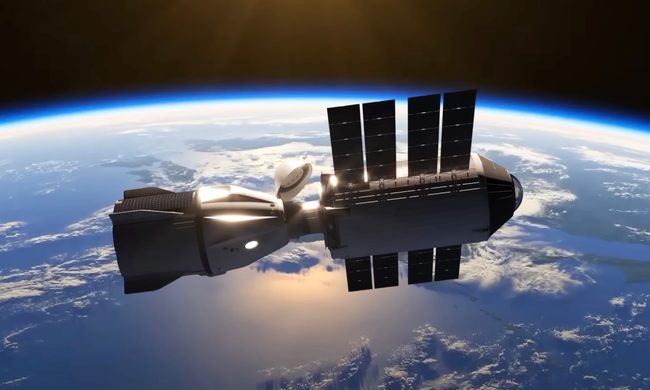
How Vast's space station will look in orbit.

AI data centers already consume vast amounts of electricity and water on Earth, so Silicon Valley has begun looking somewhere considerably more spacious... literally.

Elon Musk's SpaceX and Jeff Bezos' Blue Origin, along with several other companies, have proposed enormous constellations of satellites designed to operate as orbital data centers. However, environmental groups and former space officials are now warning that putting them into orbit at the proposed scale could have severe consequences for Earth's atmosphere and the night sky.

Read more
The first possible exomoon is here, and it makes our Moon look hilariously tiny
Scientists may have found the first exomoon, except this one is the size of Jupiter
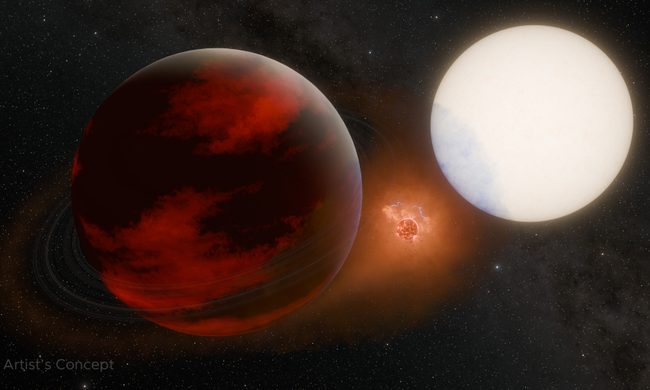
This artist’s concept depicts a potential volcanic moon between the exoplanet WASP-49 b, left, and its parent star. New evidence indicating that a massive sodium cloud observed near WASP-49 b is produced by neither the planet nor the star has prompted researchers to ask if its origin could be an exomoon.

We have already discovered more than 6,000 planets outside of our immediate neighborhood. Yet, finding a moon orbiting one of those distant worlds has proved considerably harder. Astronomers may finally have something close to the real deal, but this particular object stretches the word “moon” almost beyond recognition.

Using the European Southern Observatory’s Very Large Telescope in Chile, researchers detected strong evidence for a moon-like object in the CD-35 2722 system. Further observations are still necessary to confirm the discovery, but it could become the first confidently detected natural satellite outside our solar system. There is still one tiny complication though. This moon is apparently massive.

Read more
China’s answer to SpaceX’s reusable rockets literally catches boosters in a net
SpaceX catches boosters on legs. China just used a net.
Ammunition, Missile, Weapon

SpaceX's playbook for recovering a rocket booster generally involves legs, a precisely controlled vertical landing, and either a concrete pad or a drone ship. 

China just managed to pull off something similar, but in a slightly different way, and on July 10, it tested the method as well.

Read more