  1. Home
  2. Computing
  3. News

The first 300TB SSD is on the horizon

Add as a preferred source on Google
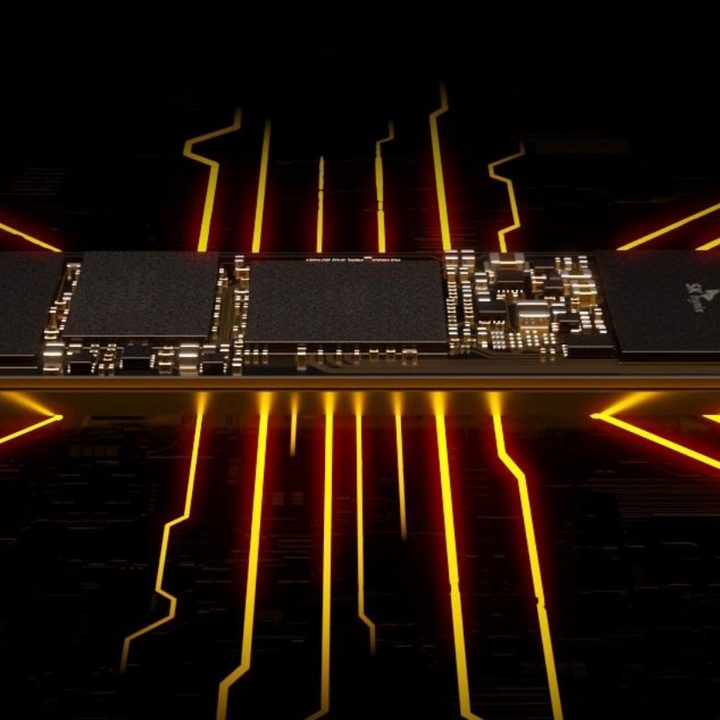
An SK Hynix SSD over a dark and orange background.
SK Hynix

Some of the best SSDs we use are usually 1TB or 2TB, but consumer models go up to 8TB — which is nothing in the context of a datacenter, and the latest announcement from SK Hynix puts that into perspective. The company revealed that it’s currently developing a solid-state drive with a capacity of 300TB, which is a completely unprecedented size. Seeing these enormous SSDs in the flesh might take some time, though.

The company announced the new drive at a press conference in Seoul, South Korea. There are reportedly more interesting products on the way, including various memory solutions, and the focus is entirely on being able to support data centers as the era of AI progresses. According to Tom’s Hardware, SK Hynix’s market researchers claim that the global volume of data generated on a yearly basis is on an upward trend, and the increase is truly like nothing we’ve ever seen before. SK Hynix predicts that we’ll see a jump up to 660 zettabytes (ZB), up from 15ZB in 2014.

To give some context to that number, 660ZB equals 660 billion terabytes. Back in 2018, studies estimated that around 175ZB of data would be generated globally in 2025, but it’s easy to imagine that this number may have changed with the recent AI boom.

No matter the current state of global data generation, the demand is only going to go up from here, so SK Hynix isn’t really jumping ahead of the curve — it’s just paving a path for many other companies to follow with massive SSDs to support AI workloads in datacenters. Both high-capacity HDDs and SSDs are necessary.

A Microsoft datacenter.
A Microsoft datacenter. Microsoft

Unfortunately, not much is known about the 300TB SSD as of yet, other than that it’s in the works. Tom’s Hardware speculates that the drive may rival Samsung’s PBSSD initiative (which tops out at 240TB right now and is offered on a subscription basis) or ExaDrive’s 100TB SSD, which, while a solid-state drive, comes encased in a 3.5-inch chassis, so it resembles an HDD. It also costs $40,000.

It’s hard to imagine the kind of performance an SSD of this size might be able to offer, and that’s something that SK hynix will have to tackle before the launch. Achieving a good balance of capacity, speed, and reliability is bound to be difficult with a drive of this size — but it’s clear that these solutions are a necessity, as we’re still in the early days of the AI era.

Monica J. White
Monica is a computing writer at Digital Trends, focusing on PC hardware. Since joining the team in 2021, Monica has written…
The Mac Pro nearly received an M3 Extreme chip twice as powerful as M3 Ultra
High production costs likely killed Apple’s M3 Extreme plans
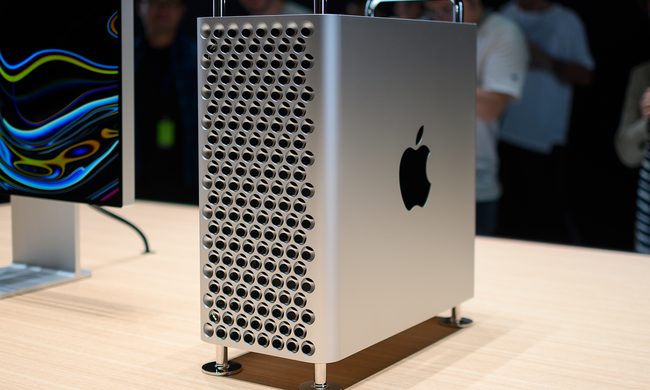
Apple's Mac Pro on a table at a press event.

Apple discontinued the Mac Pro earlier this year, ending a 20-year run for a computer that once represented the very best of the company’s desktop lineup. However, Apple reportedly had much bigger plans for the machine before ultimately replacing it with the Mac Studio.

According to Bloomberg’s Mark Gurman, Apple developed an M3 Extreme chip that could have offered twice as many CPU and GPU cores as the M3 Ultra. The processor was intended to sit above the Ultra tier and could have finally given the Mac Pro the performance advantage it badly needed. Apple eventually abandoned the chip due to concerns over production costs and limited demand for such an expensive machine.

Read more
Hidden prompts can secretly rewrite an AI’s memory, and researchers say that’s a serious problem
Researchers discover AI attack that rewrites an assistant's long-term memory
Chatbot on a smartphone.

Large language models are getting better at remembering us. Whether it's your preferred writing style, recurring tasks, shopping habits or project deadlines, AI assistants are increasingly storing long-term memories to make future conversations feel more personal and useful. But according to new research, that same feature could become one of AI's biggest security vulnerabilities.

Researchers from New Mexico State University have demonstrated a new attack called GhostWriter, capable of secretly planting false memories inside AI agents. Rather than stealing information outright, the attack manipulates what an AI remembers, potentially causing it to make dangerous decisions long after the original attack has taken place.

Read more
This experiment shows how easy it is to poison an open-weight AI model for under $100
This research raises new doubts about trusting open weight AI models.
Computer, Electronics, Laptop

Open-weight AI models have been having a moment lately. Just this month, Moonshot's massive Kimi K3 model landed close behind Claude Fable 5 and GPT 5.6 Sol in several benchmarks, all while remaining fully open-weight and downloadable by anyone.

However, Katie Paxton-Fear, a cybersecurity lecturer at Manchester Metropolitan University and staff security advocate at Semgrep, managed to poison an open-weight model and proved how easily that openness can be turned against you (via The Register).

Read more