  1. Home
  2. Space
  3. News

How your aurora photographs are helping NASA study solar storms

Add as a preferred source on Google

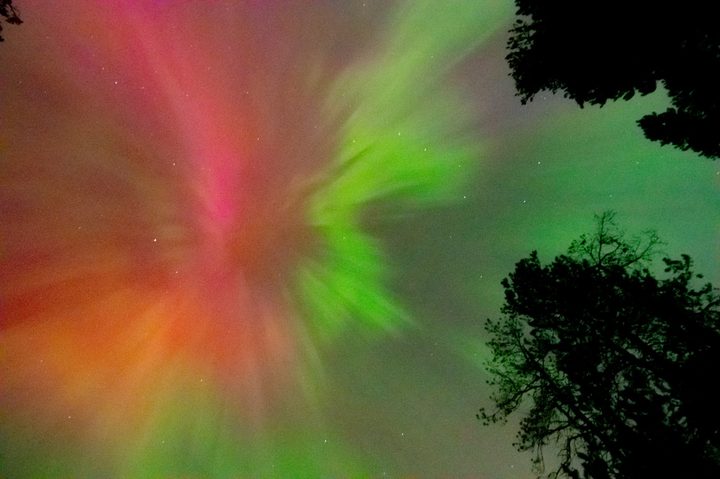
A coronal aurora appeared over southwestern British Columbia on May 10, 2024.
A coronal aurora appears over southwestern British Columbia on May 10, 2024. NASA/Mara Johnson-Groh

This week has seen one of the most dramatic solar storms in decades, leading to views of auroras seen around the world as charged particles from the sun interacted with Earth’s atmosphere. But the events weren’t only notable for the gorgeous colors seen in the sky — they are also a way for scientists to learn about the sun and how its activity varies over time.

Recommended Videos

Scientists know that the sun operates on a roughly 11-year cycle of increasing and decreasing activity. We are currently heading toward solar maximum, when the sun’s activity peaks, but even so the solar storms observed recently were far more powerful than is typical for this period of the cycle. That gave NASA scientists an opportunity for collecting valuable data.

“We’ll be studying this event for years,” said Teresa Nieves-Chinchilla, acting director of NASA’s Moon to Mars (M2M) Space Weather Analysis Office, in a statement. “It will help us test the limits of our models and understanding of solar storms.”

The period of solar storms began May 7, with a barrage of solar flares and outbursts of energy called coronal mass ejections occurring over the following several days. This culminated with the most powerful solar flare seen in the current cycle on May 14. It takes some time for the effects to travel from the sun to Earth, so the geomagnetic storms here began on May 10 and lasted across the weekend.

A Week of Rapid-Fire Solar Flares

It was this solar storm that created the widely seen auroras, and many amateur astronomers and even regular people without any particular astronomical knowledge were able to capture beautiful images because of developing camera technology.

“Cameras — even standard cell phone cameras — are much more sensitive to the colors of the aurora than they were in the past,” said Elizabeth MacDonald, NASA heliophysics citizen science lead. “By collecting photos from around the world, we have a huge opportunity to learn more about auroras through citizen science.”

There isn’t a simple way to measure the strength of a geomagnetic storm, but this one was given the highest rating of G5, which hasn’t been used since 2003. One thing that was particularly notable about this geomagnetic storm was how far south of the North Pole the auroras were visible, as they are typically only seen around polar regions.

McDonald is asking people to submit reports of what they did see — or even if they didn’t see an aurora at all in their region — to Aurorasaurus.org to help with science research.

And while the sun’s stormy activity will continue, the region where most of the activity was coming from is now facing away from Earth, so we shouldn’t experience more auroras than usual here. However, scientists are interested to see the view from Mars, which is currently located ahead of Earth and so will get a continuing view of the solar activity for another day.

Georgina Torbet
Georgina has been the space writer at Digital Trends space writer for six years, covering human space exploration, planetary…
NASA is investing $590 million in private contractors to build humanity’s first Moon outpost
NASA is counting on private companies to land its Moon Base dream.
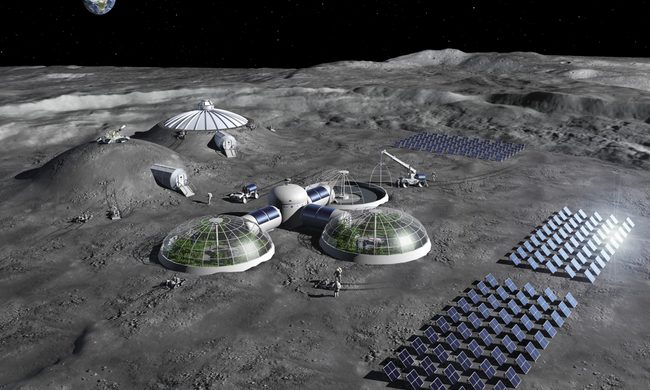
Artist impression of a Moon Base concept, with solar arrays for energy generation, greenhouses for food production, and habitats shielded with regolith.

Building a permanent base on the Moon sounds like science fiction, but NASA is making it feel a lot more real. The agency just handed $590 million in contracts to three private companies for four uncrewed lunar lander missions launching in late 2028.

These missions are part of Phase 1 of NASA's broader $30 billion Moon Base program, which needs to deliver landers, rovers, and scientific cargo up there before astronauts eventually move in. These efforts are closely tied NASA's Artemis program, which sent humans on a lunar flyby in April for the first time since the Apollo era.

Read more
Getting to Mars may require a pit stop in orbit, and NASA just tested the nozzle to make that happen
A gas pump nozzle for spacecraft sounds simple. It is not, and that's what makes this test worth paying attention to.
Architecture, Building, Factory

Getting a spacecraft to Mars or beyond requires an enormous amount of fuel, most of which has to be hauled from Earth, adding to the overall cost and weight of the spacecraft. NASA has been working on a different approach, one that could be more efficient and effective.

It wants to refuel a spacecraft in orbit before heading out for the mission. What’s even more interesting is that the space agency just finished testing a component that could make that possible: a cryocoupler.

Read more
Elon Musk’ Starlink could soon offer mobile services as a US carrier
Showcase of T-Mobile Starlink service on an iPhone.

Elon Musk’s Starlink has already changed how millions of people access the internet, especially in places where traditional broadband struggles to reach. Now, the satellite internet service could be preparing for an even bigger leap — becoming your mobile carrier.

According to a Financial Times report, SpaceX has told investors it’s considering launching a retail Starlink mobile service in the US. Instead of simply partnering with wireless carriers, the company could begin selling mobile plans directly to consumers, putting it in direct competition with Verizon, AT&T, and T-Mobile.

Read more