  1. Home
  2. Space
  3. News

Next-gen spacesuit can turn urine into drinking water

Add as a preferred source on Google
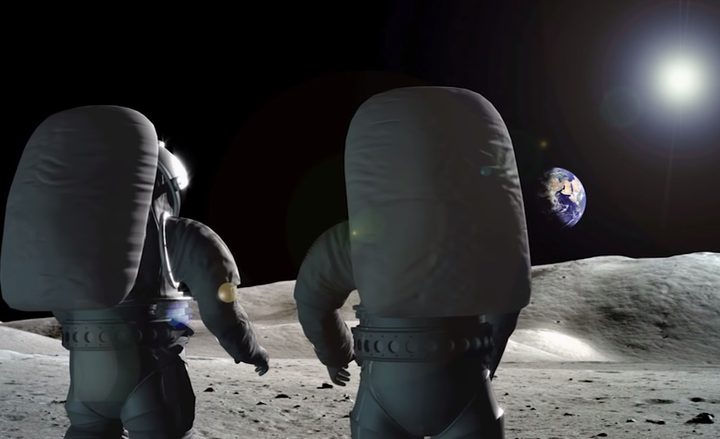
An illustration showing astronauts on the moon.
NASA / NASA

Researchers have created a prototype spacesuit that’s capable of recycling urine into drinking water.

Inspired by the “stillsuits” in the sci-fi classic Dune, the unique design could enable astronauts to partake in lengthier spacewalks on the moon during the upcoming Artemis missions.

Recommended Videos

“The design includes a vacuum-based external catheter leading to a combined forward-reverse osmosis unit, providing a continuous supply of potable water with multiple safety mechanisms to ensure astronaut well-being,” Sofia Etlin, a research staff member at Weill Cornell Medicine and Cornell University, and the study’s first author, said in the scientific journal Frontiers.

The longest time that astronauts currently spend away from bathroom facilities is around seven hours straight during spacewalks outside the International Space Station (ISS). The bulky spacesuits worn for such activities contain an absorbency garment — a kind of multilayered diaper — should nature call while the astronaut is working outside the station. But the garments are uncomfortable and can cause hygiene problems.

“The MAG [maximum absorbency garment] has reportedly leaked and caused health issues such as urinary tract infections and gastrointestinal distress,” Etlin said, adding that the current suits contain in-suit drink bags capable of holding a liter of water, an amount insufficient for lunar walkabouts that could last as long as 10 hours.

The prototype suit includes an undergarment made of multiple layers of flexible fabric, which connects to a collection cup with a different shape and size for women and men. The urine is diverted to a battery-powered urine filtration system contained inside a backpack. Here, it gets recycled with an efficiency of 87% through a two-step osmosis filtration system. The purified water is enriched in electrolytes and pumped into the in-suit drink bag, with the collection and purification of 500 milliliters of urine taking a mere five minutes.

The newly designed suit is ready to be tested under simulated conditions before being trialed in actual spacewalks.

Astronauts aboard the ISS already drink water recycled from urine, so transferring the technology to a spacesuit makes perfect sense.

NASA is planning to land two astronauts on the moon in 2026 as part of the highly anticipated Artemis III mission. Later, the space agency hopes to build a permanent base on the moon from which astronauts will be able to go on extended expeditions, and it’s these missions across the lunar surface where the new spacesuit would prove particularly useful.

Trevor Mogg
Contributing Editor
Not so many moons ago, Trevor moved from one tea-loving island nation that drives on the left (Britain) to another (Japan)…
Amazon’s Starlink rival just crossed a major milestone, but don’t expect perfect internet just yet
Amazon finally showed up to the space internet party
Amazon Leo satellite layout across all launch vehicles

Amazon has taken a significant step toward launching its long-awaited satellite internet service. Following its latest rocket launch, the company now has 396 Project Kuiper satellites in low-Earth orbit, enough to begin offering continuous service across select regions. The milestone keeps Amazon on track for its previously announced goal of launching commercial service by mid-2026.

https://twitter.com/Weber44Chris/status/2072575499461963938?ref_src=twsrc%5Etfw%7Ctwcamp%5Etweetembed%7Ctwterm%5E2072575499461963938%7Ctwgr%5Ed727a1b853cbf519585e7bf2655943afb2f91bb8%7Ctwcon%5Es1_&ref_url=https%3A%2F%2Fwww.theverge.com%2Fscience%2F960563%2Famazon-leo-service-tipping-point

Read more
Amazon’s Starlink rival is set to launch satellite internet later this year
After launching nearly 400 satellites, Amazon says its Leo broadband service will go live later this year.
Atlas V launches 29 Amazon Leo satellites from Cape Canaveral, Florida

Amazon's long-awaited answer to SpaceX's Starlink is finally nearing liftoff. According to an exclusive report from Reuters, the company plans to begin offering its Leo satellite internet service later this year, after its latest rocket launch pushed the constellation to 394 satellites in orbit.

The pieces are finally falling into place for Project Kuiper

Read more
NASA is investing $590 million in private contractors to build humanity’s first Moon outpost
NASA is counting on private companies to land its Moon Base dream.
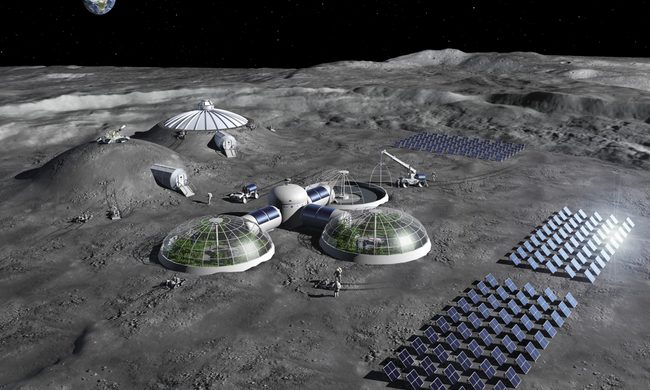
Artist impression of a Moon Base concept, with solar arrays for energy generation, greenhouses for food production, and habitats shielded with regolith.

Building a permanent base on the Moon sounds like science fiction, but NASA is making it feel a lot more real. The agency just handed $590 million in contracts to three private companies for four uncrewed lunar lander missions launching in late 2028.

These missions are part of Phase 1 of NASA's broader $30 billion Moon Base program, which needs to deliver landers, rovers, and scientific cargo up there before astronauts eventually move in. These efforts are closely tied NASA's Artemis program, which sent humans on a lunar flyby in April for the first time since the Apollo era.

Read more