  1. Home
  2. Computing
  3. News

Google strikes back with its own lightweight AI model

Add as a preferred source on Google
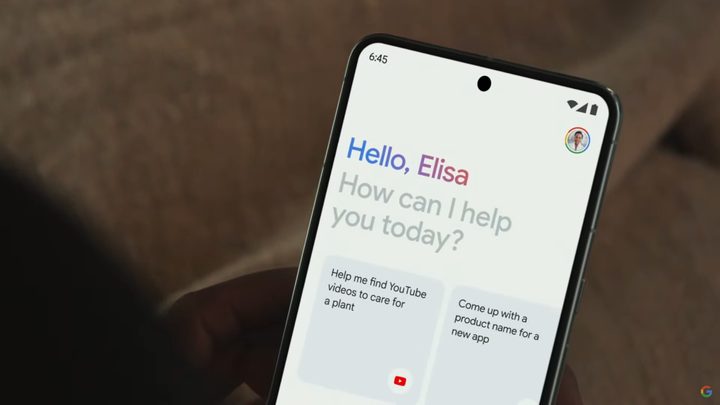
Google Gemini on smartphone.
Google

Google announced Thursday that it is releasing Gemini 1.5 Flash, it’s snack-sized large language model and ChatGPT-4o mini competitor, to all users regardless of their subscription level.

The company promises “across-the-board improvements” in terms of response quality and latency, as well as “especially noticeable improvements in reasoning and image understanding.”

Recommended Videos

Google initially released Gemini 1.5 Flash in May as a lighterw-eight version of its flagship Gemini 1.5 Pro model. It’s designed to perform less resource intensive inference tasks faster and more efficiently than Pro does, much as Claude 3.5 Haiku, Llama 3.1-8B and ChatGPT-4o mini do for their respective parent models.

Flash’s context window is drastically expanding with this update, growing from a paltry 8K length to 32K (roughly 50 pages of text). Granted, that’s a 4x increase in size, but even at 32K, Gemini Flash’s context window is still just a quarter the size of GPT-4o mini’s 128K window (or, about a book’s worth).
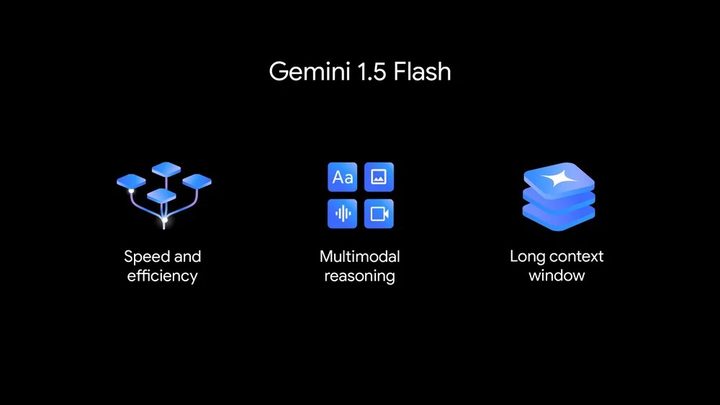
A slide showing Google Gemini 1.5 Flash features.
Google

What’s more, Google plans to “soon add” the ability to upload text and image files, either from Google Drive or the local hard drive, direct to the context window. This feature was previously restricted to the subscription tiers.

The company also announced updates on its efforts to reduce instances of hallucinations within its models. Google plans to include “links to related content for fact-seeking prompts in Gemini,” essentially providing links to the sources it cites.

The AI will do this for both traditional search and for associated Workspace apps as well. If the AI uses information gleaned through its Gmail integration, it will provide links back to the relevant emails.

These updates are available immediately to nearly all Gemini users on both web and mobile and in 40 languages. Teens who meet the minimum age requirements needed to manage their own Google accounts will receive access next week.


Andrew Tarantola
Former Computing Writer
Andrew Tarantola is a journalist with more than a decade reporting on emerging technologies ranging from robotics and machine…
Study finds humans will talk to AI ghosts of the dead as reincarnations, and it’s pretty grim
The first AI ghost study is in. The results are about as complicated as you'd expect.
VR Headset, Person, Face

A new study from the University of Colorado Boulder confirms something that sounds both impressive and concerning. People find interacting with AI simulations of their dead loved ones deeply meaningful, and most will come away wanting to do it again.

The researchers call it a "generative ghost," which is a clear reference to generative AI, but I’d still prefer to call it unsettling.

Read more
Apple’s Hide My Email feature has an unfixed bug that leaves email addresses exposed
100% exploitable in limited testing, known since June 2025, and still unfixed as of today.
apple-merging-sign-in-with-apple-hide-my-email-icloud+

Apple has been selling Hide My Email to keep your real email address hidden, but it has a vulnerability that does the exact opposite. The worst part is that the company has known about it for a year. 

Hide My Email, part of Apple’s paid iCloud+ subscription, lets users generate anonymous email addresses for signing up to a website, so that their personal or work email remains free of promotional emails and spam. 

Read more
I hate sharing my Mac, but a face-unlocking app finally cured my privacy paranoia
Someone finally built the app locker every Mac user has been asking for.
FaceGate in action on Mac

If you have ever handed your Mac to a friend, family member, or coworker for "just a minute," you know the mild panic that follows. Sure, your Mac has a lock screen, but once someone is past it, they can open Messages, Photos, Notes, Mail, WhatsApp, and your browser.

iPhones had the same issue, but Apple solved it by adding an app lock feature with the iOS 18 update. Sadly, no such feature exists for macOS. That’s where the new FaceGate app for Mac can help you. It’s a free and open-source app that lets you lock apps on your Mac and even has some novel tricks up its sleeve. So, let’s talk about it, shall we?

Read more