1. Home
  2. Space
  3. News

Elon Musk says SpaceX’s Polaris Dawn mission will be ‘epic.’ Here’s why

Add as a preferred source on Google
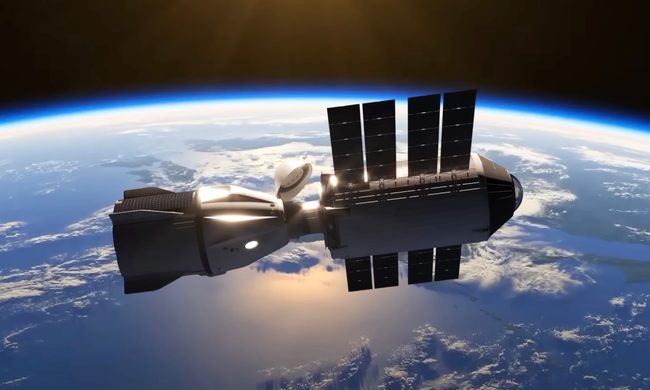
The Polaris Dawn Crew Dragon spacecraft as it will look in orbit.
How the Polaris Dawn spacewalk might look. SpaceX

SpaceX chief Elon Musk said on Sunday that the upcoming Polaris Dawn mission will be “epic.”

The highly anticipated mission is targeting Monday, August 26, for liftoff from the Kennedy Space Center in Florida> It will power four non-professional astronauts to orbit.

Recommended Videos

Rather than docking with the International Space Station (ISS), the Crew Dragon spacecraft carrying the adventurers will instead orbit Earth for several days. In fact, the spacecraft will orbit about 435 miles (700 kilometers) above Earth, taking it around 185 miles (298 kilometers) higher than the ISS and considerably higher than any Crew Dragon has ever traveled.

But what’s getting Musk particularly excited is the mission’s plan to perform the first-ever commercial spacewalk.

It will be carried out by two crew members: Mission commander Jared Isaacman, the billionaire CEO of payment-processing firm Shift4 and funder of Polaris Dawn, and Sarah Gillis, a lead space operations engineer at SpaceX. During the walk, the pair will test out an all-new spacesuit designed specifically for such extravehicular activities (EVAs).

“Building a base on the moon and a city on Mars will require thousands of spacesuits,” SpaceX said. “The development of this suit and the execution of the EVA will be important steps toward a scalable design for spacesuits on future long-duration missions.”

Also traveling aboard the Crew Dragon as part of the four-person crew will be Scott Poteet, a retired U.S. Air Force lieutenant colonel and former colleague of Isaacman at Shift4, and Anna Menon, a lead space operations engineer at SpaceX. While three of the crew members will be heading to orbit for the first time, for Isaacman this will be his second trip following the all-civilian Inspiration4 mission in 2021.

The voyage will also involve the first crewed test of Starlink laser-based communications in space, an endeavor that’s expected to provide useful data for future space communications systems necessary for missions to the moon and beyond. Additionally, the crew will carry out scientific research designed to advance both human health on Earth and scientists’ understanding of human health during future long-duration spaceflights.

SpaceX will live stream the launch and various parts of the mission. Digital Trends will share more detailed information on how to watch as soon as it becomes available.

Trevor Mogg
Contributing Editor
Not so many moons ago, Trevor moved from one tea-loving island nation that drives on the left (Britain) to another (Japan)…
NASA built the Roman Space Telescope to study dark matter, but it can also help protect Earth from killer asteroids
The Nancy Grace Roman Space Telescope wasn't built to hunt asteroids, but it turns out to be great at it.
Nancy Grace Roman space telescope.

NASA is about to launch a telescope built to unlock some of the universe's biggest mysteries, and it turns out that same design could help protect Earth along the way.

The Nancy Grace Roman Space Telescope is set to launch from Kennedy Space Center on August 30, 2026, with a primary mission focused on studying dark matter and dark energy - the invisible forces shaping galaxies and cosmic expansion. Researchers now say its unique design also makes it unexpectedly effective at spotting dangerous asteroids headed our way (via MIT Technology Review).

Read more
Space is becoming Bezos and Musk’s next data center site, and we have every reason to worry
The AI boom is coming for the night sky
How Vast's space station will look in orbit.

AI data centers already consume vast amounts of electricity and water on Earth, so Silicon Valley has begun looking somewhere considerably more spacious... literally.

Elon Musk's SpaceX and Jeff Bezos' Blue Origin, along with several other companies, have proposed enormous constellations of satellites designed to operate as orbital data centers. However, environmental groups and former space officials are now warning that putting them into orbit at the proposed scale could have severe consequences for Earth's atmosphere and the night sky.

Read more
The first possible exomoon is here, and it makes our Moon look hilariously tiny
Scientists may have found the first exomoon, except this one is the size of Jupiter
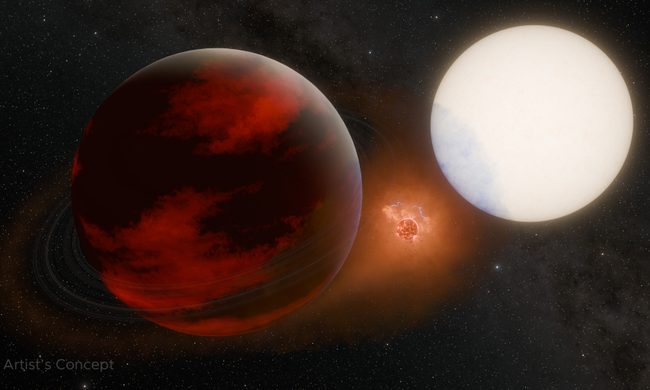
This artist’s concept depicts a potential volcanic moon between the exoplanet WASP-49 b, left, and its parent star. New evidence indicating that a massive sodium cloud observed near WASP-49 b is produced by neither the planet nor the star has prompted researchers to ask if its origin could be an exomoon.

We have already discovered more than 6,000 planets outside of our immediate neighborhood. Yet, finding a moon orbiting one of those distant worlds has proved considerably harder. Astronomers may finally have something close to the real deal, but this particular object stretches the word “moon” almost beyond recognition.

Using the European Southern Observatory’s Very Large Telescope in Chile, researchers detected strong evidence for a moon-like object in the CD-35 2722 system. Further observations are still necessary to confirm the discovery, but it could become the first confidently detected natural satellite outside our solar system. There is still one tiny complication though. This moon is apparently massive.

Read more