1. Home
  2. Space
  3. News

SpaceX’s Polaris Dawn mission faces further delay after FAA grounds Falcon 9

Add as a preferred source on Google
A Falcon 9 booster coming in to land.
A Falcon 9 booster landing on a droneship. SpaceX / SpaceX

SpaceX’s workhorse Falcon 9 rocket has been grounded by the Federal Aviation Administration (FAA) after one of the boosters toppled over and exploded shortly after landing at the end of a mission on Wednesday.

The FAA said it will carry out an inquiry into the incident, adding that the Falcon 9 shouldn’t fly again until it’s complete.

Recommended Videos

“A return to flight of the Falcon 9 booster rocket is based on the FAA determining that any system, process, or procedure related to the anomaly does not affect public safety,” the FAA said in a widely reported statement.

The disruption to SpaceX’s flight schedule as a result of the FAA’s decision could mean that the highly anticipated Polaris Dawn mission — involving four non-professional astronauts flying the Crew Dragon spacecraft further from Earth than ever before and also the first commercial spacewalk — looks set to face another delay. The mission was supposed to lift off from the Kennedy Space Center on Tuesda,y but a ground-based issue forced SpaceX to delay launch by a day. But it ended up scrubbing Wednesday’s launch attempt, too, over concerns about poor weather conditions off the coast of Florida in five days’ time, when the Crew Dragon was set to return home.

This is the second time that the FAA has grounded the Falcon 9 rocket in recent months. The last flight suspension occurred in July after a Falcon 9 second stage failed to properly relight during a Starlink mission. That time, SpaceX launches were halted for about two weeks.

Wednesday’s explosion

SpaceX’s Falcon 9 rocket had successfully launched another batch of Starlink internet satellites to orbit on Wednesday and the vehicle’s first stage was set to make a routine landing on a droneship off the coast of Florida about eight minutes after liftoff. But seconds after touching down, the booster toppled over and exploded.

The mishap came just minutes after the booster set a new record by becoming the first Falcon 9 first stage to complete 23 launches, meaning it had landed 22 times previously without any issue.

It was the first failed Falcon 9 landing since February 2021, and SpaceX will be as keen as the FAA to find out what went wrong.

Trevor Mogg
Contributing Editor
Not so many moons ago, Trevor moved from one tea-loving island nation that drives on the left (Britain) to another (Japan)…
NASA built the Roman Space Telescope to study dark matter, but it can also help protect Earth from killer asteroids
The Nancy Grace Roman Space Telescope wasn't built to hunt asteroids, but it turns out to be great at it.
Nancy Grace Roman space telescope.

NASA is about to launch a telescope built to unlock some of the universe's biggest mysteries, and it turns out that same design could help protect Earth along the way.

The Nancy Grace Roman Space Telescope is set to launch from Kennedy Space Center on August 30, 2026, with a primary mission focused on studying dark matter and dark energy - the invisible forces shaping galaxies and cosmic expansion. Researchers now say its unique design also makes it unexpectedly effective at spotting dangerous asteroids headed our way (via MIT Technology Review).

Read more
Space is becoming Bezos and Musk’s next data center site, and we have every reason to worry
The AI boom is coming for the night sky
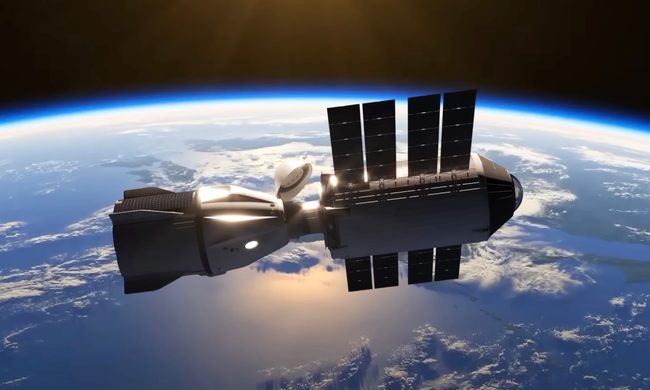
How Vast's space station will look in orbit.

AI data centers already consume vast amounts of electricity and water on Earth, so Silicon Valley has begun looking somewhere considerably more spacious... literally.

Elon Musk's SpaceX and Jeff Bezos' Blue Origin, along with several other companies, have proposed enormous constellations of satellites designed to operate as orbital data centers. However, environmental groups and former space officials are now warning that putting them into orbit at the proposed scale could have severe consequences for Earth's atmosphere and the night sky.

Read more
The first possible exomoon is here, and it makes our Moon look hilariously tiny
Scientists may have found the first exomoon, except this one is the size of Jupiter
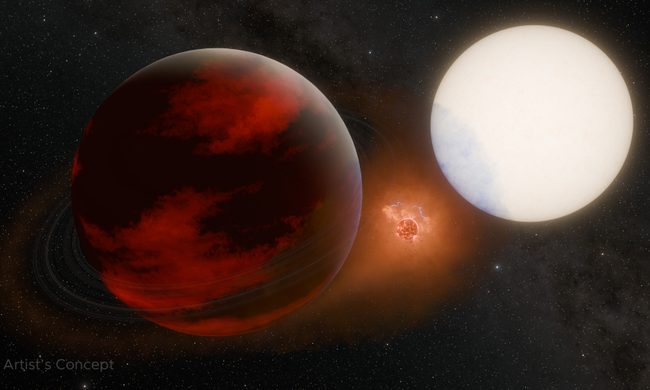
This artist’s concept depicts a potential volcanic moon between the exoplanet WASP-49 b, left, and its parent star. New evidence indicating that a massive sodium cloud observed near WASP-49 b is produced by neither the planet nor the star has prompted researchers to ask if its origin could be an exomoon.

We have already discovered more than 6,000 planets outside of our immediate neighborhood. Yet, finding a moon orbiting one of those distant worlds has proved considerably harder. Astronomers may finally have something close to the real deal, but this particular object stretches the word “moon” almost beyond recognition.

Using the European Southern Observatory’s Very Large Telescope in Chile, researchers detected strong evidence for a moon-like object in the CD-35 2722 system. Further observations are still necessary to confirm the discovery, but it could become the first confidently detected natural satellite outside our solar system. There is still one tiny complication though. This moon is apparently massive.

Read more