If you travel abroad frequently, you’ve probably wondered how to cut back on bill shock. We’ve all been there: you have a great vacation, get back home, and your next postpaid bill drops. Except, it’s much higher than you expected thanks to roaming charges for using your phone abroad.
Most networks offer some form of roaming bundle. While Verizon and AT&T offer paid daily bundles that can quickly rack up a bill of more than $100 per line for the month, T-Mobile remains the only of the big three carriers to offer inclusive roaming for free.
However, it’s not the only carrier to do so, with several virtual networks (MVNOs) running on T-Mobile offering free roaming. One of these is Google Fi, and since its launch, it has attracted roaming customers thanks to inclusive data costs.
How does T-Mobile compare to a big MVNO partner-slash-rival? I tested both on a recent trip and it’s a close battle. Here’s which one I’d pick, and why.
How I tested each network
Over the past month, I’ve traveled from the US to the UK, Norway, Dubai (in the UAE), India and Qatar. Each country has its idiosyncrasies about network coverage, but with both networks essentially using T-Mobile’s roaming agreements, I found that each carrier mostly connects to the same networks.
However, despite that, there was a noticeable difference in both speed and connectivity. T-Mobile’s roaming plan was mostly limited to LTE coverage — which is spotty in some countries more than others — while Google Fi connected to the fastest network available, which was usually 5G. These differences also meant there were noticeable differences in speed, ping, and reliability.
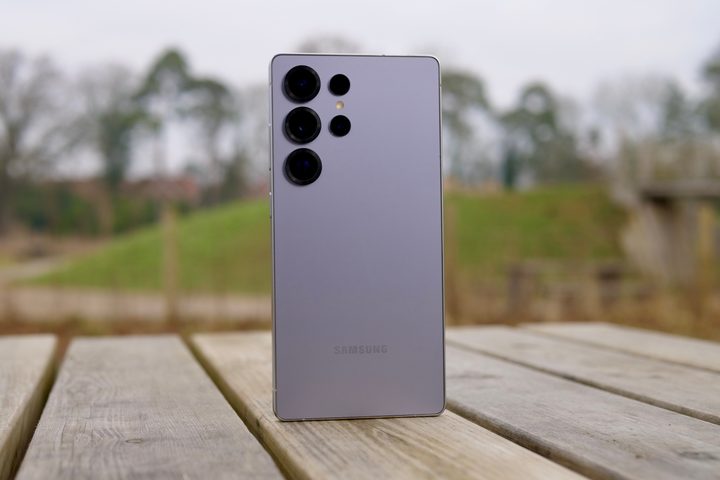
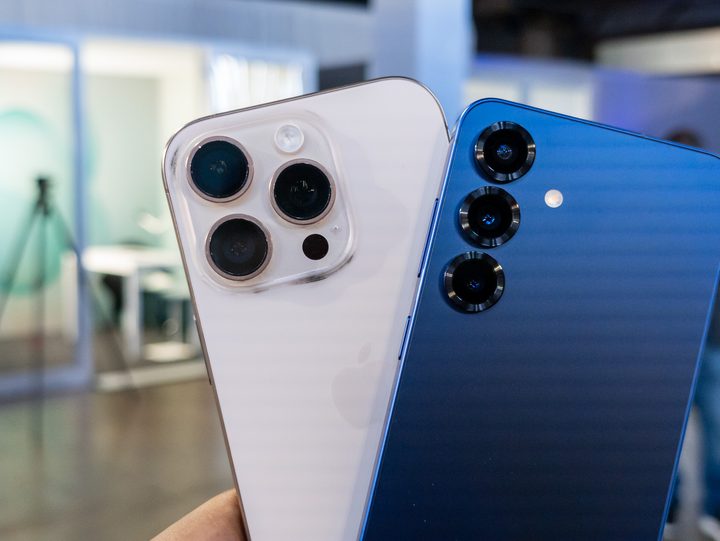
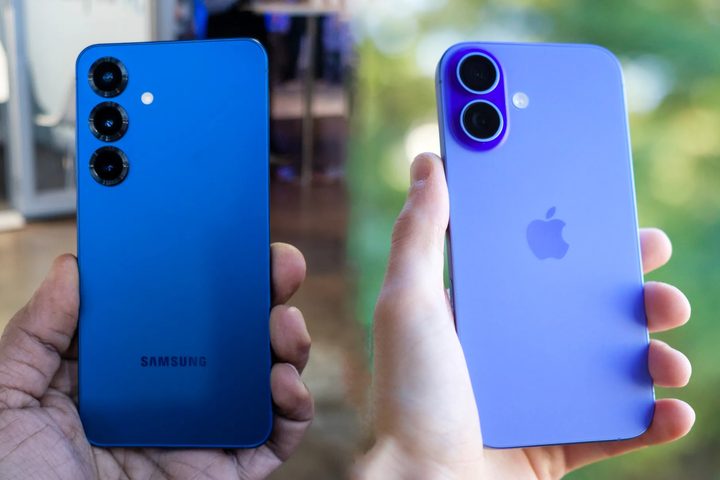
At first, the T-Mobile SIM card was in the Galaxy S25 Ultra with my personal Google Fi SIM in my iPhone 16 Pro, however, I moved the latter to the Galaxy S25 Plus for this test. The net result is as close a comparison as possible between these two carriers and tests that removed as many variables as possible.
Key differences between T-Mobile and Google Fi

The first thing to note is that not all T-Mobile plans include inclusive roaming. We’ve covered the differences in our best cell phone plans guide, but also worth mentioning is that if you have a plan with inclusive data, you’ll only get 5GB at high speed with the remainder limited to GPRS speeds. Having traveled around the world extensively with T-Mobile, you’ll want to pay to get extra high-speed data as these speeds are not usable for most things.
Meanwhile, Google Fi allows you to use your inclusive data at no extra charge while roaming in one of the 100+ supported countries. In theory, this should work when you’re connected to one of their specific carriers in that country, but I’ve found that this doesn’t matter as much. That said, how did each carrier perform?
Data Roaming Costs

The proliferation of voice-over-IP (VOIP) apps like FaceTime, WhatsApp, and Telegram means you’ll probably be using your phone mostly for data so I focused most of my testing on this. However, as you’ll read in the next section, I also tested the call quality and charges between each network as well, although less than the data testing.
Throughout 100 tests, I found that Google Fi is consistently much faster, more reliable, and connected to significantly more 5G networks. It’s not even close. Over 30 days, I used 42.6GB of data on Fi while roaming, which was all included in my Google Fi plan. I’m on the Flexible Plus plan, which includes up to 50GB of data per active live.
My T-Mobile SIM was used sparingly because I knew that the high-speed data was limited to 5GB, but even then, I exceeded this within 7 days. My total usage across both SIM cards was 54GB in one month, which would have cost me an extra $40 with Google Fi (at $10/GB to keep high-speed data after the 50GB fair use policy) or $200 with T-Mobile, who offer a roaming bundle for $50 that includes 15GB of high-speed data.
Considering the difference in cost here, it’s no contest. Google Fi is the clear winner.
Data Roaming Speeds
As I have alluded to, there’s a significant difference in data speeds when roaming with these two networks. Much like the roaming costs section, this is also rather clear-cut: Google Fi is significantly better than T-Mobile, even when using so-called high-speed data on the latter.
I ran a variety of tests in each country, but my limited time in some meant there were fewer data points than in others. Nonetheless, the table below shows a summary of all my testing results.
| Google Fi | T-Mobile | |
| London: 4 tests | ||
| Average Speed | 48.3 Mbps | 12.6 Mbps |
| Average Ping | 473 | 435 |
| # of tests below 1Mbps | 0 | 2 |
| Oslo: 5 tests | ||
| Average Speed | 58.6 Mbps | 18.3 Mbps |
| Average Ping | 429 | 387 |
| # of tests below 1Mbps | 0 | 1 |
| Dubai: 22 tests | ||
| Average Speed | 98.6 Mbps | 19.4 Mbps |
| Average Ping | 365 | 302 |
| # of tests below 1Mbps | 2 | 14 |
| India: 57 tests | ||
| Average Speed | 67.6 Mbps | 9.2 Mbps |
| Average Ping | 421 | 392 |
| # of tests below 1Mbps | 4 | 26 |
| Qatar: 12 tests | ||
| Average Speed | 88.6 Mbps | 10.2 Mbps |
| Average Ping | 491 | 467 |
| # of tests below 1Mbps | 0 | 6 |
You may be wondering why there’s such a difference in the average speeds, and the answer is fairly straightforward: despite T-Mobile consistently having a better ping, the speeds were almost always under 40% of the speeds of the Google Fi SIM. This lends itself to the theory that speeds were being throttled by T-Mobile or the roaming agreement, which was further supported by the fact that many times the speed test would run normally at first, only to quickly slow down considerably. The latter was the opposite of my experience on Google Fi which was slow at first and then sped up considerably.
At first, I thought this was a problem with the T-Mobile account, but it turns out that my account is fine. It seems like T-Mobile is consistently deprioritized, and much more than Google Fi. In many cases, the speeds were under 1Mbps, which I removed from this calculation but have listed the total count of in the table; had I not done so, the average speed would have been less than half of the number in the table above.
I’ve seen this phenomenon before, but I thought it was limited to just the UK. At the same time, I’ve never had T-Mobile speeds this slow before, and I tested this across two SIMs connected to the same account with the same result.
Calls and text charges
While data roaming is undoubtedly the most important part of roaming, you may find yourself needing to make a local call or send a local text. The latter is fairly unlikely, but I found myself needing to make several calls to local businesses while traveling. Here’s where the two networks diverge somewhat.
Neither network charges for texting when abroad, so you can text to your heart’s desire. Google Fi makes it easy to understand call charges when roaming. Calls are charged at a flat $0.20/per minute, although they’re cheaper when made over Wi-Fi. Unfortunately, Wi-Fi calling isn’t available in every country and on every carrier, so I just assume it’s billed at this rate.
T-Mobile also has a similar billing structure, with calls back to the US and in your roaming country charged at $0.25/minute, as long as Simple Global is active on your account. However, T-Mobile’s international bundles — which include the additional high-speed data mentioned above — also come with free unlimited calling, so this could be a great way to fix your roaming costs.
It’s a tight contest but Google Fi is better
If we were to consider the plans alone, it would be a tight contest that T-Mobile would arguably win, but having tested both, there’s no contest for me: Google Fi has the better roaming package.
However, if you’re roaming in a country like the UAE or India where you may need to make voice calls, T-Mobile’s unlimited roaming bundle may be useful. That said, at a rate of $5 per day (with 512MB data), $35 for 10 days (5GB data), or $50 for 30 days (15GB data), it can be quite expensive if you use a lot of data.
If you are an average user who won’t use a lot of data but needs some calls as well, T-Mobile may be the best fit. For most people, Google Fi’s Unlimited Plus package is the best fit, and it’s the one I plan to keep using while traveling.