“We were always coming back, and I think people need to know that.” So said NASA astronaut Butch Wilmore as he and fellow astronaut Suni Williams took questions for the first time since returning from their longer-than-expected stay in orbit.
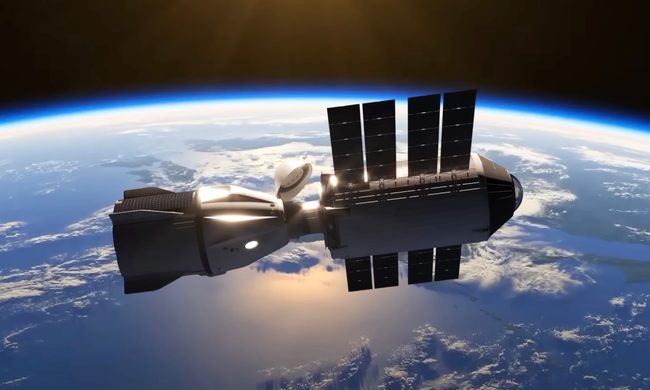
Wilmore and Williams flew to the International Space Station (ISS) in June 2023 in the first crewed flight of Boeing’s Starliner spacecraft. The test mission was only supposed to last eight days, but technical issues with the spacecraft prompted NASA to bring the vehicle home empty, leaving Wilmore and Williams waiting for a ride home.
NASA decided to stick with its usual crew rotation system, which meant sending up Crew-9 in September with two fewer astronauts than originally planned, leaving two seats for Wilmore and Williams when the Crew-9 mission ended on March 18, nine months after they left Earth.
Many news reports over that time described how the pair were “stranded” or “stuck” in space, but NASA were safely managing the situation and the pair were never in any danger.
Speaking to reporters at a NASA news conference on Monday, Williams said she and Wilmore knew very well that the outward journey was a test flight, but when it didn’t turn out as planned, their years of training and orbital experience kicked in and they just got on with the job.
“We are International Space Station crew members, and we’re doing what all of our other friends in the astronaut office do — go and work and train and and do amazing science experiments up on the International Space Station,” Williams said.
When asked about who was responsible for the mission’s unexpected outcome, Wilmore responded: “I’ll start with me. There were questions that I, as the commander of the spacecraft, that I should have asked and I did not. At the time, I didn’t know I needed to, and maybe you could call that hindsight but I’ll start and point the finger and I’ll blame me.”
But Wilmore also added that besides himself, NASA and Boeing “all own this … we’re not going to look back … we’re going to look forward and say, ‘what are we going to use, our lessons learned, from this whole process’ and make sure we are successful in the future.”
Asked about the politicization of the mission, with President Trump and SpaceX boss Elon Musk accusing the Biden administration of blocking efforts to bringing the astronauts home early, Crew-9 astronaut Nick Hague, also at the news conference, said: “When we’re up there operating in space, you don’t feel the politics, you don’t feel any of that. It’s focus strictly on mission. The politics, they don’t make it up there.”
Notably, both astronauts described Boeing’s Starliner spacecraft as “very capable,” with Wilmore adding that he would ride it again if the opportunity ever arises.
“We’re going to rectify all the issues that we encountered,” Wilmore said. “We’re going to fix it, we’re going to make it work. Boeing’s completely committed. NASA is completely committed. And with that, I’d get on in a heartbeat.”
Many reporters were also curious about the first things the two astronauts did when they got home. Hugging loved ones was top of the list, with Williams also embracing her dogs before enjoying a grilled cheese sandwich.
According to Williams, it was only when they got back to terra firma that they fully realized the extent of interest in the mission.
“When we came home, it was like, ‘Wow, there are a lot of people who are interested,’” Williams said, adding that she was “very thankful, very amazed that we could hopefully be one positive element to bring people together.”