1. Home
  2. Space
  3. News

Look out for the Lyrids … and other skywatching tips for April

Add as a preferred source on Google
A person watching shooting stars in the night sky.
Pexels/Raman deep

NASA’s skywatching tips for this month include a meteor shower, planets at dusk and dawn, and a distant “city” of stars.

Let’s kick off with the Lyrids, described by NASA as a “modest” meteor shower that promises up to 15 sightings per hour during its peak overnight on April 21 and into the following morning.

Recommended Videos

“The Lyrids are best observed from the Northern Hemisphere, but can be seen from south of the equator as well,” NASA points out. “View them after about 10:30 p.m. local time until dawn, with the best viewing around 5 a.m.”

As with the every meteor shower, for the best view, find a spot away from city lights or any other kind of light pollution, and with the broadest possible view of the sky. Also, give your eyes a little time to adjust to the darkness as you try to spot the bright flashes of light streaking across the sky.

There are plenty of planets to spot during April, too. Mars, for example, will be high overhead in the south each evening. You can identify it by its salmon-pink color, and when you do, ponder for a moment that NASA has a couple of rovers tootling across the martian surface

Morning skies this month offer a view of Venus — the brightest planet in our solar system —  in the east before dawn, moving a little higher each morning as the month goes on.

And then, at the end of April, you can enjoy a wonderful view of Jupiter appearing close to the crescent moon in the western sky about half an hour after sunset. 

For the final tip, you’ll need to grab a pair of binoculars or a telescope. It’s a chance to view a globular cluster known as M3, a vast collection of stars 34,000 light-years from Earth in our galaxy’s outer reaches. When viewed through binoculars, it appears as a small, fuzzy, patch of light. With a small telescope, however, you’ll see a more defined glow with a slightly grainy texture, and using a telescope that’s 8 inches or larger, the cluster appears as hundreds of individual stars. 

“Globular clusters contain some of the oldest stars in the universe, often over 10 billion years old,” NASA said. “M3 itself is probably 11 to 13 billion years old and contains around half a million stars. And it’s relatively easy to spot in April under dark skies with binoculars or a small telescope.”

For more information on how to locate April’s recommendations, check out NASA’s video midway down the page.

Trevor Mogg
Contributing Editor
Not so many moons ago, Trevor moved from one tea-loving island nation that drives on the left (Britain) to another (Japan)…
Getting to Mars may require a pit stop in orbit, and NASA just tested the nozzle to make that happen
A gas pump nozzle for spacecraft sounds simple. It is not, and that's what makes this test worth paying attention to.
Architecture, Building, Factory

Getting a spacecraft to Mars or beyond requires an enormous amount of fuel, most of which has to be hauled from Earth, adding to the overall cost and weight of the spacecraft. NASA has been working on a different approach, one that could be more efficient and effective.

It wants to refuel a spacecraft in orbit before heading out for the mission. What’s even more interesting is that the space agency just finished testing a component that could make that possible: a cryocoupler.

Read more
Elon Musk’ Starlink could soon offer mobile services as a US carrier
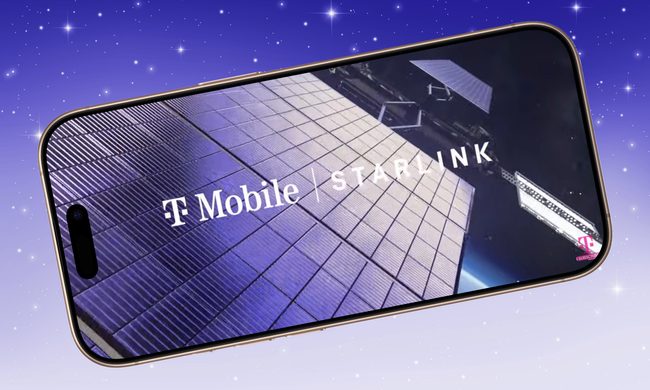
Showcase of T-Mobile Starlink service on an iPhone.

Elon Musk’s Starlink has already changed how millions of people access the internet, especially in places where traditional broadband struggles to reach. Now, the satellite internet service could be preparing for an even bigger leap — becoming your mobile carrier.

According to a Financial Times report, SpaceX has told investors it’s considering launching a retail Starlink mobile service in the US. Instead of simply partnering with wireless carriers, the company could begin selling mobile plans directly to consumers, putting it in direct competition with Verizon, AT&T, and T-Mobile.

Read more
Lightsails have hit another speed bump on the road to interstellar travel
The coolest interstellar travel idea may get betrayed by the light pushing it
LightSail in Earth orbit

Laser-powered lightsails are one of the coolest answers to spaceflight. It might not be as sci-fi-sounding as a warp drive, but now, its practicality has also come under question. Using lightsails, a spacecraft could unfurl an ultra-thin reflective sail and let a powerful laser push it toward another star, without relying on fuel.

The tech was simple and elegant--except it's also more complicated than it sounds. A new preprint from researchers Chao Shen and Jiaze Li of the Harbin Institute of Technology suggests that relativistic lightsails may run into a hidden propulsion problem once they start moving extremely fast.

Read more