1. Home
  2. Space
  3. News

SpaceX is about to try something new with its mighty Starship rocket

Add as a preferred source on Google
The Starship launching from Starbase in October 2024.
SpaceX

SpaceX has just test fired a Super Heavy booster ahead of the Starship’s ninth flight test.

The ground-based firing of the world’s most powerful rocket took place at SpaceX’s Starbase site in Boca Chica, Texas, on Thursday.

Recommended Videos

Notably, the upcoming flight test will involve the first-ever reuse of a Super Heavy booster, with this particular one having made its maiden flight in the seventh test in January 2025.

SpaceX shared footage of Thursday’s static fire in a post on social media:

Static fire of the Super Heavy preparing to launch Starship’s ninth flight test. This booster previously launched and returned on Flight 7 and 29 of its 33 Raptor engines are flight proven pic.twitter.com/XBOvoZezvJ

— SpaceX (@SpaceX) April 3, 2025

The reuse of rocket boosters is a key part of SpaceX’s spaceflight system. The company has been landing and reusing the first stage of its workhorse Falcon 9 rocket for years, helping the company to drastically cut the cost of spaceflight. Doing the same with the Super Heavy, however, is a more challenging endeavor due to the rocket’s much larger size, and because rather than landing on a hard surface like the Falcon 9, SpaceX is using a new method involving giant mechanical arms on the launch tower that secure the Super Heavy above the ground as it returns.

SpaceX has so far managed to successfully bring home the Super Heavy booster three times, achieving the remarkable feat for the first time in October last year. The Elon Musk-led spaceflight company said the first Super Heavy reuse will be a step toward its goal of “zero-touch reflight,” in other words, repeated liftoffs without the Super Heavy touching the ground between missions.

A date has yet to be set for the ninth flight test of the Starship, which comprises the first-stage Super Heavy and the upper stage Starship spacecraft.

The last two tests saw the spacecraft break up in the air due to recurring propulsion system issues linked to structural vibrations and fuel line vulnerabilities. Having now addressed those issues, SpaceX engineers will be desperate for the upcoming test to fill its mission goals, which will include a soft landing of the spacecraft in the Indian Ocean. 

SpaceX is aiming to ramp up testing of the Starship this year as NASA is hoping to use a modified version of the spacecraft to land two astronauts on the moon in the highly anticipated Artemis III mission, which is currently scheduled for 2027. 

Trevor Mogg
Contributing Editor
Not so many moons ago, Trevor moved from one tea-loving island nation that drives on the left (Britain) to another (Japan)…
Amazon’s Starlink rival just crossed a major milestone, but don’t expect perfect internet just yet
Amazon finally showed up to the space internet party
Amazon Leo satellite layout across all launch vehicles

Amazon has taken a significant step toward launching its long-awaited satellite internet service. Following its latest rocket launch, the company now has 396 Project Kuiper satellites in low-Earth orbit, enough to begin offering continuous service across select regions. The milestone keeps Amazon on track for its previously announced goal of launching commercial service by mid-2026.

https://twitter.com/Weber44Chris/status/2072575499461963938?ref_src=twsrc%5Etfw%7Ctwcamp%5Etweetembed%7Ctwterm%5E2072575499461963938%7Ctwgr%5Ed727a1b853cbf519585e7bf2655943afb2f91bb8%7Ctwcon%5Es1_&ref_url=https%3A%2F%2Fwww.theverge.com%2Fscience%2F960563%2Famazon-leo-service-tipping-point

Read more
Amazon’s Starlink rival is set to launch satellite internet later this year
After launching nearly 400 satellites, Amazon says its Leo broadband service will go live later this year.
Atlas V launches 29 Amazon Leo satellites from Cape Canaveral, Florida

Amazon's long-awaited answer to SpaceX's Starlink is finally nearing liftoff. According to an exclusive report from Reuters, the company plans to begin offering its Leo satellite internet service later this year, after its latest rocket launch pushed the constellation to 394 satellites in orbit.

The pieces are finally falling into place for Project Kuiper

Read more
NASA is investing $590 million in private contractors to build humanity’s first Moon outpost
NASA is counting on private companies to land its Moon Base dream.
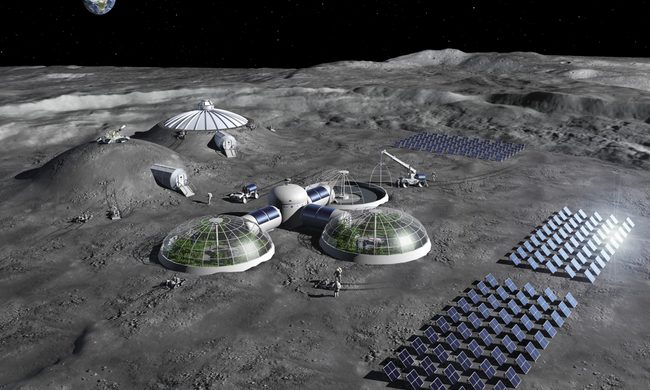
Artist impression of a Moon Base concept, with solar arrays for energy generation, greenhouses for food production, and habitats shielded with regolith.

Building a permanent base on the Moon sounds like science fiction, but NASA is making it feel a lot more real. The agency just handed $590 million in contracts to three private companies for four uncrewed lunar lander missions launching in late 2028.

These missions are part of Phase 1 of NASA's broader $30 billion Moon Base program, which needs to deliver landers, rovers, and scientific cargo up there before astronauts eventually move in. These efforts are closely tied NASA's Artemis program, which sent humans on a lunar flyby in April for the first time since the Apollo era.

Read more