1. Home
  2. Space
  3. News

Digital Trends may earn a commission when you buy through links on our site. Why trust us?

NASA to shut Spot the Station site. Here’s how you can still track the ISS

Add as a preferred source on Google
The International Space Station.
The International Space Station NASA

Did you know that on a clear night, it’s possible to see the International Space Station (ISS) when it passes overhead? Sunlight reflecting off the habitable satellite causes it to shine brightly as it orbits Earth some 250 miles up, making it easy to spot.

For many years now, NASA has operated a service that lets you sign up for text message and email notifications that are sent out shortly before the ISS passes within sight of your registered location. Depending on its path across the sky, the station could remain visible for as long as six minutes, giving you plenty of time to gaze upward and marvel at the fact that humans are living and working aboard the distant, orbital outpost.

Recommended Videos

But from June 12, subscribers will no longer receive the notifications, and the ability to find sighting opportunities near you will also no longer be available on the Spot the Station website.

The good news is that there’s still an easy way to find out when the ISS is passing overhead. 

All you need to do is download NASA’s Spot the Station app, which is available on iOS and Android for smartphones and tablets.

The revamped mobile app offers notifications of ISS viewing opportunities in the U.S. and around the world, and also brings improvements to the user experience. For example, the Spot the Station app can be configured to provide push notifications based on your precise location at any given time.

It also features an augmented reality interface that shows you the location of the space station relative to you, making it easier to locate it as it passes by.

The app also offers up-to-date information on the latest science and research being conducted by astronauts aboard the facility, which has had a continuous human presence for almost a quarter of a century. 

Want to find out more about everyday life aboard the space station? Then check out these videos made on the ISS by visiting astronauts over the years. 

Trevor Mogg
Contributing Editor
Not so many moons ago, Trevor moved from one tea-loving island nation that drives on the left (Britain) to another (Japan)…
Space is becoming Bezos and Musk’s next data center site, and we have every reason to worry
The AI boom is coming for the night sky
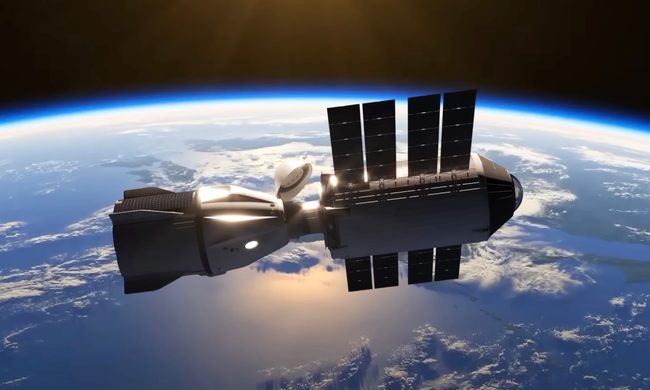
How Vast's space station will look in orbit.

AI data centers already consume vast amounts of electricity and water on Earth, so Silicon Valley has begun looking somewhere considerably more spacious... literally.

Elon Musk's SpaceX and Jeff Bezos' Blue Origin, along with several other companies, have proposed enormous constellations of satellites designed to operate as orbital data centers. However, environmental groups and former space officials are now warning that putting them into orbit at the proposed scale could have severe consequences for Earth's atmosphere and the night sky.

Read more
The first possible exomoon is here, and it makes our Moon look hilariously tiny
Scientists may have found the first exomoon, except this one is the size of Jupiter
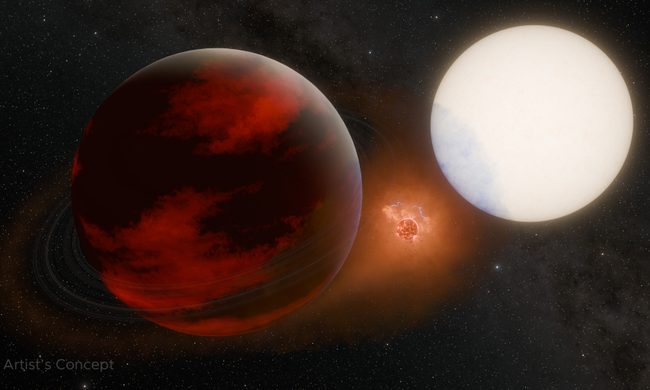
This artist’s concept depicts a potential volcanic moon between the exoplanet WASP-49 b, left, and its parent star. New evidence indicating that a massive sodium cloud observed near WASP-49 b is produced by neither the planet nor the star has prompted researchers to ask if its origin could be an exomoon.

We have already discovered more than 6,000 planets outside of our immediate neighborhood. Yet, finding a moon orbiting one of those distant worlds has proved considerably harder. Astronomers may finally have something close to the real deal, but this particular object stretches the word “moon” almost beyond recognition.

Using the European Southern Observatory’s Very Large Telescope in Chile, researchers detected strong evidence for a moon-like object in the CD-35 2722 system. Further observations are still necessary to confirm the discovery, but it could become the first confidently detected natural satellite outside our solar system. There is still one tiny complication though. This moon is apparently massive.

Read more
China’s answer to SpaceX’s reusable rockets literally catches boosters in a net
SpaceX catches boosters on legs. China just used a net.
Ammunition, Missile, Weapon

SpaceX's playbook for recovering a rocket booster generally involves legs, a precisely controlled vertical landing, and either a concrete pad or a drone ship. 

China just managed to pull off something similar, but in a slightly different way, and on July 10, it tested the method as well.

Read more