1. Home
  2. Space
  3. News

Watch this SpaceX rocket launch on 15th anniversary of first Falcon 9 liftoff

Add as a preferred source on Google

A SpaceX Falcon 9 rocket roared skyward on Wednesday on what was also the 15th anniversary of the first-ever Falcon 9 launch.

The anniversary mission launched from the Vandenberg Space Force Base in California, deploying 27 Starlink internet satellites to low-Earth orbit.

Here’s the SpaceX rocket leaving the launchpad:

Falcon 9 lifts off from pad 4E in California on the 15th anniversary of its first launch pic.twitter.com/W99cLA0EJD

— SpaceX (@SpaceX) June 4, 2025

Wednesday’s mission was the 26th flight for this particular first-stage booster, which previously launched Sentinel-6 Michael Freilich, DART, Transporter-7, Iridium OneWeb, SDA-0B, NROL-113, NROL-167, NROL-149, and 17 Starlink missions. 

Recommended Videos

Following stage separation, the Falcon 9 booster returned and landed on the Of Course I Still Love You droneship, which was waiting in the Pacific Ocean.

It’s been a busy 15 years for SpaceX, during which it has perfected the launch-to-landing system of its workhorse Falcon 9 rocket.

SpaceX’s first launch of the Falcon 9 took at Cape Canaveral in Florida on June 4, 2010. The inaugural flight marked a significant milestone in commercial spaceflight history as it was the first time that a privately developed rocket of Falcon 9’s size had been successfully launched to orbit.

The mission deployed a prototype of the Dragon spacecraft, called the Dragon Spacecraft Qualification Unit. The uncrewed test flight evaluated the rocket’s performance and the spacecraft’s aerodynamic capabilities, with the latter completing more than 300 orbits before reentering Earth’s atmosphere and burning up later that month. You can watch the highlights of the historic flight below:

The successful inaugural launch laid the foundation for SpaceX’s subsequent achievements, including the first commercial spacecraft to dock with the International Space Station (ISS) in 2012 and the development of reusable rocket technology. Today, the Falcon 9, Dragon, and Crew Dragon make regular runs to the ISS, carrying both cargo and crew. The workhorse rocket also deploys satellites for government and commercial entities globally, and, as in Wednesday’s mission, is helping to build out SpaceX’s internet-from-space Starlink service with numerous satellite deployments in low-Earth orbit. 

Importantly, the Falcon 9 was also a stepping stone to the development of the mighty Starship, the most powerful rocket ever to fly. The Starship comprises the first-stage Super Heavy booster and the upper-stage Starship spacecraft. The 120-meter-tall vehicle made its first flight in April 2023, and its most recent one just last month. The rocket will one day be used for crew and cargo voyages to the moon, and possibly Mars, too. 

Trevor Mogg
Contributing Editor
Not so many moons ago, Trevor moved from one tea-loving island nation that drives on the left (Britain) to another (Japan)…
NASA is investing $590 million in private contractors to build humanity’s first Moon outpost
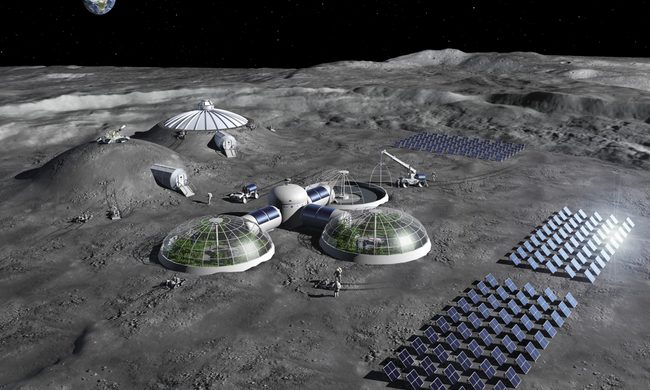
NASA is counting on private companies to land its Moon Base dream.
Artist impression of a Moon Base concept, with solar arrays for energy generation, greenhouses for food production, and habitats shielded with regolith.

Building a permanent base on the Moon sounds like science fiction, but NASA is making it feel a lot more real. The agency just handed $590 million in contracts to three private companies for four uncrewed lunar lander missions launching in late 2028.

These missions are part of Phase 1 of NASA's broader $30 billion Moon Base program, which needs to deliver landers, rovers, and scientific cargo up there before astronauts eventually move in. These efforts are closely tied NASA's Artemis program, which sent humans on a lunar flyby in April for the first time since the Apollo era.

Read more
Getting to Mars may require a pit stop in orbit, and NASA just tested the nozzle to make that happen
A gas pump nozzle for spacecraft sounds simple. It is not, and that's what makes this test worth paying attention to.
Architecture, Building, Factory

Getting a spacecraft to Mars or beyond requires an enormous amount of fuel, most of which has to be hauled from Earth, adding to the overall cost and weight of the spacecraft. NASA has been working on a different approach, one that could be more efficient and effective.

It wants to refuel a spacecraft in orbit before heading out for the mission. What’s even more interesting is that the space agency just finished testing a component that could make that possible: a cryocoupler.

Read more
Elon Musk’ Starlink could soon offer mobile services as a US carrier
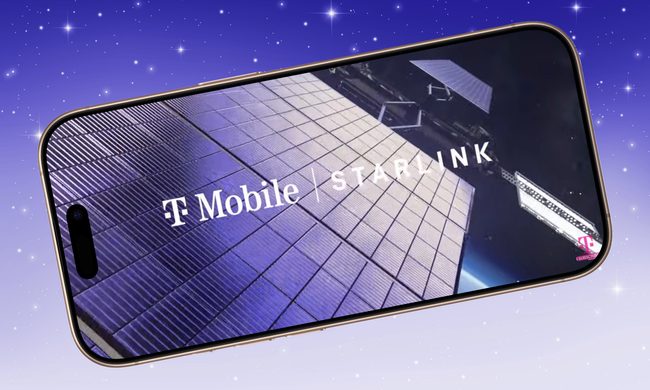
Showcase of T-Mobile Starlink service on an iPhone.

Elon Musk’s Starlink has already changed how millions of people access the internet, especially in places where traditional broadband struggles to reach. Now, the satellite internet service could be preparing for an even bigger leap — becoming your mobile carrier.

According to a Financial Times report, SpaceX has told investors it’s considering launching a retail Starlink mobile service in the US. Instead of simply partnering with wireless carriers, the company could begin selling mobile plans directly to consumers, putting it in direct competition with Verizon, AT&T, and T-Mobile.

Read more