Apple’s execution with note-taking on macOS leaves a lot of room for improvement. There are so many areas where it feels like an abandoned project, instead of the future-proof experience that native iOS apps often deliver. In fact, the disparity across its own platforms is troubling.
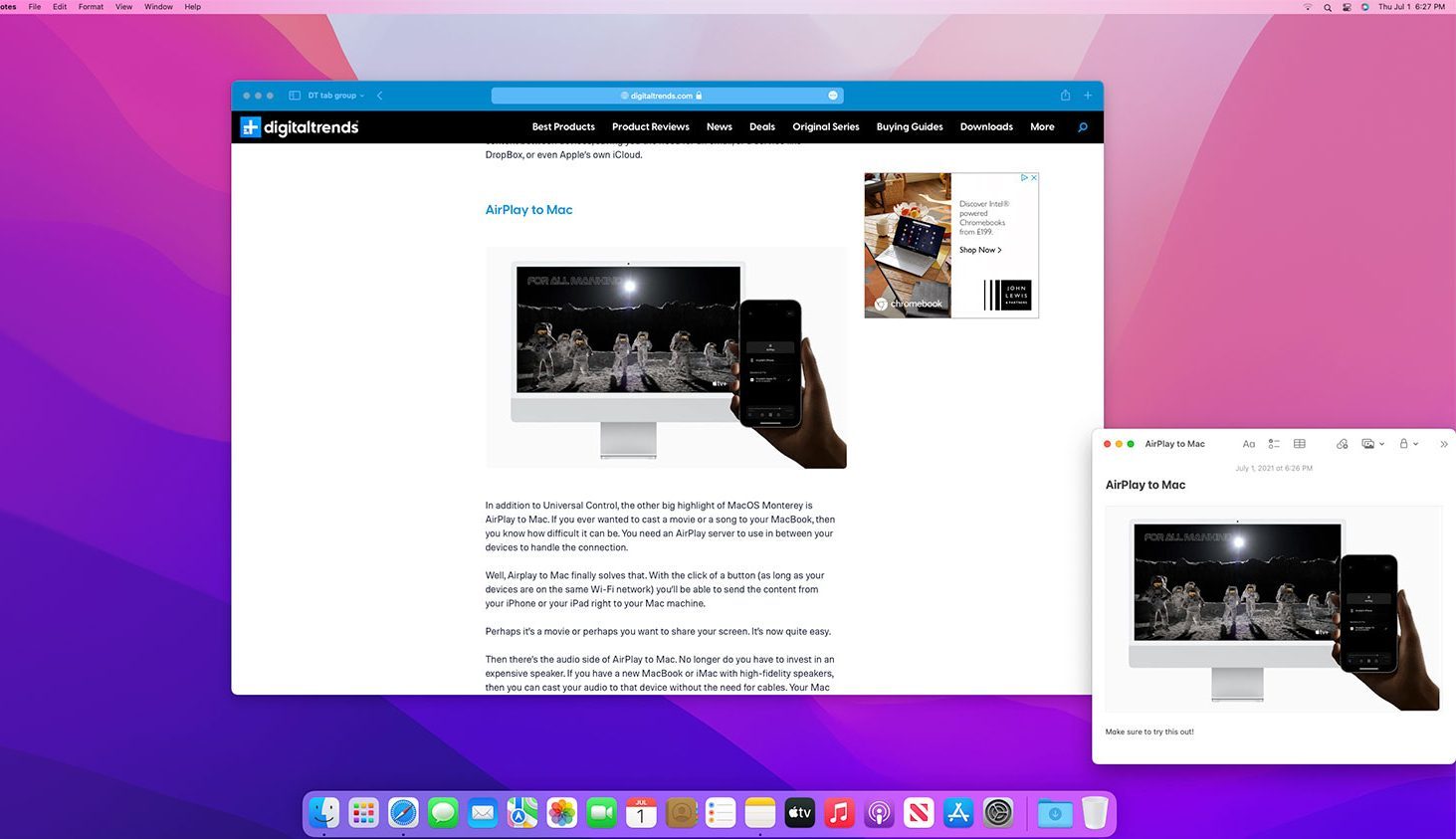
Take, for example, iPadOS and iOS. You can quickly launch a notes page straight from the control, without having to close the existing app and launch the Notes app. On macOS, you don’t get any such facility.
If you want to seamlessly save a webpage or its contents as a standalone note, there are a few hurdles. For web-based workflow, you must use the Safari browser, because only in Apple’s browser does the Share Sheet offer a quick notes shortcut. Otherwise, trigger the Notes app with a keyboard shortcut.
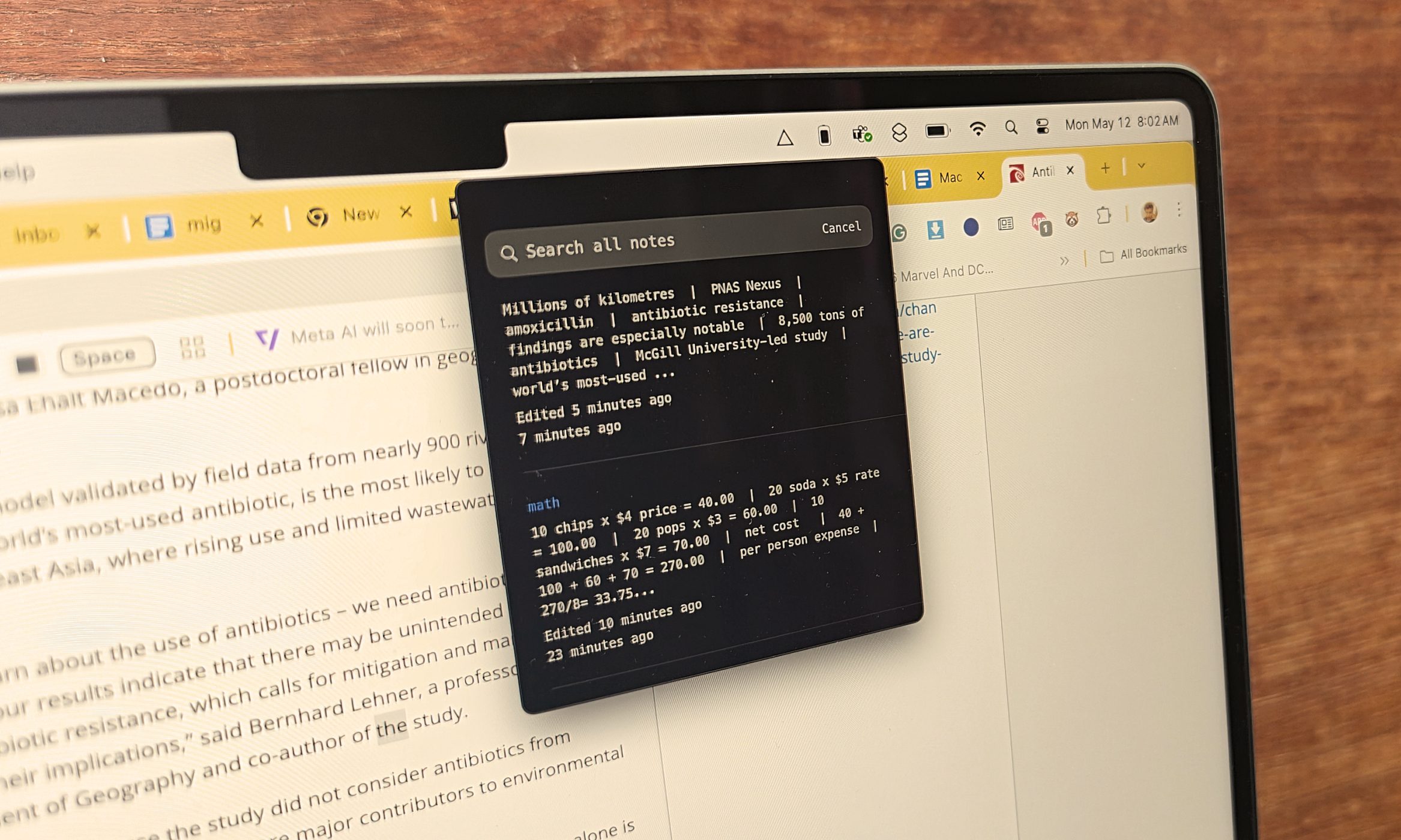
Why won’t Apple put a Quick Notes button in the control center, or implement it in the Menu Bar, is simply perplexing. The whole concept of burdening users with another app window, when there is a solution waiting to be activated, also puzzles me.
There’s plenty of inspiration
I’ve often focused on the missed opportunity that is macOS’ Menu Bar. On the other hand, the open-source and indie-developer community has created so many lightweight and deeply practical utilities that live predominantly as a Menu Bar app.
Maccy, for example, solves the native clipboard problem on Macs elegantly. Antinote is another stunning app that I use daily. For saving information, I rely on the excellent Sticky Notes for Safari app that tags all my takeaways wherever I want on a webpage.
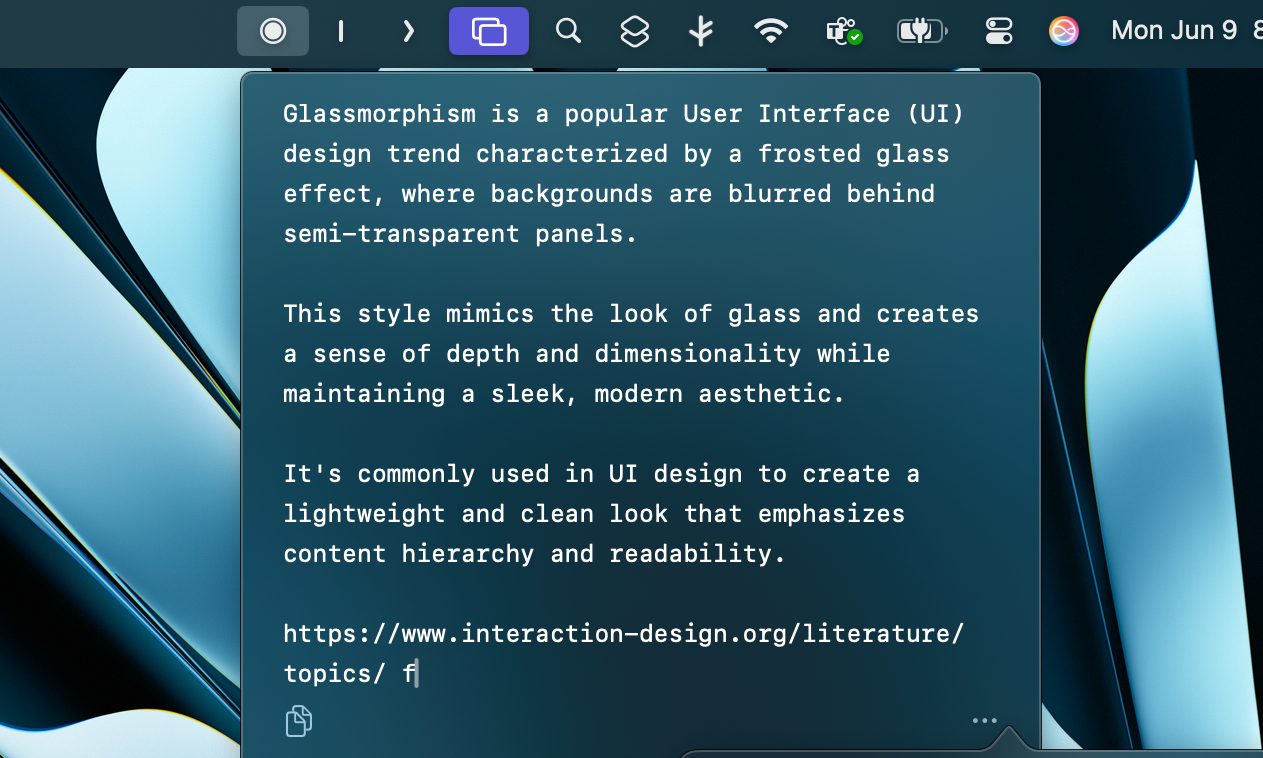
A couple of weeks ago, I stumbled upon BarNotes. It’s a neat app that essentially serves as a scratchpad and lives in the Menu Bar. It has been designed in the same aesthetic format as a native Apple app.
As far as functional depth goes, you can adjust the font size, pick between four styles, and change the notepad color. I like the “transparent” effect, as it sits well with Apple’s own glassmorphic design elements that first arrived with macOS Big Sur.
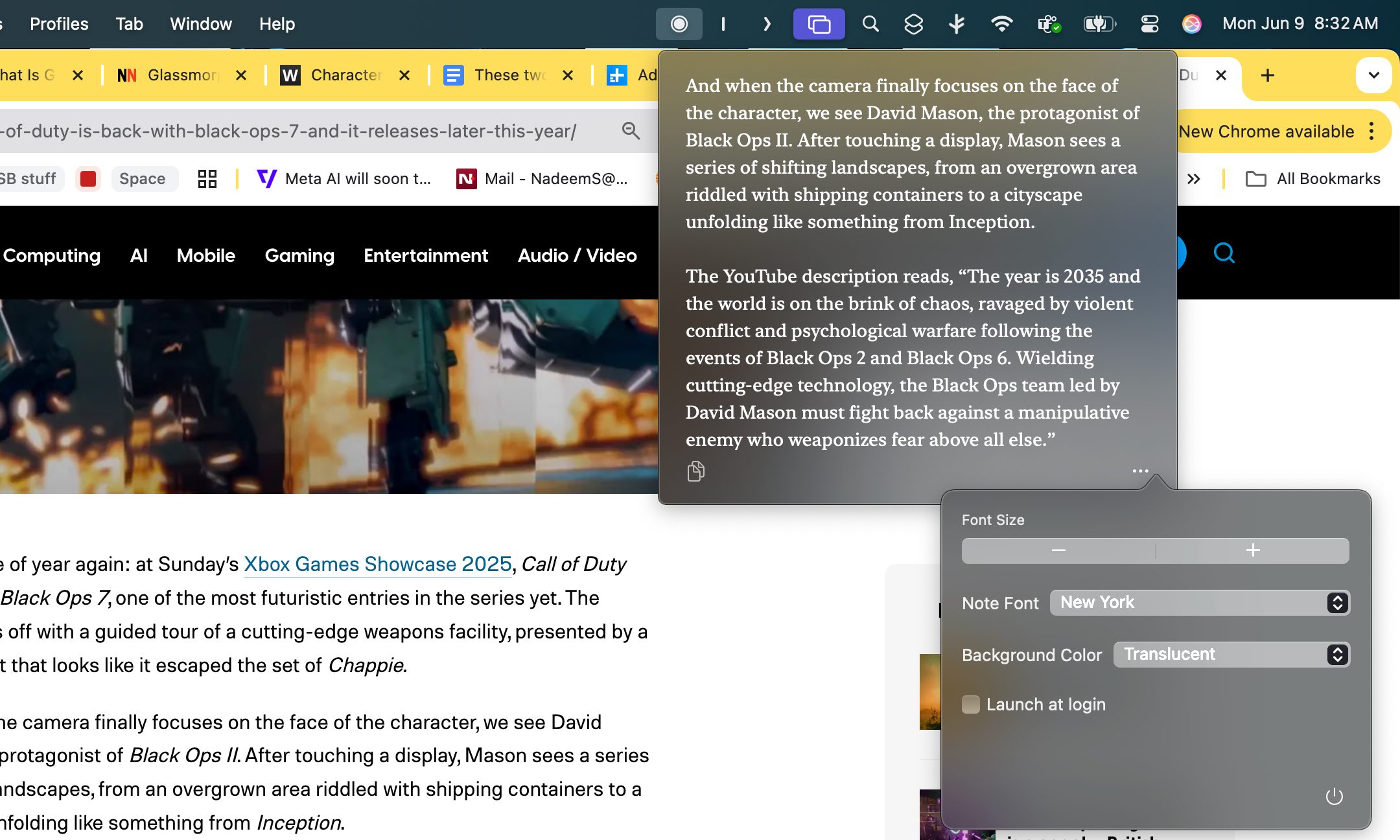
It doesn’t burden you with too many features that aren’t required from a digital scratchpad, and also strips all the stylistic formatting when you paste your content, which is a convenient touch. The best part? BarNotes is free and available on the App Store, which means you don’t have to worry about the security aspect, either.
Tab Notes Lite is another free app that lives in the Menu Bar and offers a few extra goodies. It lets you click on the screen’s edge to take a note, pick up the local storage folder, and offers customizable shortcuts, as well. There are a whole bunch of paid apps, too, but I recommend sticking with the free options if they get the job done.
Apple Intelligence
The best place for AI is the low-stakes scenario where it can handle the task at hand with minimal scope for correction. Like asking it to compose a quick note in a formal tone, convert the file format, or send it as an email. The kind of tasks Google Gemini can currently handle, and so can Apple Intelligence.
The major hurdle, however, is the platform-wide implementation. For example, the AI-powered Writing Tools system doesn’t always work reliably, especially within third-party software. For example, when writing a paper in Docs on Chrome, a right-click doesn’t show Writing Tools in the context menu.
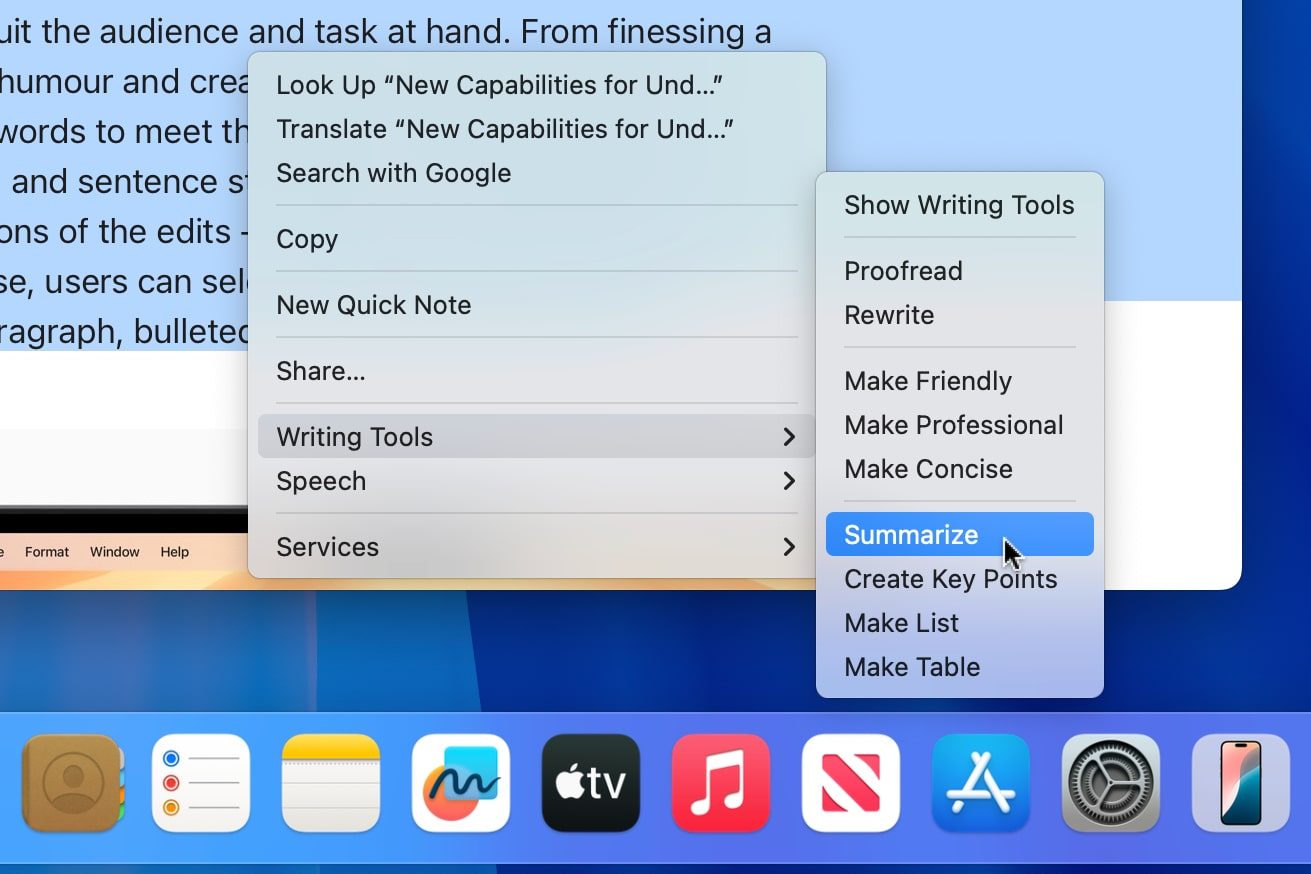
To use it, you must copy-paste the text passage in the Notes app and then repeat the process to perform an AI-driven task, such as proofreading, style conversion, and summarization. If there were a Menu Bar shortcut for Notes, users wouldn’t have to do a back-and-forth between two apps in order to get the best of Apple Intelligence.
I would love for Apple to put Notes within the Menu Bar and make Writing Tools a crucial part of it. Then there is the situation with integration. Gemini will seamlessly perform tasks across Gmail, Maps, Drive, and Calendar, among other apps, using text and/or voice input. Apple Intelligence, despite its ChatGPT integration, can’t do any of that, yet.
Make it happen, Apple
It was only last week that ChatGPT gained the ability to access files in your Google Drive, among other cloud storage services such as Dropbox, SharePoint, OneDrive, and Box. Moreover, the rumored Gemini integration within Apple Intelligence is nowhere to be seen. I dearly hope WWDC 2025 can offer some clarity on that front.
And while at it, Apple should add some quickly accessible voice input features, as well. Narrating a quick idea instead of having to type it out, and then getting a transcribed version (with summaries) would go a long way toward boosting day-to-day productivity.
With Notes’ arrival in macOS Menu Bar, supercharged by Apple Intelligence and meaningful integration with other services, users won’t have to jump between different apps, or even pay money for basic third-party software. Apple must fill these fundamental gaps, and I am dearly hoping that the company pays attention to this aspect at its developers conference.