1. Home
  2. Cars
  3. Legacy Archives

By Jove, they’ve got it! Caterham and Alpine sports car ready for 2016 production

Add as a preferred source on Google

Right now, Caterham, the British track-day carmaker, only makes, well, track cars. While this might be a fun business segment for automotive designers, it’s not a highly lucrative one.

That’s why Caterham has partnered with French automaker Renault to build a new road-going sports car. And it’s now headed to production for 2016.

Recommended Videos

For Renault’s half of the partnership, it’ll use the high-speed hellion to re-start its failed Alpine performance brand. Although designed side by side upon the same aluminum chassis, the two cars, unlike the Subaru BRZ and Toyota FR-S joint venture, won’t look the same.

In fact, Renault’s design chief Laurens van den Acker was quick to specify in an Autocar interview: “The two cars need to be clearly different. It needs to be not just a sports car, but also a car for aesthetes.”
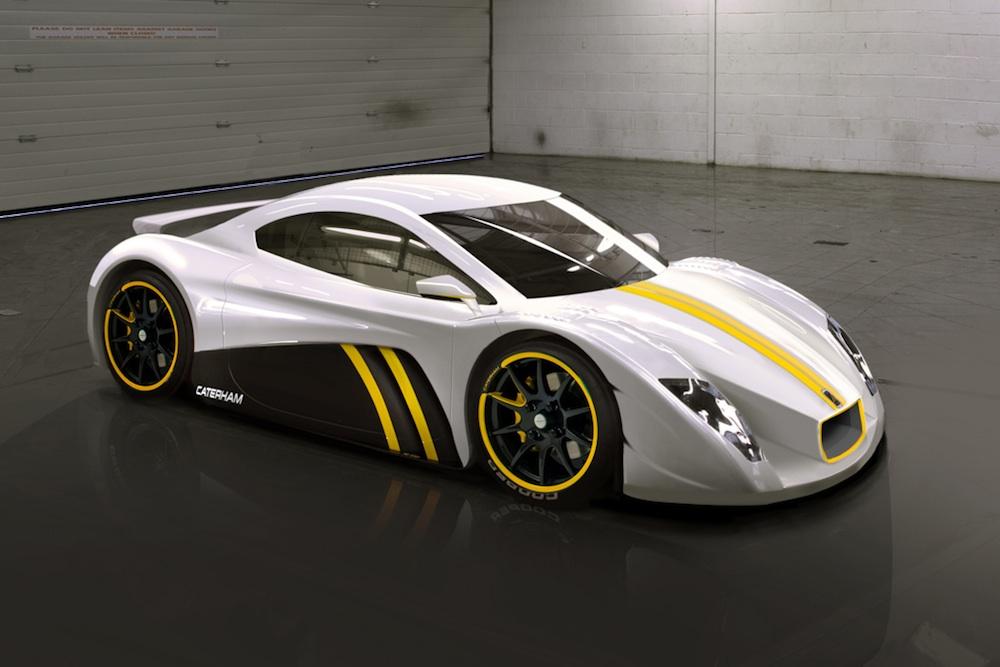
Caterham sports car
Image used with permission by copyright holder

Delightfully, not only will the looks be distinctive between the two, so will the steering traits, and handling characteristics.

As for power output, the Caterham will pump out somewhere between 250 to 300 horsepower, while Autocar reports that it’s still unclear how many ponies the Alpine will produce. Pegged at only 1,100 kg, the Caterham is likely to have a power-to-weight ratio of around 270 hp per ton, not unlike the Alfa Romeo 4C.

Caterham hopes to produce and sell as many as 3,000 units per year of the sports car presently referred to as the C120. Intriguingly, this would represent a 500-percent sales increase for the small British car firm.

Surely, the Alpine will not be offered in the U.S. The Caterham, however, just might make its way Stateside. Let’s hope.

As soon as we learn official information, we’ll be sure to bring it to you. Until then, let’s try to think of what silly name the cars might get. The Caterham Biscay? The Alpine A1102020?

Main photo: Autocar

Nick Jaynes
Former Automotive Editor
Nick Jaynes is the Automotive Editor for Digital Trends. He developed a passion for writing about cars working his way…
Tesla launches the six-seat Model Y Long Wheelbase in the US
The stretched electric SUV brings more space, more comfort, and up to 325 miles of range.
Tesla Model Y Long Wheelbase Featured

Tesla is giving the Model Y a little more breathing room. The company has officially launched the Model Y Long Wheelbase in the United States and Puerto Rico, introducing a stretched version of its best-selling electric SUV with a three-row, six-seat layout that's designed to make family road trips a lot more comfortable.

A bigger Model Y with a focus on comfort

Read more
A stolen Kia reveals the hidden limits of connected car technology
Kia can see where your stolen car is. GDPR means it won't share that in real time. That is the entire problem.
Kia EV3 design

If you’re buying a car with connected car technology, thinking it would help you to recover it in the event of theft, you might want to recalibrate your expectations. 

A recent incident in the UK, in which a car owner had three tracking devices installed in his car and still couldn’t recover it, led the carmaker to state that connected-car technology isn’t a “certified security vehicle tracker” (via the BBC).

Read more
Cambrige experts find utterly simple fix for longer lasting EV batteries. Just put some pressure on it.
Scientists found a way to make EV batteries last longer without reinventing the battery
EV Charging

EV battery breakthroughs typically involve new chemistry, exotic materials, or faster charging/higher capacity. But a new study reveals that you can skip all the fancy stuff and go with a very simple solution, Researchers from the University of Cambridge found that putting the battery under the right amount of pressure actually helps.

The study was about how physical pressure affects lithium-ion battery life, which found that keeping cells under constant pressure could double their lifespan. The work was published in Nature Energy, and the team says the improvement came without changing the active materials, electrolyte, or basic battery chemistry.

Read more