1. Home
  2. Computing
  3. Legacy Archives

Panasonic Brightens Up Toughbooks

Add as a preferred source on Google
Panasonic Brightens Up Toughbooks
Image used with permission by copyright holder

Panasonic has taken the wraps off two new Toughbook models, plainly indicating it has faith in the market for ruggedized, outdoor capable portable computers for use in law enforcement, on job sites, in the field, and other harsh conditions.

Panasonic’s CF-30 notebook and CF-19 tablet PCs now come with 1.66 GHz Intel Core 2 Duo processors, 60 to 80 GB hard drives, 512 MB of RAM (expandable for 4 GB, and daylight-readable 1,024 by 768 pixel displays Panasonic is claiming are the brightest in the world without lowering battery life. The screen on the CF-19 tablet puts out 550 cd/m2, while the CF-30 notebook sports an industry-leading 1,000 cd/m2 of brightness.

Recommended Videos

“These next generation Toughbooks are the result of close collaboration between our R&D labs, engineering teams, Panasonic component divisions and, most importantly, our customers, who depend upon us to meet the needs of their business by supplying mobile devices they can rely on and trust,” said Rance Poehler, president of Panasonic Computer Solutions Company, in a statement. “Our Customers have asked us for brighter displays that can be used in any environment. Delivering a 1,000 NIT screen is a major accomplishment for Panasonic’s engineers, who are unparalleled in their ability to strike a balance between form and function in rugged devices. This is clearly the brightest LCD in any battery powered computer in the Industry today and another first for Panasonic.”

The new ToughBooks also feature all the ruggedized features customers have come to expect, including magnesium alloy bodies, water and dust resistance, and shock-mounted screens and hard drives certified to the MIL-STD-810F standard for drops, shocks, vibration, and temperature extremes. The systems also offer multiple wireless connectivity solutions—WLAN, WWAN, GPS, and Bluetooth— Trusted Platform Module v1.2, and optional fingerprint readers, and feature backward compatibility for vehicle mounting solutions developed for the previous generation of Toughbooks.

The new Toughbooks will be available in December, with the CF-30 notebook starting at $4,699 and the CF-19 starting at $4,199.


Geoff Duncan
Former Contributor
Geoff Duncan writes, programs, edits, plays music, and delights in making software misbehave. He's probably the only member…
Google Assistant finally has a shutdown date, and it’s only weeks away
Google Assistant starts shutting down September 4 as Gemini takes over.
google assistant mobile.

Google Assistant’s long goodbye now has a firm date. Google says it will begin discontinuing the voice assistant on eligible mobile devices on September 4, 2026, according to an email sent to users and shared publicly on Reddit.

The transition may take several weeks, so Assistant won’t vanish from every device at once. Once the change reaches an eligible Android device, Gemini will replace Assistant with no option to switch back.

Read more
ChatGPT Atlas is shutting down and it has some homework left before you migrate
OpenAI is pulling the plug on Atlas, so start packing your bookmarks
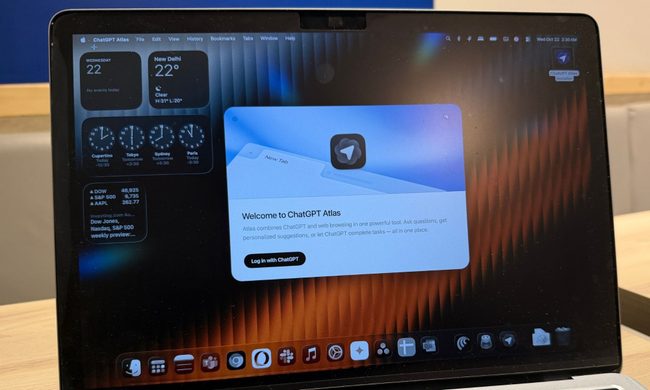
ChatGPT Atlas browser on a MacBook.

ChatGPT Atlas is heading toward an early grave, and anyone still using OpenAI's browser has a small pile of homework to finish before the shutdown. OpenAI has confirmed that Atlas is scheduled to stop working on August 9, 2026.

After that date, the browser may no longer be operational. So users won't be able to browse the web or get access to its agent-powered workflows. Meanwhile, the company is moving those browser-based capabilities into ChatGPT and Codex. But unfortunately, the transition isn't as convenient as users may hope.

Read more
Google quietly rewrote Chrome’s AI documentation with important answers to on-device AI downloads
Google quietly clarified how Chrome handles on-device AI downloads.
Google Chrome with Gemini

I remember Chrome quietly downloading a 4GB AI model onto PCs. It raised plenty of eyebrows in May 2026. The next day, a Chrome executive clarified how on-device AI is core to its “developer & security strategy,” and that the model processes data locally. 

Now, Chrome has updated its support documents to explain the download and, more importantly, include an option to stop it. 

Read more