1. Home
  2. Computing
  3. Legacy Archives

Google to Help Film Entire Universe

Add as a preferred source on Google

Internet giant Google can be accused of having its head in the clouds—or, given a recent partnership with NASA, perhaps in the stratosphere or low Earth orbit—taking on major projects just because they’re, well, there.

Now word comes that Google has signed on with a group of 19 universities and national labs to assist with the planning, operation, and data management for the Large Synoptic Survey Telescope (LSST). Scheduled to go into operation on top of Cerro Pachón in Chile in 2013, the LSST is an 8.4-meter telescope to be equipped with a three-billion pixel digital camera and take motion images of the entire visible sky. When running, the LSST may generate more than 30 terabytes of image information every night—and that’s a data management task of Google-y proportions.

Recommended Videos

"The LSST will be the world’s most powerful survey telescope, with vast data management challenges," said Donald Sweeney, LSST Project Manager. "LSST engineers and scientists have been collaborating with Google on a number of these exciting opportunities. Even though the Universe is very old, exciting things happen every second. The LSST will be able to find these events hundreds of times better than today’s other big telescopes. Google will help us organize and present the seemingly overwhelming volumes of data collected by the LSST."

"Partnering with Google will significantly enhance our ability to convert LSST data to knowledge," said University of California, Davis, Professor and LSST Director J. Anthony Tyson. "LSST will change the way we observe the universe by mapping the visible sky deeply, rapidly, and continuously. It will open entirely new windows on our universe, yielding discoveries in a variety of areas of astronomy and fundamental physics. Innovations in data management will play a central role."

The LSST is expected to help answer important astronomic questions regarding dark matter, the origins of the solar system, and provide immeasurable data on extra solar planets, stellar events, Kuiper belt objects, and even comets and near-Earth asteroids which could present significant threats to life on Earth.

The announcement of Google’s involvement with the LSST project is timed to coincide with the national meeting of the American Astronomical Society beginning Sunday in Seattle. The LSST is a public-private partnership, but the data it produces will be public.

Geoff Duncan
Former Contributor
Geoff Duncan writes, programs, edits, plays music, and delights in making software misbehave. He's probably the only member…
How to install macOS 27 Golden Gate public beta on your Mac?
From a smarter Siri to a more reliable Spotlight, here's your full walkthrough for installing macOS 27 Golden Gate's public beta today.
macOS 27 Golden Gate

Along with iOS 27’s public beta, Apple has also released macOS 27 Golden Gate’s public beta build, so that early adopters can get their hands on the new features, including Siri AI, and provide timely feedback to help ensure a stable iOS launch in September. 

If you’re sold on all the new features but don’t want to put your faithful MacBook through developer beta duty, a public beta offers a much more refined experience. To install macOS 27’s public beta, follow the steps given below. 

Read more
Microsoft is finally fixing the worst thing about Windows Search, but you can’t try it just yet
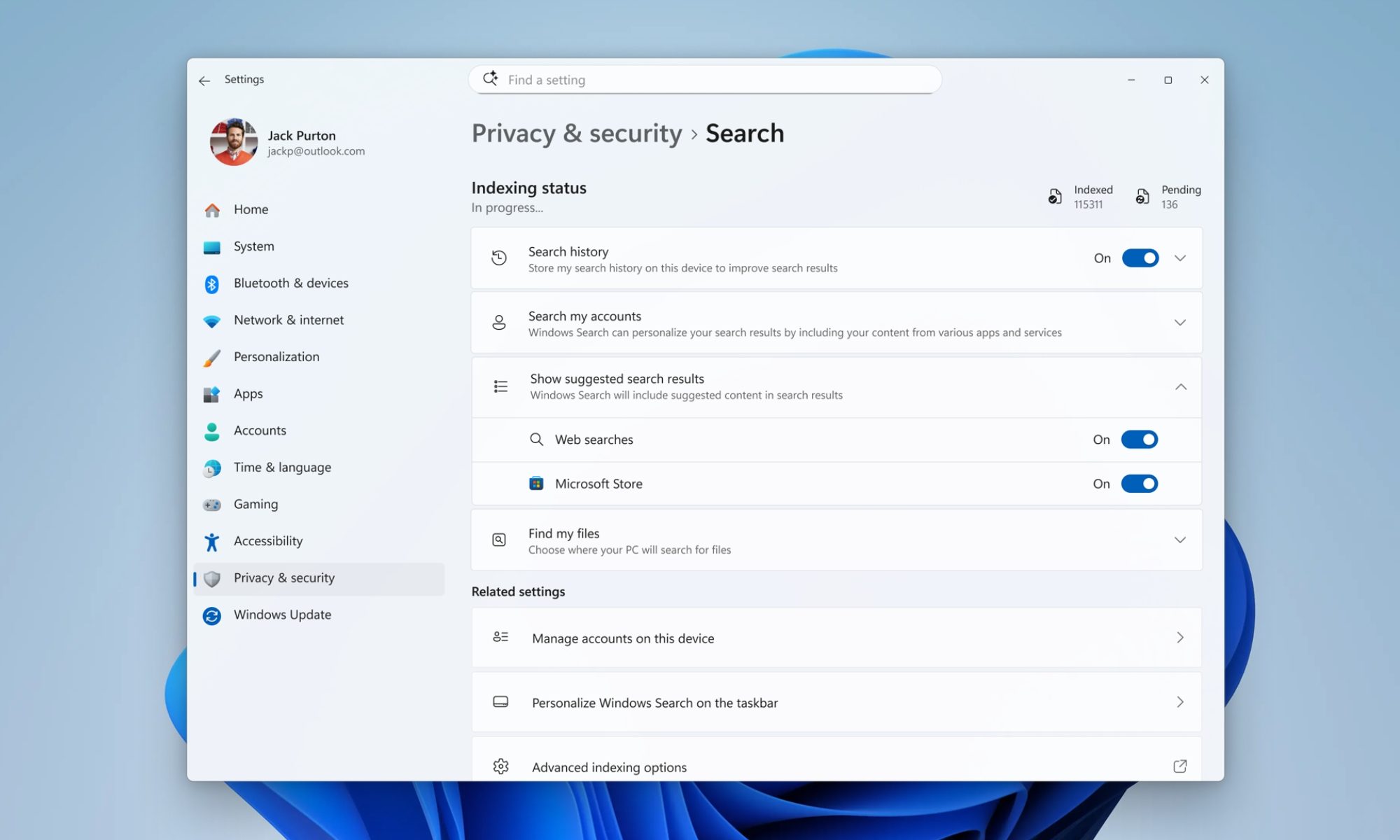
Windows Insiders in the Experimental channel are getting a Search experience that finally feels less of a billboard and more of what users actually need.
Page, Text, Person

Windows Search has been a mess for years, and I do not use that word lightly. Open it to find a file, and you get trending Bing topics, Microsoft Store promotions, and an AI tools tile that just opens a browser. 

That is changing, but not immediately for all users. Microsoft is rolling out a batch of Windows Search improvements to Insiders in the Experimental channel, and for once, this isn't just a fresh coat of paint.

Read more
Apple doesn’t want to share this AirPods feature with Meta, but the EU may force its hand
Spring 2027, EU only, built under DMA pressure.
The front of the Ray-Ban Meta smartglasses.

I’ve been an AirPods user for the last four years, and one of the things that makes it genuinely hard to leave behind is the seamless, almost magical pairing experience across devices. Open an AirPods case near your iPhone, and a pop-up appears within seconds. Switch to your Mac and the audio follows. 

However, the experience is limited only to Apple devices. Doesn’t matter whether you have one of the coolest pieces of tech on the market right now; if it’s not Apple, it won’t get the same treatment. However, that might change for the Meta Quest or the Ray-Ban Meta glasses, thanks to pressure from the EU. 

Read more