What are we going to do with you, Nintendo? This week, President Satoru Iwata attempted to explain what will be done to stop the bleeding caused by the Wii U’s poor performance as he stood before weary investors in Tokyo. He announced a multi-stage approach to addressing the company’s woes, triage that includes delivering more games that take advantage of the console’s unique features, capitalizing on opportunities in the mobile market to spread awareness of the Nintendo brand, and striking out in new, health-conscious (possibly non-gaming) hardware directions. Now that Nintendo’s shared the full transcript of Iwata’s address, we’ve got a little more clarity on what’s being done.
The most promising planned changes to Nintendo’s gaming business relate to the way the company treats user accounts and the overall responsiveness of the Wii U console. Here’s the thing though: there’s no escaping the fact that these ostensible improvements amount to catch-up. For most of the past 10 years, Nintendo’s been behind the technology curve in terms of what its core audience wants. While Microsoft and Sony put effort into consolidating their network infrastructures and improving usability, Nintendo contented itself with pinning its future to an admittedly innovative control scheme. It turned out great for the Wii, but now the company is in the awkward position of hyping its fans on features that are simply expected in the modern-day gaming environment.
Nintendo’s top competitors, Microsoft and Sony, have had an integrated account system for more than a decade.
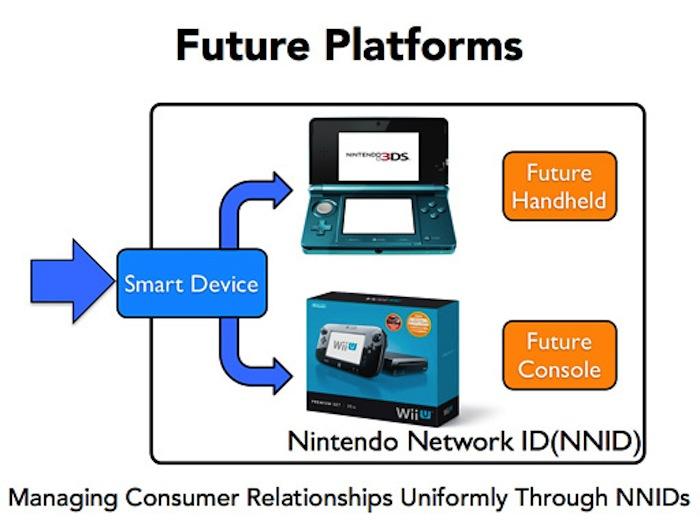
Integrated accounts create more flexibility when delivering content, especially if future Nintendo consoles and handhelds rely on a unified operating system across all platforms (as Iwata suggested). It’s like the relationship between your iOS or Android smartphones and tablets. Most apps that work on one, work on the other. Especially games. Sony is already toying with this sort of approach in its one-purchase-fits-all Cross-Buy titles that work on PlayStation 3/4 and PS Vita alike. Iwata also suggested a possible scenario where players with lots of games purchased on their account could see discounts on future purchases as a reward for loyal patronage.
The integrated account system already exists on the Wii U and 3DS. Content you own doesn’t follow you to new or replacement hardware yet, but it will surely come in time. So will a new quick-start menu on the Wii U GamePad. It’s meant to give players the ability to access to their games faster than they have in the past, right on the console’s second-screen controller, with no need to return to the Wara Wara Plaza on your TV. The company’s engineers also appear to have cracked issues with running Virtual Console DS games on the Wii U, so expect to see those added to the eShop at some point.
It’s all catch-up. Microsoft and Sony built much of this into their hardware years ago. Their competing services have evolved to the point now where you build on these basic features Nintendo’s adding with enhancements like cloud-assisted gaming on the Xbox One and game-streaming via the upcoming PlayStation Now service. Cutting down the Wii U’s atrocious load times is a great step, but harbor no illusions. Iwata’s optimism for Nintendo’s future stems in large part from a push to close the technology gap between his company and its competition.
To be clear: drawing even with Microsoft and Sony must be a vital focus for Nintendo at this point. The Wii U isn’t equipped to compete with the PlayStation 4 or Xbox One, and the casual gaming revolution that many credit the Wii for sparking has long since been taken over by phones and tablets. Nintendo’s big advantage is in its first-party catalog, beloved characters like Mario, Link, and Samus Aran, but – as the Wii U quickly taught us all – this stable of favorites is not enough to re-build an audience that strayed to high-def consoles while the Wii floundered for years with outdated hardware. Tremendous games like Pikmin 3 and Super Mario 3D World still weren’t enough to drive console sales.
There’s no easy fix here. A quick launch feature and added Virtual Console support won’t save the Wii U in the short-term. The next Mario Kart game, which Iwata confirmed is coming in May 2014, won’t either. Games like that and the upcoming Super Smash Bros. Wii U will certainly bolster the library even more, but it’s very likely that the Wii U will never achieve blockbuster console status. It lags too far behind the competitors’ new hardware in terms of raw power and it’s not priced competitively.
Iwata’s statements suggest that Nintendo continues to believe price isn’t the issue for the Wii U, but that’s just wrong. He spoke during the investor address of growing sales by expanding into new markets, even places that might require more modest pricing as compared to the more “developed” markets, as he put it. The failure here is in not recognizing that the $300 Wii U is in the worst possible position, price-wise. It’s $100 less than the considerably more powerful PS4 and it’s $100 more than the still-viable, content-rich PlayStation 3/Xbox 360 platforms. Iwata claims that gamers need to be better educated on what the Wii U’s unique features offer, but if the sum of that is the GamePad and its near-field communication capabilities – as he suggested – then he’s wrong. The NFC support isn’t a bad thing, but much like the original Wii’s motion controls, it feels like a clever gimmick.
Iwata expressed hope for Nintendo’s chances with future hardware pushes. The company’s vision for improving its customers’ quality of life is noble, and the stated goal of developing of non-wearable health monitoring technology is a definitive embrace of very current tech trends. It might not be gaming, but let’s not forget that Nintendo started out peddling trading cards. This is a company that has a track record of adapting. How and when that happens remains to be seen, but it’s hard right now to feel hopeful about Nintendo’s future in gaming.