1. Home
  2. Computing
  3. News

You might soon see unheard RAM brands appear inside your PC

Amid DRAM scarcity and ballooning costs, HP, Dell, Asus, and Acer may pivot to Chinese memory makers, a strategic tweak that could ripple across the PC ecosystem.

Add as a preferred source on Google
HP EliteBook X Glip G2i AI Laptop.
HP

In a rare moment of concern and chaos in the PC industry, popular manufacturers like HP, Dell, Acer, and Asus are reportedly exploring sourcing dynamic random-access memory (DRAM) chips from Chinese suppliers.

The move comes as a global memory crisis is squeezing supply, sending prices through the roof, and forcing companies to rethink their short-term strategies about procuring DRAM and NAND flash modules (via Nikkei Asia).

PC makers eye Chinese memory as supply tightens

Traditionally, all the renowned PC makers we’re talking about have relied on memory giants like Micron, Samsung, and SK Hynix, companies that have handled both quality and scale for OEMs.

Recommended Videos

However, as these memory makers prioritize AI data centers and supporting infrastructure for their customers, consumer-grade PC memory is getting much less attention than it deserves, resulting in tighter inventories and higher costs while threatening new product launches.

HP has already taken the first step by “qualifying” memory products (determining whether they meet the company’s quality standards) from a Chinese supplier, ChangXin Memory Technologies (CXMT), to diversify its supply chain. Interestingly, Dell is also analyzing components from the same suppliers.

The other two manufacturers, Acer and Asus, have asked their production partners in China to check potential memory suppliers for notebooks and other systems; to me, it sounds like they’re keeping the suppliers as backup options.

What’s in it for American buyers?

The most immediate benefit of turning to Chinese buyers is supply diversity and security, which is crucial for brands operating on thin margins (especially in the entry-level and mid-range segments). It’s not about securing cheaper memory chips at scale; it’s about securing them in time to meet product launch deadlines.

For end users, this could result in stable product availability (fewer “out of stock” lineups) and controlled pricing. Further, wider adoption of Chinese memory could shift the global semiconductor landscape, potentially challenging traditional suppliers’ market share and revenue and freeing up production for consumer-grade devices.

Does this mean that the RAM stick in your next PC or laptop could be from a Chinese supplier? I don’t think so. Manufacturers would most likely use the Chinese supply chain to meet the global demand, i.e., outside of the United States.

However, if the traditional memory makers don’t ease supply and the memory crisis worsens over time, you might expect computers sold in America to feature RAM modules from lesser-known names.

Shikhar Mehrotra
For more than five years, Shikhar has consistently simplified developments in the field of consumer tech and presented them…
I went hands-on with Dell’s new slim laptops, and the new 14S hits a sweet spot below XPS prices
Dell’s new 14S and 16S may be the balanced Windows laptops I’ve been waiting for
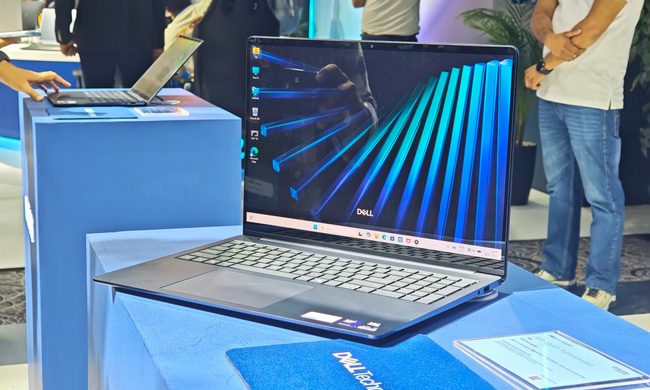
Dell 16S on display

Dell’s new XPS 13 recently gave me renewed hope for affordable Windows laptops. Its $699 starting price. Its sharp touchscreen display and compact aluminum design make it a compelling alternative to the MacBook Neo. But at the same event, Dell had more in store for us.

I also spent time with the Dell 14S and Dell 16S, which are two laptops that target buyers who like the XPS 13's slim and polished approach. These two laptops target buyers who like the XPS 13's slim and polished approach but need more performance, a larger battery, or a roomier display. They also occupy an interesting position in Dell’s lineup. With prices just a couple of hundred dollars above the XPS 13 in the US, the duo sit right between the inexpensive XPS 13 and below the far more premium XPS 14.

Read more
OpenAI president confirms a family of ChatGPT devices is coming soon
Brockman won't confirm the smart speaker rumors, but he's already thinking bigger than one gadget.
OpenAI logo on Microsoft surface

Talking to your computer instead of typing to it might sound like a sci-fi fantasy, but OpenAI is betting big on it. In a chat with Joanna Stern on her YouTube channel, OpenAI president Greg Brockman confirmed that the company is not stopping at just one gadget. Get ready, because a whole family of devices is on the way.

When Stern brought up rumors of an AI smart speaker, Brockman did not confirm or deny it. Instead, he said, "we're building a family of devices," adding that the focus is not on any single product but on delivering value over time. As for a launch date, Brockman kept things just as mysterious, only saying, "you should expect them soon."

Read more
Microsoft is making a Copilot super app to end your AI app juggling
Chat, code, and your autonomous work buddy are all moving under one roof this year.
Microsoft Copilot website open on Microsoft Surface

Microsoft has been dropping Copilot everywhere lately: chat, Cowork, coding, autonomous agents, and now it looks like all of it is getting stuffed into one place. During Wednesday's earnings call, CEO Satya Nadella confirmed the company is building an AI super app that brings every one of these Copilot experiences under a single roof.

What exactly is Microsoft building?

Read more