  1. Home
  2. Computing
  3. Phones
  4. News

Fitbit is becoming Google Health, and it’s getting a bunch of wellness upgrades

Google is finally treating health tracking as a platform play, pulling in medical records, third-party fitness data, and AI coaching in a way that Fitbit's standalone app was never built to handle.

Add as a preferred source on Google
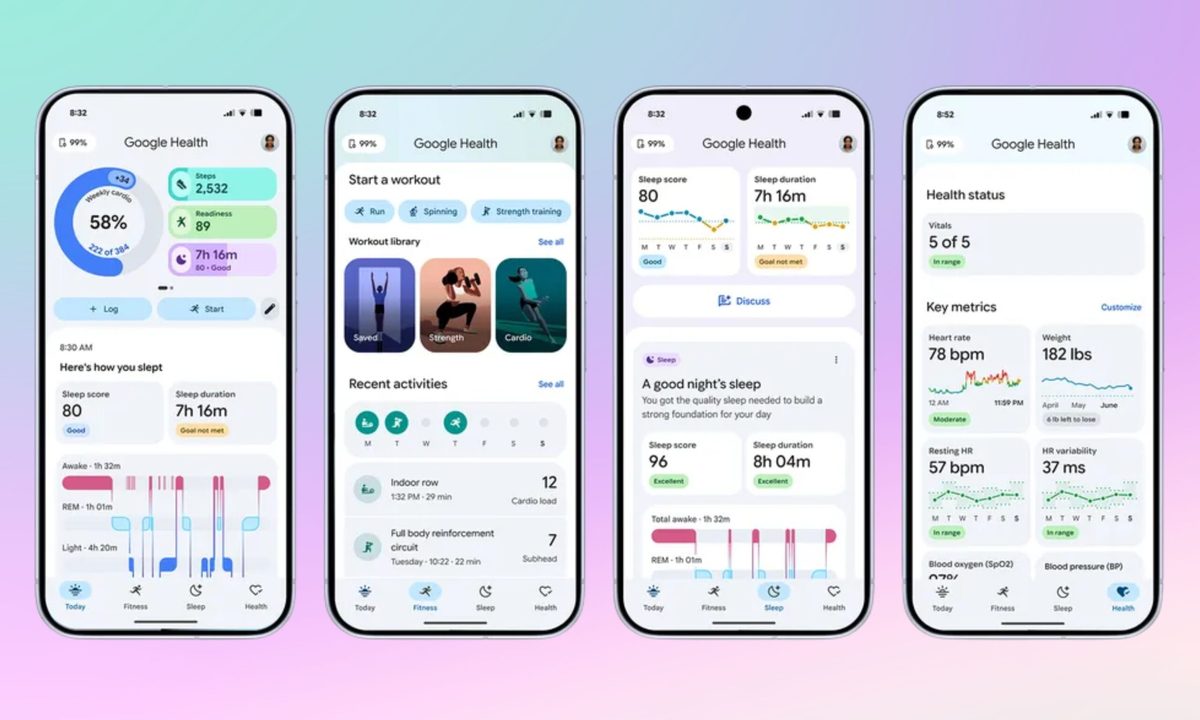
New Google Health app.
Google

Google is officially pulling the plug on the Fitbit app, replacing it with the new Google Health app on May 19, 2026. It is quite ironic, as the company just announced a new Fitbit Air screenless fitness tracker, but the change will take place via an OTA update. 

This is happening after Fitbit’s fifteen-year run, wherein it gathered millions of fitness-focused users and provided them with various health trackers and meaningful insights via its software. 

Get up close and personal with your health.

On May 26, the Fitbit app becomes the #GoogleHealth app for both Android and iOS— combining the best of Fitbit tracking with the power of Google to create a more holistic wellness experience.

Learn more: https://t.co/ABOOMCvA0J pic.twitter.com/d7UAyE7YK6

— Google Health (@googlehealth) May 7, 2026

Should Fitbit users worry?

Google has already confirmed on X that the “Fitbit devices aren’t going anywhere,” so all the user data stays in place. In simpler words, all your workout logs from the Fitbit app will still show up in Google Health.

Recommended Videos

For now, the Fitbit brand stays alive on the hardware front, implying that all its devices will still be available and supported. However, it’s the Fitbit app that’s getting subsumed by Google, in its new Health app.

Google has not confirmed whether existing Fitbit Premium subscribers will be automatically migrated to Google Health Premium. What is confirmed is that the monthly price remains $9.99, while the annual subscription has been revised from $79.99 to $99.99.

What’s new in Google Health?

The most significant addition is multimodal logging. Google Health users can log food, workouts, and health data by typing, speaking, or taking a picture via their smartphone. The app uses AI to automatically recognise and log the nutritional content from the photo (a meaningful addition over the Fitbit app).

Users in the United States can directly upload their medical records to the app, and the Google Health Coach (a new version of the Fitbit Personal Health Coach available via the Health Premium membership) can reference that data while answering health-related questions. Sleep tracking accuracy improves by 15% over the previous Fitbit app’s models, thanks to upgraded machine learning.

The app can also pull data from Apple Health, Peloton, and MyFitnessPal, making it much more open than the Fitbit ecosystem. Rounding out the changes is a customisable dashboard, expanded social leaderboards for steps and cardio load, and improved cycle tracking.

This is a fundamental shift from a device-centric app that counted your steps and stored your workout details to a health platform that connects wearables, medical records, nutritional details, and AI-based coaching, all under one roof. 

Shikhar Mehrotra
For more than five years, Shikhar has consistently simplified developments in the field of consumer tech and presented them…
AI browsers like Perplexity Comet can be tricked into spilling your password through BioShocking exploit
Six AI browsers were found leaking saved passwords and many of them haven't fixed it yet.
MacBook Air in hand, Comet browser loaded—let’s see what Perplexity’s AI can really do

Security researchers just found a strange way to trick AI browsers into handing over your passwords. They managed to trick AI browser agents into exposing sensitive data like saved passwords, session cookies, and private tokens by disguising the theft as part of a harmless "game."

The technique is called BioShocking, named after the popular video game BioShock, where a brainwashed character is manipulated into believing a false reality. Once an AI browser falls for the same trick, it stops following its own safety rules entirely.

Read more
Google Play’s latest speed boost goes way beyond the phone
Play Store v52.1 targets app install performance across Android devices, including cars, TVs, watches, tablets, and phones.
Google Play Store Photo

Google is rolling out Play Store v52.1 with changes built around a practical Android problem, getting apps installed more smoothly on very different kinds of hardware.

The update focuses on Play Store infrastructure, with Google pointing to stability, performance, and better memory use while a device adds an app. That install path now has to work on phones, tablets, Wear OS watches, Google TV, Android TV, Android Auto, and cars running Android Automotive.

Read more
Peacock Premium Plus joins YouTube as the streaming bundle battle gets messier
The $16.99 subscription brings Peacock’s sports-heavy catalog into YouTube, with account details still unclear.
Adult, Female, Person

Peacock Premium Plus is now available through YouTube Primetime Channels, giving viewers a new way to add a major streaming service inside YouTube.

The $16.99-per-month subscription brings Peacock’s live sports, NBC and Bravo shows, originals, Universal movies, Telemundo programming, and Spanish-language FIFA World Cup 2026 coverage into YouTube’s channel marketplace.

Read more