As modern homes become more sealed and indoor living becomes more intensive, healthy air is becoming a practical home comfort issue rather than a niche wellness concern.
With remote work keeping more residents indoors for extended stretches, heightened focus on indoor air cleanliness has intensified amid seasonal pollen surges, wildfire haze and other outdoor contaminants. In response, a growing number of companies, including Cozeware, are exploring ways to bring fresh outdoor air indoors without requiring costly renovations or permanent installation, particularly for apartment dwellers and renters.
Spiked indoor CO₂ concentrations, pet dander and wildfire smoke infiltration can constantly degrade living comfort, yet most standard air solutions fail apartment and rental dwellers due to renovation limits.
The Indoor Air Problem
Opening windows is often the simplest way to bring fresh air indoors, but it is not always a practical year-round solution. Seasonal pollen, wildfire smoke, extreme weather, and outdoor noise can make natural ventilation difficult, particularly for people living in urban areas or spending long hours at home.
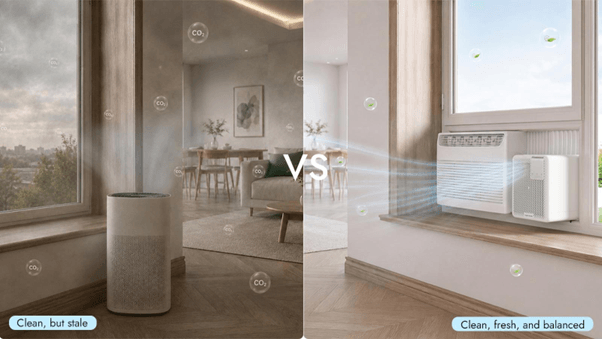
As a result, many households rely on one of three common approaches to managing indoor air quality. Built-in HVAC ventilation systems can improve airflow but often require costly installation, construction work, or modifications that may not be feasible for renters. Standalone air purifiers can help reduce airborne pollutants, but they generally do not bring fresh outdoor air indoors or address rising indoor CO₂ levels. Basic window fans can improve air circulation, yet most lack advanced filtration or real-time air-quality monitoring.
These limitations have created growing interest in a new product category that combines ventilation, multi-stage filtration, and real-time air quality tracking in a single system.
Modern Solutions
As worries over indoor air quality continue to grow, manufacturers are exploring new ways to combine ventilation, filtration, and smart monitoring into more accessible products. Rather than relying solely on permanent HVAC upgrades, many newer systems aim to provide cleaner air through portable and easily removable window-mounted units that work within the constraints of apartments, rental properties, and older homes.
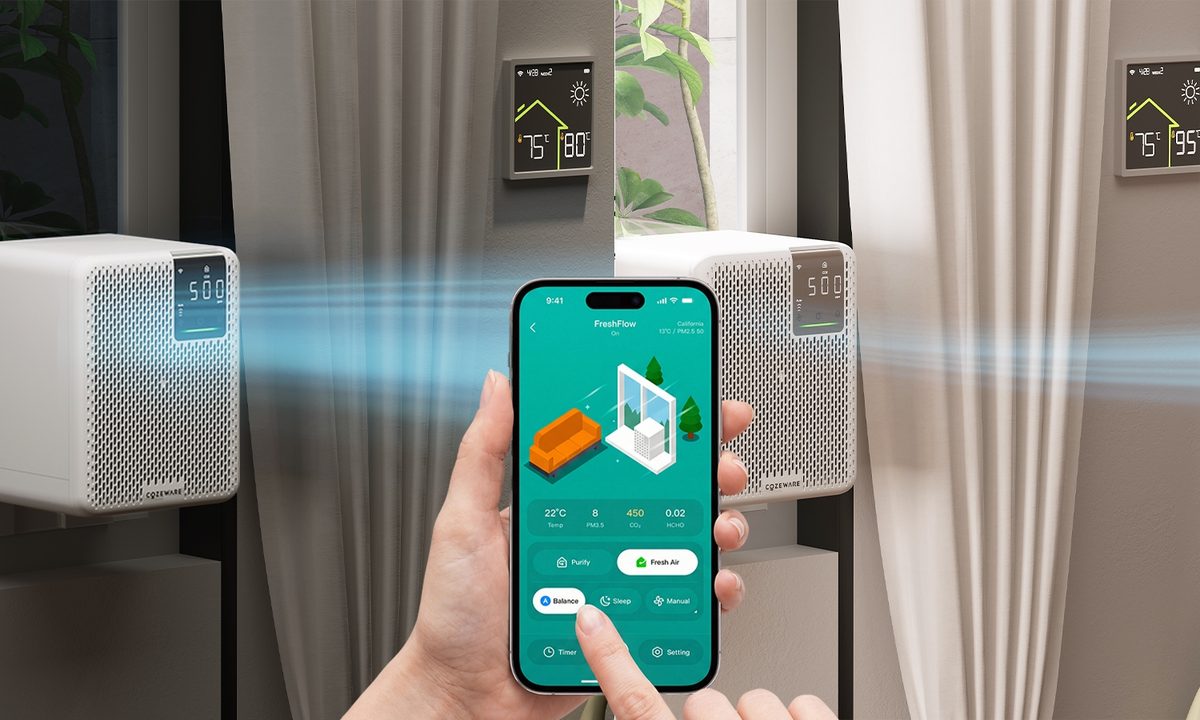
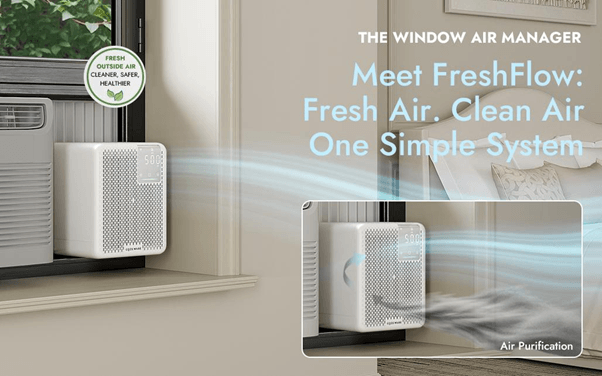
One example is Cozeware’s FreshFlow, a window-mounted system designed for tool-free installation. The product addresses a challenge familiar to many apartment residents and remote workers: opening a window can improve ventilation and reduce indoor CO₂ buildup, but it may also let in pollen, wildfire smoke, outdoor noise, and unwanted heat or cold. Keeping windows closed helps maintain indoor comfort, yet can leave stale air trapped inside for extended periods.
FreshFlow combines filtered fresh-air intake with indoor air purification and real-time CO₂ monitoring, illustrating a growing trend toward solutions that balance ventilation, comfort, and energy efficiency in a single system.
Lab-controlled internal testing shows the ventilator can bring CO₂ levels in a 35 m² room down to readings consistent with ambient outdoor air within one hour. Results will differ based on room dimensions, number of occupants, existing air exchange and surrounding environmental variables.
For renters, avoiding the need for wall drilling and landlord approval can be a significant advantage, especially with a setup process that can be completed in about 10 minutes. Its ultra-quiet running performance makes it perfectly suited for bedrooms and remote work offices, while filtration options are designed to help address common concerns including pollen, pet dander, and wildfire smoke. The product reflects a broader industry effort to make ventilation and air-quality management more accessible without requiring major renovations.
Final Thoughts
Indoor air quality is emerging as a core consideration of modern home design and everyday living. As people spend more time working, studying, and relaxing indoors, interest in practical ways to improve ventilation and reduce airborne pollutants is likely to continue growing.
At the same time, apartment living, rental restrictions, and rising renovation costs are creating demand for products that enable effortless installation. As a result, manufacturers are exploring new approaches that combine fresh air delivery, fine filtration and smart air quality tracking in more accessible formats.
Products such as FreshFlow reflect this broader shift toward more accessible indoor-air solutions. As consumers prioritize effective ventilation, wildfire smoke filtration and daily living comfort, all-in-one indoor air treatment technologies might become increasingly prevalent in modern households.
The information provided in this article is for general informational and educational purposes only. It is not intended as legal, financial, medical, or professional advice. Readers should not rely solely on the content of this article and are encouraged to seek professional advice tailored to their specific circumstances. We disclaim any liability for any loss or damage arising directly or indirectly from the use of, or reliance on, the information presented.