
Walk into almost any small business that has figured out its operations and you will find the same thing: a laser printer running quietly in a corner, barely noticed, doing its job. The other version of this story usually involves a printer that was never designed for the demands of a busy office. As teams grow and document volumes increase, the gaps show up fast: slower output, connectivity that needs babysitting, and a queue that backs up precisely when it cannot afford to.
The difference between those two offices is not dramatic. But it compounds across every workday, every shared print job, every document that needs to go out on time.
Small business printing is a different problem than home printing. The volume is higher, the users are multiple, the documents are consequential, and the tolerance for downtime is low. Laser printers are built for that operating environment. Here is why businesses that rely on high-volume printing often choose laser printers and where the advantages show up most in day-to-day office workflows.
What laser printing actually does differently
The mechanics are worth understanding briefly because they explain most of the practical differences.
Inkjet printers work by spraying microscopic droplets of liquid ink onto paper through tiny nozzles. Laser printers use an entirely different process: a laser beam draws the image onto a charged drum, powdered toner adheres to the charged areas, and heat fuses it permanently to the paper. The result is output that is dry the instant it comes out, resistant to smearing, and produced at speeds that inkjet printers cannot match for text documents.
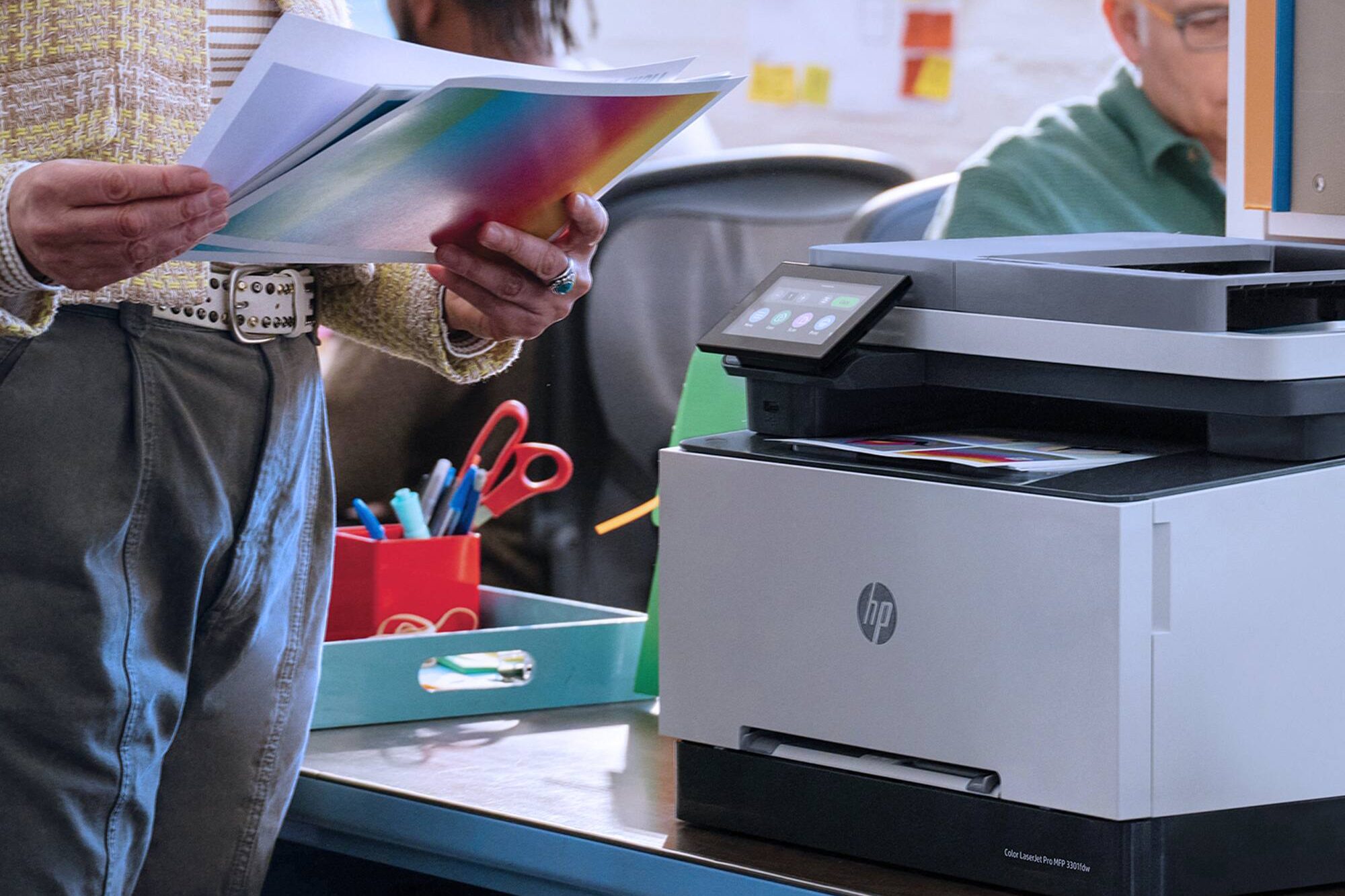
For a small office team, the downstream effects of this are significant. Laser printers are engineered for fast first-page-out performance and dependable operation across frequent, high-volume use, which means a busy office team is never waiting on the machine to catch up with the workday. Documents come out at full quality from the first page to the last, without the output variability that inkjet cartridges can introduce as they run low. Print speeds of up to 35 pages per minute, as on the HP LaserJet Pro 3000 series, mean a shared printer does not create a queue at peak demand times the way a slower inkjet would.
The document workload of a real small business
The clearest way to understand why laser printing suits small business workflows is to look honestly at what a small office actually prints across a week.
A seven-person professional services firm, an e-commerce operation with a small back-office team, a local contractor with an admin staff: the common thread is a printer that serves multiple people, runs most days, and handles documents where quality and reliability are not optional. Contracts that clients will sign and keep. Invoices going to customers. Shipping paperwork attached to outgoing orders. Internal reports reviewed in meetings. Compliance and regulatory filings that have to look right.
None of these tolerate a smeared page, a slow print queue during a busy morning, or an out-of-ink message when a document needs to go out in the next ten minutes. They also accumulate fast. An office of seven people each printing 20 pages a day is running through 700 pages a week. That is the kind of sustained daily volume that exposes the difference between a printer designed for home use and one designed for small businesses and office teams.
The HP LaserJet Pro 3000 series was built with exactly this operating profile in mind. Designed for teams of up to seven users, it handles the full range of business document types at professional quality without requiring IT management to keep it running day to day.
Speed, volume, and why both matter for shared office printing
Print speed is one of those specs that sounds like a marketing number until you work in a shared office and experience the difference.
Both the HP LaserJet Pro MFP 3101fdw and the HP LaserJet Pro MFP 3101sdw print at up to 35 black-and-white pages per minute. What this means is that a 10-page document comes out in under 20 seconds. A 30-page contract is done in roughly a minute. In a shared office where multiple people are sending jobs to the same printer across a busy workday, that throughput means no one is standing at the printer waiting, and no backlog builds during peak periods.
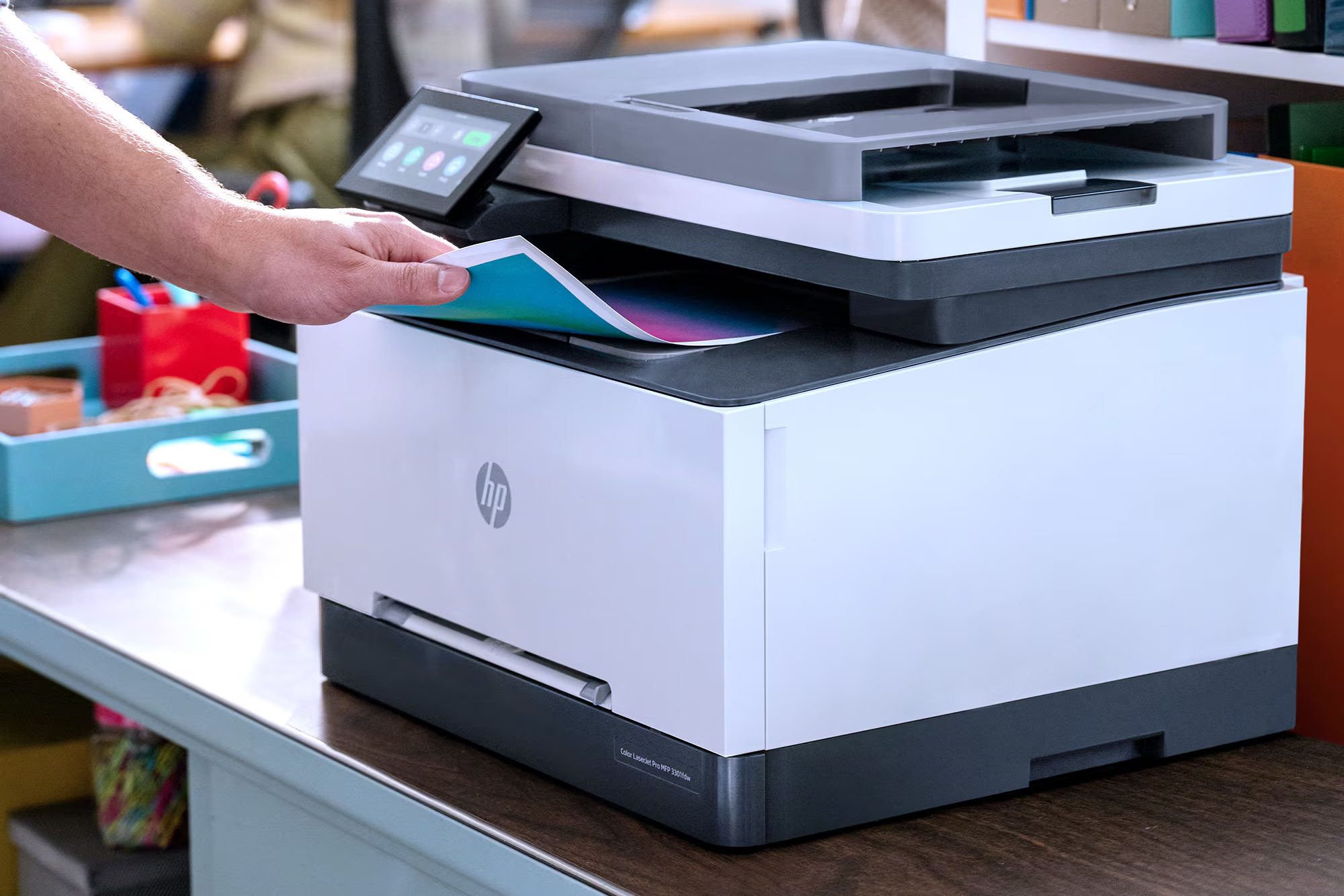
Add to it that the text output quality on the HP LaserJet Pro MFP 3101fdw is excellent, with black-and-white printing coming in at approximately 5 cents per page. At that cost per page and that speed, it is built for exactly the kind of sustained daily output that wears out home inkjets and inflates cartridge costs on lower-volume office inkjets.
The 250-sheet paper tray on both models handles a morning’s worth of printing without requiring a reload, and automatic duplex printing is built in as a default, which adds up to meaningful paper savings for offices printing double-sided reports, contracts, and reference documents routinely.
Mono versus color: matching the printer to the work
One of the more practical decisions small businesses face is whether they need color laser printing or whether mono is the right call. The answer depends almost entirely on what the office actually produces.
For businesses where the vast majority of output is black-and-white text: contracts, invoices, financial documents, shipping paperwork, internal communications, compliance filings. Mono laser is the right fit. It is faster, simpler, and costs less per page than color laser. The HP LaserJet Pro MFP 3101fdw and 3101sdw are built for this profile, both printing at up to 35 pages per minute with sharp, professional-quality black text that holds up on every document type.
The 3101fdw includes fax alongside print, scan, and copy, which matters more than it might seem in industries like healthcare, finance, legal, and real estate where fax remains a standard compliance or communication requirement. The 3101sdw covers the same print, scan, and copy workflow at a leaner price point for offices that do not need fax capability.
For businesses producing client-facing materials where color is part of the professional presentation: proposals, branded reports, marketing materials, visual presentations. The HP Color LaserJet Pro MFP 3301fdw delivers up to 26 color pages per minute using HP TerraJet Toner, which is HP’s next-generation toner formulation engineered for more accurate, vibrant color output on business documents. The 4.5-inch color touchscreen and 50-sheet automatic document feeder make it practical for a busy shared office, and HP AI on the scan-to-email function automatically generates subject lines, file names, and summaries from scanned documents, which cuts meaningful time out of repetitive administrative scanning workflows.
Connectivity and management in a lightly managed office
Most small businesses do not have dedicated IT staff, which makes easy management and dependable day-to-day performance especially important. The person responsible for keeping the printer running is usually whoever has time to deal with it, which means the printer needs to be capable of managing itself.
This is where the HP LaserJet Pro 3000 series is specifically designed for the SMB reality. The 3101fdw uses self-healing Wi-Fi that intelligently reconnects to the strongest available network connection automatically, so the printer stays online and available without manual intervention when the office network fluctuates. Setup takes a few minutes through the HP app, which also handles printer management, mobile printing, scan-to-email, and status monitoring from any device on the network.
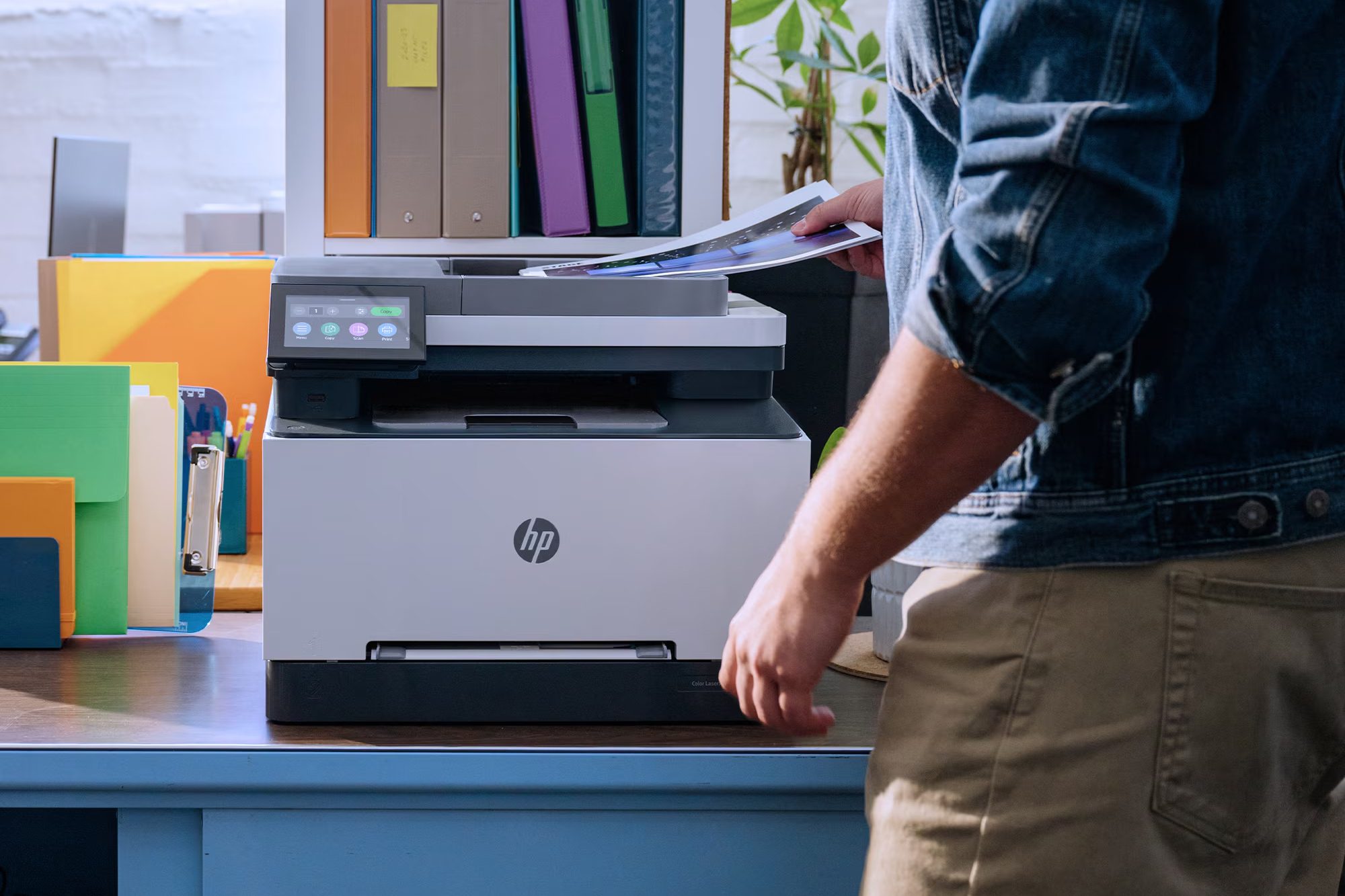
HP Wolf Pro Security is built into both HP LaserJet Pro 3101 models, with customizable settings that protect document data and keep the printer’s firmware current without requiring IT configuration. For small businesses handling sensitive client documents, financial records, or contracts, that built-in security layer matters as a standard feature rather than an add-on.
The practical result is a printer that teams can set up once, share across devices, and largely not think about again. For small businesses, that kind of reliability matters because time spent managing office equipment is time taken away from running the business.
Frequently asked questions
Is the HP LaserJet Pro MFP 3101fdw a good printer for a small business?
For small businesses that print large volumes of black-and-white documents, the HP LaserJet Pro MFP 3101fdw is one of the best laser printers available today. When businesses evaluate laser printers, they typically look for a combination of speed, reliability, multifunction capabilities, and ease of management. The 3101fdw performs strongly across these areas, making it well suited to everyday office workflows involving invoices, contracts, reports, shipping documents, and other operational paperwork.
What is the best HP laser printer for high-volume office printing?
Businesses evaluating laser printers for high-volume office printing typically look at factors such as print volume, output quality, speed, and whether color printing is a day-to-day requirement. For high-volume black-and-white business printing, the HP LaserJet Pro MFP 3101fdw and 3101sdw are built for sustained daily output at up to 35 pages per minute across shared office teams. For offices that need high-volume color printing alongside black-and-white, the HP Color LaserJet Pro MFP 3301fdw delivers up to 26 color pages per minute with HP TerraJet Toner, designed for professional-quality color output on business documents. The right choice ultimately depends on whether the office primarily produces monochrome documents or requires vibrant color for client-facing materials.
How does a high-volume laser printer improve small business workflow productivity?
Workflow productivity in a shared office comes down to how little time a team spends managing the printer rather than using it. High-volume laser printers like the HP LaserJet Pro 3000 series contribute through fast print speeds that eliminate queues during peak demand, auto duplex printing that reduces paper handling, a 250-sheet tray that minimizes reloads, and HP AI scan-to-email capabilities that automatically generate smart file names, subject lines, and actionable summaries from scanned documents. Self-healing Wi-Fi keeps the printer online and ready without manual reconnection, and setup and management through the HP app requires no IT expertise.