1. Home
  2. Cars
  3. Legacy Archives

Legendary F1 champion Niki Lauda thinks Formula E is ‘not motor sport’

Add as a preferred source on Google

It’s hard to argue against Formula E’s historical significance and consumer market influence, but that doesn’t mean you have to like it.

Since its inception this year, the one-make, single-seater, all electric race series has drawn both acclaim and ire from the automotive community. For every person applauding the event for its boundary-pushing, eco-friendly image, you’ll find another critiquing it for modestly performing vehicles and a distinct lack of 12-cylinder howl.

To put it bluntly, fans are split.

Recommended Videos

When asked what he thought about Formula E, the always candid Niki Lauda did not mince words.

“For me it was the worst thing I have seen for a long time,” the legendary F1 champion and Mercedes team executive told Auto Motor und Sport. “The cars look like toys; they creep around the track one after the other. For me, this is not motor sport.”

Ouch.

Lauda’s qualms may be exaggerated, but they do speak to some of the inherent flaws of Formula E. For one, even with several hundred pounds of top-rated batteries inside, the cars are limited to about 45 minutes of run time at best. They also have to stop and recharge for two hours halfway through the race.

Related: Formula E’s all-electric racecars are shaping the future of tomorrow’s EVs

Still, the cars can accelerate from 0 to 60 mph in three seconds, and will undoubtedly help to advance future hybrid and EV technologies, the production of lightweight materials, and the sculpting advanced aerodynamics.

Just last month, we reported that a tech company called Qualcomm had begun testing a wireless EV charging system at Formula E. Currently, the technology is being used to charge Formula E’s safety cars, but it’s just a matter of time until similar systems start to pop up in the homes of consumers.

(Photo via Biografie Online)

Andrew Hard
Andrew first started writing in middle school and hasn't put the pen down since. Whether it's technology, music, sports, or…
Volvo is rolling out Apple Music to over 2 million cars with a simple OTA update
Your Volvo may soon get Apple Music without needing CarPlay
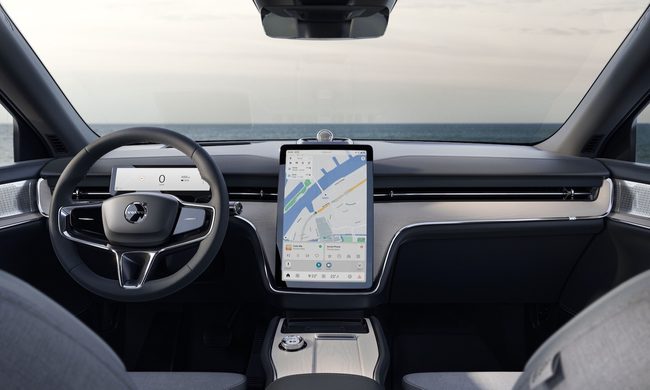
Interior view of the 2024 Volvo EX90.

The line between your smartphone and your car continues to blur. Volvo has announced that it is rolling out an over-the-air software update that brings Apple Music directly to the infotainment systems of more than 2 million vehicles worldwide. Instead of relying on Apple CarPlay or plugging in an iPhone, eligible drivers will be able to stream music natively from their car's built-in system, making Apple Music another integrated feature of Volvo's software experience.

The update is arriving for a wide range of Volvo models, including the EX90, ES90, XC90, S90, V90, XC60, S60, V60, XC40, EX40 and EC40, covering model year 2020 onwards. Availability, however, may vary depending on the vehicle.

Read more
Chery’s latest EV packs flagship tech for the price of a base Tesla, but you can’t buy it
Here's everything packed into Exeed's 2027 Exlantix ES, from its 27-sensor autonomous driving suite to its 860 km range, all starting under $31,000.
Car, Transportation, Vehicle

Chery's premium arm just dropped a sedan that makes you wonder why American EVs cost twice as much for half the tech.

Exeed's 2027 Exlantix ES ships with a driver-assist system called Falcon 700. It is built around an Nvidia Orin-Y chip and a genuinely stacked sensor suite.

Read more
A new AI model wants self-driving cars to think before they swerve
Forget guessing games, this self-driving AI actually shows its work.
Self driving car

Self-driving cars have gotten pretty good at driving. The harder problem is teaching them to drive safely in situations nobody planned for. We have heard horror stories of self-driving cars, behaving erratically in emergency situations, often times delaying first responders from reaching the scene.

A team at Seoul National University, led by professor Jun Won Choi from the Department of Electrical and Computer Engineering, thinks they have cracked part of that puzzle with a new AI model called SafeDrive. The research was recently selected as a highlight paper at CVPR 2026, a distinction that goes only to roughly 3% of all submissions.

Read more