1. Home
  2. Computing
  3. News

Microsoft has revealed its anime mascot for Windows 10

Add as a preferred source on Google

If you’re a fan of anime, you’re likely applauding Microsoft for its latest promotional efforts. Microsoft’s Japanese offices have unveiled the company’s mascot for Windows 10, the latest operating system set to debut this summer. The mascot is an anime-stylized image of a blue-haired woman in a miniskirt, according to WindowsCentral.

The young woman, who is currently nameless, will have her own campaign in June. You’ll be able to offer your opinion on what her name should be. Thus far, we know that she is 17 years old and comes from 100 years in the future. She works at the gadget-heavy Tokyo neighborhood of Akihabara, and in terms of hobbies, she loves gaming (of course). Her attire gives her a schoolgirl-like appearance located on the corner of chic and cute.

Recommended Videos

Voiceover Actress Ai Nonaka is slated to provide the blue-haired girl with a voice of her own. If you enter the public campaign to name the mascot, which begins on June 19, you’ll be eligible for a series of prizes. Five Grand Prizes will be autographed by Nonaka herself.

While this may seem a little odd in Western culture, it’s worth noting that this isn’t the first time that Microsoft has used this type of advertising in Japan. The company had similar mascots for Windows 7, 8 and Internet Explorer.

Nanami Madobe, a similar-looking blue-haired schoolgirl, was the mascot for Windows 7, and she was given her own video, according to The Verge. Two different characters were used to promote Windows 8 and RT, both of them being schoolgirls (Madobe Yu and Madobe Ai). And a blond-haired anime girl named Inori Aizawa was introduced to promote Internet Explorer. Microsoft gave Inori her own Facebook page, video, website, and a series of wallpapers.

Throughout the past decade, there have been more than 10 separate anime characters created to raise awareness of Microsoft’s products. The latest creation for Windows 10 shows that the practice won’t be slowing down any time soon.

Krystle Vermes
Former Digital Trends Contributor
Krystle Vermes is a professional writer, blogger and podcaster with a background in both online and print journalism. Her…
The maker of ChatGPT wants to make open-source projects less of a security bargain
OpenAI launches Patch the Planet for open-source security, with over 30 open-source projects on board.
openai-chatgpt-os

OpenAI has launched Patch the Planet, a new initiative aimed at fixing one of the internet's quietest problems – the chronically underfunded security of open-source software.

Patch the Planet pairs OpenAI's most security-capable AI models with Trail of Bits, a security firm that has committed its entire research organization to the effort, alongside support from HackerOne and Calif.

Read more
I sifted through the Prime Day chaos to find the best Apple deals actually worth buying
Apple's about to hike prices. Prime Day 2026 is your last chance to save up to $150 on MacBooks, AirPods, and iPads.
Prime Day Deals on Apple Products

Apple is set to increase the prices for its upcoming iPhones and MacBooks, as the company can no longer offset the rising RAM and storage costs. That means, if you are looking to upgrade your aging device, you should buy the current-generation Apple products rather than wait for the new ones.

And since Amazon Prime Day is offering good discounts on the latest iPhones, iPads, MacBooks, and other Apple accessories, this is the perfect time to buy them. Here are my favorite Amazon Prime Day deals for Apple products. 

Read more
This sneaky photo trick gets AI chatbots to ignore their safety rules
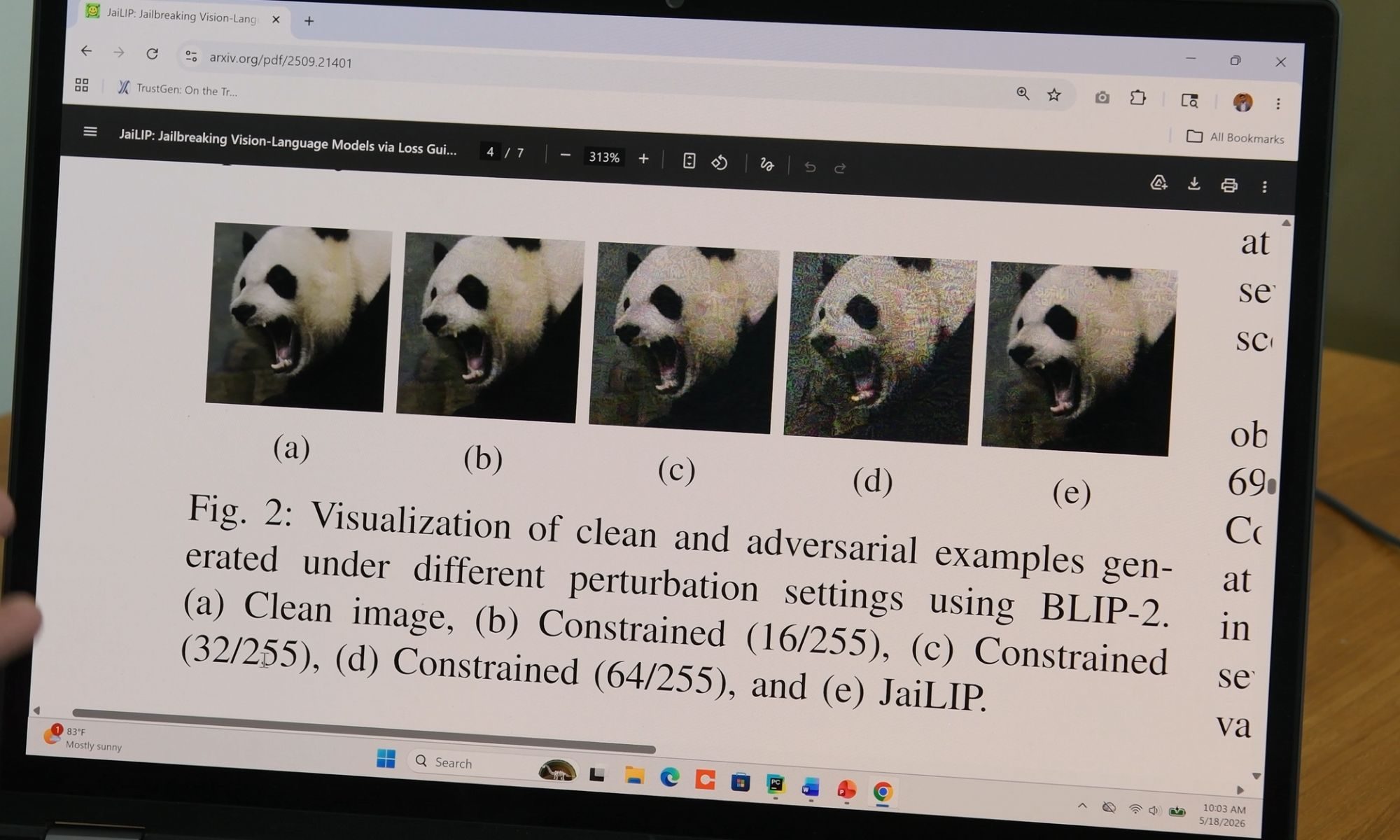
Florida International University researchers built a method that nearly doubled the rate of harmful responses from a tested AI model using nothing but pixel-level edits in an image.
JaiLIP AI chatbot exploit image

A photo that looks completely ordinary to you could carry a hidden instruction to trick an AI chatbot into ignoring its safety rules, according to new research out of Florida International University. The study found that pixel-level alterations in an image that are invisible to the human eye can be enough to confuse the model reading the image and lead it to generate responses it would normally block.

Hacking what the AI sees

Read more