  1. Home
  2. Cars
  3. Business
  4. Entertainment
  5. Photo Galleries
  6. News

Darth Vader, your motorcycle is here (no, seriously, it comes with a lightsaber)

Add as a preferred source on Google

Whether he was known as Anakin Skywalker or the Dark Lord of the Sith, Darth Vader drove some cool vehicles in his day — podracers, a customized TIE fighter, and various combat spacecraft during the Clone Wars. Now, there’s a new people carrier made in his image, but this one’s a bit more grounded than the rest.

Appropriately named the Dark Force, this sinister two-wheeler is made by Redmond, Washington-based Ural Motorcycles, and it features plenty of Vader-inspired flair. The body, engine, and exhaust have been completely blacked out, and it features LED lighting and a red lightsaber as standard equipment. As with all of Ural’s bikes, the Dark Force also features a sidecar, perfect for that secret apprentice you’re hiding from The Emperor.

“Come to the dark side … we’ve got sidecars!” the brand says.
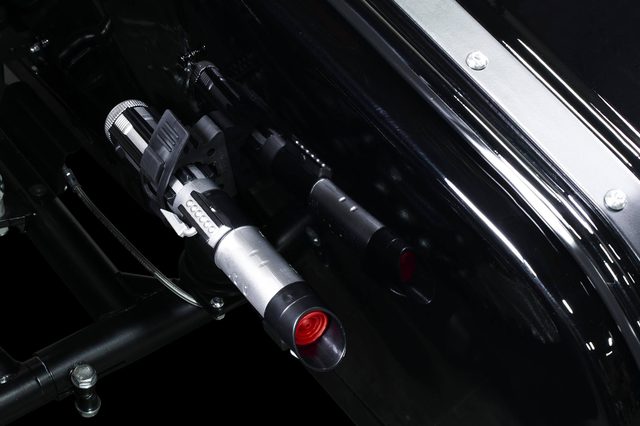
Ural-Dark-Force-003
Image used with permission by copyright holder

Aside from the Sith theme and plasma energy weapon, the Dark Force boasts a large Enduro bench seat, a 2.9-cubic foot waterproof trunk, and a 749cc, air-cooled two-cylinder engine that makes 41 horsepower. It could be the perfect choice for getting from one end of the Star Destroyer to the other, or perhaps for attending a certain upcoming movie premiere in style. Just 25 examples will be made, each of which will start at $14,999. The Dark Force arrives at Ural dealerships today.

If you can’t get your mitts on one of these limited-edition motorcycles, not to worry, there are plenty of Vader-approved vehicles in the galaxy. At San Diego Comic Con last year, for example, Hot Wheels unveiled a life-sized version of its “Darth Vader Car” toy, which was styled after the Dark Lord’s iconic helmet. Sith lords constantly lust for power, and the car responded in kind with a 526-hp Chevy LS3 small-block V8. Read more about the vehicle here.

Andrew Hard
Andrew first started writing in middle school and hasn't put the pen down since. Whether it's technology, music, sports, or…
Tesla launches the six-seat Model Y Long Wheelbase in the US
The stretched electric SUV brings more space, more comfort, and up to 325 miles of range.
Tesla Model Y Long Wheelbase Featured

Tesla is giving the Model Y a little more breathing room. The company has officially launched the Model Y Long Wheelbase in the United States and Puerto Rico, introducing a stretched version of its best-selling electric SUV with a three-row, six-seat layout that's designed to make family road trips a lot more comfortable.

A bigger Model Y with a focus on comfort

Read more
A stolen Kia reveals the hidden limits of connected car technology
Kia can see where your stolen car is. GDPR means it won't share that in real time. That is the entire problem.
Kia EV3 design

If you’re buying a car with connected car technology, thinking it would help you to recover it in the event of theft, you might want to recalibrate your expectations. 

A recent incident in the UK, in which a car owner had three tracking devices installed in his car and still couldn’t recover it, led the carmaker to state that connected-car technology isn’t a “certified security vehicle tracker” (via the BBC).

Read more
Cambrige experts find utterly simple fix for longer lasting EV batteries. Just put some pressure on it.
Scientists found a way to make EV batteries last longer without reinventing the battery
EV Charging

EV battery breakthroughs typically involve new chemistry, exotic materials, or faster charging/higher capacity. But a new study reveals that you can skip all the fancy stuff and go with a very simple solution, Researchers from the University of Cambridge found that putting the battery under the right amount of pressure actually helps.

The study was about how physical pressure affects lithium-ion battery life, which found that keeping cells under constant pressure could double their lifespan. The work was published in Nature Energy, and the team says the improvement came without changing the active materials, electrolyte, or basic battery chemistry.

Read more