After announcing its new lineup of Omen gaming products earlier this week, HP is now teasing a prototype “Omen X” desktop that customers can wear on their back. Why? For mobile virtual reality, of course. This new trend seemingly began with Zotac and was countered by MSI’s backpack VR solution, which is set to make its debut next week during Computex in Taipei.
Unfortunately, because HP is toying around with a prototype, we don’t have any hard facts to present. Instead, the company teased the press with a PowerPoint presentation and several photos. However, what we can say is that this device won’t be stuffed into a backpack, but will come with straps so that it can be worn on the user’s back. Right now, it’s simply a development kit called the Omen X VR PC Pack.
According to the HP slides, the Omen brand targets the performance gamer with an emphasis on delivering maximum gaming performance per dollar. The Omen X brand is targeted at the enthusiast gamer, with products that are overbuilt and overengineered to deliver innovation in the gaming space. The new HP VR PC Pack hardware seems to do just that.
 Based on a brief overview provided to Digital Trends by HP, this developer kit includes two USB Type-A ports, two USB 3.1 Type-C ports, one HDMI port, one audio combo jack, one DC output jack for headphone power, two battery DC input jacks, and one DC input jack for connecting the desktop to a wall outlet. The hardware is housed inside a rounded back chassis with a checkered triangular pattern on the side facing away from the user’s back. It’s also decorated with red trimming and sports the company’s Omen logo and branding.
HP doesn’t say what headsets will be compatible with the backpack PC, but it should work just fine for the HTC Vive and Oculus Rift. The latter solution requires an HDMI port and two USB 3.0 ports at the least, whereas the HTC Vive requires an HDMI port and a single USB 2.0 port or greater. We presume HP is using the HDMI 1.3 protocol in its development kit.
Note that Facebook/Oculus VR doesn’t list HP as an Oculus Rift-ready desktop vendor, whereas HTC lists the HP Envy Phoenix as a solution optimized for the HTC Vive experience. Also note that Oculus VR actually recommends desktops with three USB 3.0 ports and a USB 2.0 port, along with HDMI output, meaning Oculus Rift owners might not achieve the optimum experience when using the Omen X backpack PC. The HTC Vive seems to be the target headset.
Unfortunately, no matter how much we begged, HP would not cough up the hardware specifications for the current developer kit. However, the company did admit that the current model supports the latest quad-core Core i5/i7 H processors from Intel, M.2 SSDs with up to 512GB of capacity, and up to 32GB of DDR4 memory.
This dev kit also sports a battery belt that connects directly to the backpack PC. Each of the two supplied high-output rechargeable batteries only lasts for an hour in their present form, and can be hot-swapped when one gets too low on juice. The battery belt not only serves to juice up the backpack, but to counterbalance the computer so that it’s not pulling users to the floor. HP uses high-output batteries so that the CPU and GPU can run at full wattage.
But get this: HP isn’t simply throwing a PC on your back and sending you on your way. The Omen X VR PC Pack is lightweight (the target max weight is 10 pounds), and includes a dual-fan rear-venting solution so that the heated components aren’t making your back sweat. Now that’s neat.
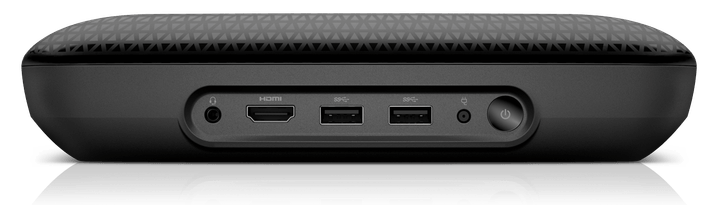
The Omen X VR PC Pack is essentially a desktop on your back, meaning owners can take the straps off, place it on a table, hook up a display and peripherals, and use it like any other Windows-based PC. When users are ready to play again, just remove the cables, attach the headset and straps, and they’re ready to jump into the virtual playground again.
Given this model is indeed a developer kit, HP has no idea when a final product will be shipped to consumers. However, a representative told Digital Trends that the company will begin showing the VR backpack in demos within the next month. We’re betting it will make an appearance at E3 2016 in June.
Until then, the company is soliciting product requests from developers and independent software vendors to receive the kit, and to work with HP on the future of this cool, new product. Maybe that means we’ll see a final product later this year. Or maybe not. We shall see.