1. Home
  2. Computing
  3. News

HTC bets big on VR after sustaining heavy losses

Add as a preferred source on Google

HTC chairwoman Cher Wang has issued an apology to shareholders for heavy losses sustained by the company over the past fiscal year. However, Wang is confident that HTC’s attempts to carve out a slice of the nascent VR marketplace will be enough to secure its future.

Wang was always going to be put in a tough spot at the shareholder’s meeting, which took place in Taoyuan, Taiwan on Friday. A year of poor results has resulted in almost half a billion dollars of losses, according to a report from Android Authority.

Recommended Videos

Despite being asked by shareholders, Wang chose not to lay out how long it will take for HTC to be profitable once again. However, she did offer up a proposal for how the company can change its fortunes — further investment into the Vive headset and the VR platform as a whole.

In April, HTC announced its involvement in a $100 million accelerator scheme intended to give startups working with VR tech a clear path toward funding. At the shareholder’s meeting, Wang announced that the company will also establish a wholly owned VR subsidiary.

There’s a certain element of risk here for HTC, as VR is far from a proven marketplace. While the Vive and the Oculus Rift have already found some success, there’s no clear indication that mainstream audiences are ready to invest in the hardware — which could be catastrophic for the company, given that the Vive seems to be a major focus from here on out.

That said, the company isn’t about to drop its other business interests and bet the farm on VR entirely. Since its launch earlier this year, the HTC 10 smartphone has played a role in boosting interest in the company’s other devices by 20 percent, reinforcing the benefits of a broad, interconnected ecosystem.

Brad Jones
Brad is an English-born writer currently splitting his time between Edinburgh and Pennsylvania. You can find him on Twitter…
The maker of ChatGPT wants to make open-source projects less of a security bargain
OpenAI launches Patch the Planet for open-source security, with over 30 open-source projects on board.
openai-chatgpt-os

OpenAI has launched Patch the Planet, a new initiative aimed at fixing one of the internet's quietest problems – the chronically underfunded security of open-source software.

Patch the Planet pairs OpenAI's most security-capable AI models with Trail of Bits, a security firm that has committed its entire research organization to the effort, alongside support from HackerOne and Calif.

Read more
I sifted through the Prime Day chaos to find the best Apple deals actually worth buying
Apple's about to hike prices. Prime Day 2026 is your last chance to save up to $150 on MacBooks, AirPods, and iPads.
Prime Day Deals on Apple Products

Apple is set to increase the prices for its upcoming iPhones and MacBooks, as the company can no longer offset the rising RAM and storage costs. That means, if you are looking to upgrade your aging device, you should buy the current-generation Apple products rather than wait for the new ones.

And since Amazon Prime Day is offering good discounts on the latest iPhones, iPads, MacBooks, and other Apple accessories, this is the perfect time to buy them. Here are my favorite Amazon Prime Day deals for Apple products. 

Read more
This sneaky photo trick gets AI chatbots to ignore their safety rules
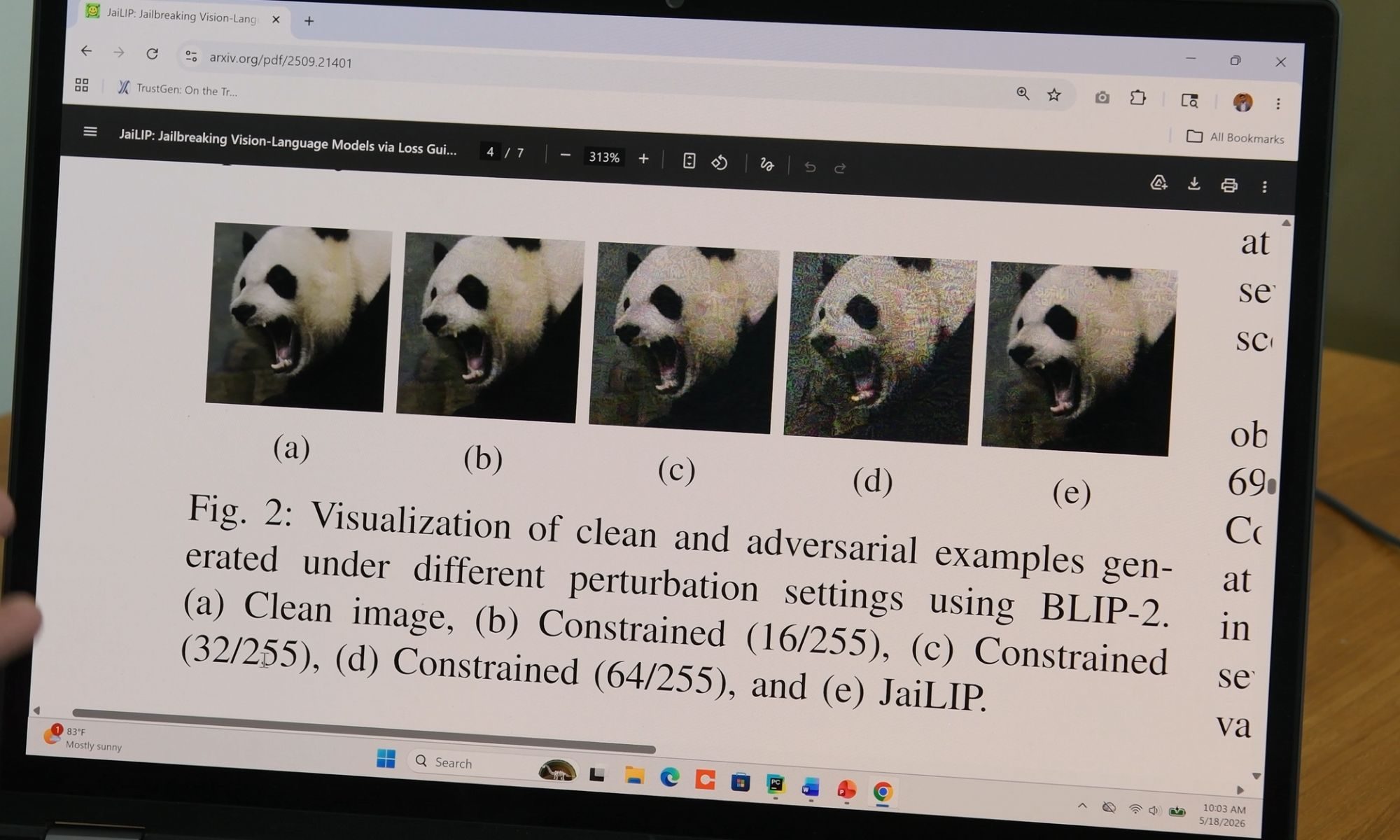
Florida International University researchers built a method that nearly doubled the rate of harmful responses from a tested AI model using nothing but pixel-level edits in an image.
JaiLIP AI chatbot exploit image

A photo that looks completely ordinary to you could carry a hidden instruction to trick an AI chatbot into ignoring its safety rules, according to new research out of Florida International University. The study found that pixel-level alterations in an image that are invisible to the human eye can be enough to confuse the model reading the image and lead it to generate responses it would normally block.

Hacking what the AI sees

Read more