1. Home
  2. Computing
  3. Legacy Archives

Phisher Facing 100 Years of Prison Time

Add as a preferred source on Google

Jeffrey Brett Goodin has been sent a strong message by a California jury: phishing does not pay. Goodin has the dubious distinction of being the first person convicted under 2003’s CAN-SPAM Act for operating a sophisticated "phishing" scheme designed to mislead Internet users into turning over personal details and account information.

Goodin, age 45, was arrested last year for preying on AOL users. His scheme involved sending AOL customers fraudulent email messages claiming to be from AOL’s billing department. Users were urged to "update" their account and billing information—including their credit card details—or risk losing service. The messages directed victims to enter their personal information and account details on Web pages Goodin controlled; Goodin and others later used the account details to make unauthorized charges on AOL user’s accounts. Goodin sent his phishing messages via compromised Earthlink accounts.

Recommended Videos

Goodin was also convicted on ten other counts, including abetting the unauthorized use of an access device (a credit card), wire fraud, possession of more than 15 unauthorized access devices, attempted to harass a witness, failure to appear in court, and—this one has got to sting—misuse of the AOL trademark.

The result? Goodin now faces up to 101 years in federal prison. He’s scheduled to be sentenced on June 11.

The CAN-SPAM act has been widely criticized as an ineffective mechanism for combatting spam and other online criminal activity—after all, the volume of spam and phishing schemes on the Internet has increased radically since the statute was passed in 2003. Goodin’s conviction—and the sheer magnitude of the sentence he may receive—could give the law some more teeth in the United States.

Geoff Duncan
Former Contributor
Geoff Duncan writes, programs, edits, plays music, and delights in making software misbehave. He's probably the only member…
Apple’s OpenAI lawsuit just tripped over an embarrassing wrong-recipient email
Apple came for OpenAI’s trade secrets, but OpenAI had email receipts
OpenAI

Apple and OpenAI’s legal battle has quickly moved beyond carefully worded court statements. OpenAI has just shared the email and message trails behind the dispute, and one exchange leaves Apple’s version of events looking questionable.

In a bluntly titled post, “Apple is getting this wrong,” OpenAI challenged Apple’s request for a preliminary injunction and accused the iPhone maker of building parts of its case around false or incomplete information. Apple wants a court to prevent OpenAI and two former Apple employees from accessing, acquiring, using, or disclosing its alleged confidential information.

Read more
Google Drive steps up its video collaboration game with timestamped comments
Google Drive's timestamped comments pin feedback to exact moments in videos.
Google Drive featured image.

Over the years, I’ve collaborated with many video editors and content creator friends of mine, often pointing out things like how the text isn’t visible around the two-minute mark or how the transition in the opening sequence feels a little off. 

However, most of the time, they would end up scrubbing through the whole clip trying to find what I meant, or they'd ask me to send a screenshot of the exact moment I was referring to. Considering I wasn’t charging anything to spot those issues, that extra effort always stung a little. Thankfully, Google’s latest Workspace update finally fixes that.

Read more
Apple is finally bringing one of my favorite Continuity features to Windows
Your iPhone and Windows PC could soon share a clipboard.
Apple Universal Clipboard feature

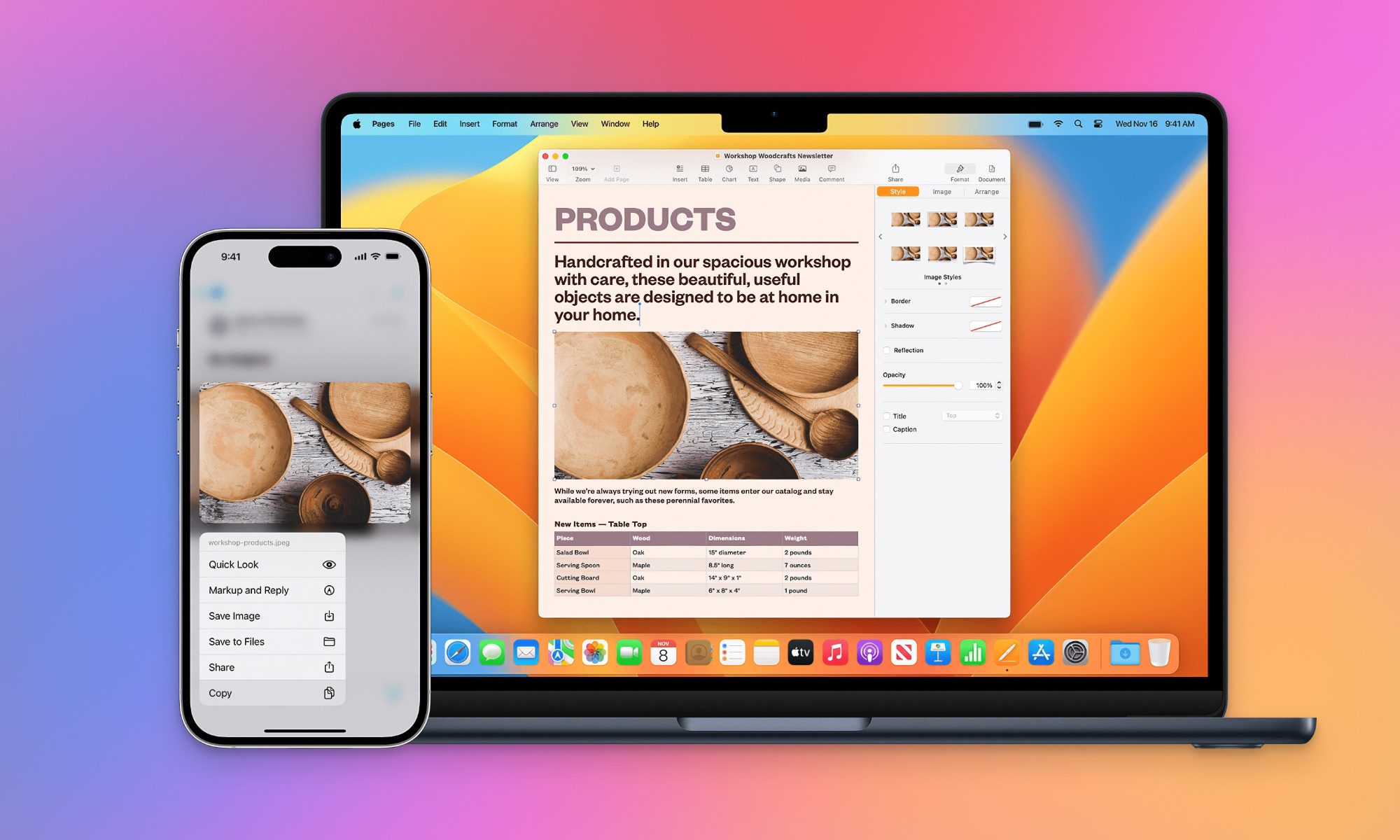
I recently wrote about Apple’s Continuity features and how they play a big role in keeping me trapped inside the Apple ecosystem. One of the smallest but most-used and favorite Continuity features is the Universal Clipboard, which lets me copy and paste text and files between multiple Apple devices. 

Now, it seems that feature is finally coming to Windows PCs. As per MacRumors, Apple is reportedly working on letting you copy something on your iPhone and paste it straight into a Windows PC, no third-party app required. 

Read more