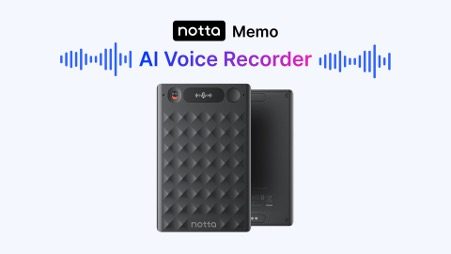
Meetings are a common point of frustration for business leaders and employees alike, but they are necessary for providing teams with clear direction. Despite implementing tools and agendas, however, productivity in meetings remains a clear challenge. That said, innovations in artificial intelligence (AI) such as Notta Memo are promising to make meetings shorter, more focused, and more actionable.
Where Traditional Meetings Fall Short
However necessary they may be, meetings tend to waste the time of everyone involved. What’s more, no meeting will directly generate revenue for a business, but redirect time and productivity. Additionally, the content provided in these meetings tends to be overwhelming and without clear direction. Any decisions made and tasks assigned are often lost as soon as the meeting reaches its conclusion.
How AI Technology Is Making Changes
Enter AI-powered meeting assistance. Modern AI tools are tackling these pain points head-on, offering features that work before, during, and after meetings to maximize efficiency and outcomes. Here’s how the technology is reshaping workplace collaboration:
Automated Agenda Creation streamlines preparation by helping meeting leaders craft focused, time-conscious agendas that eliminate unnecessary tangents and ensure every minute counts.
Real-Time Transcription and Analysis represents perhaps the biggest game-changer. AI tools like Notta Memo capture every word while simultaneously analyzing content for key themes, decisions, and next steps. Participants can finally focus on the conversation instead of frantically scribbling notes, knowing that nothing important will slip through the cracks.
Intelligent Action Item Tracking automatically identifies tasks and assignments as they emerge organically during discussions. No more post-meeting scrambles to remember who committed to what — the AI handles the heavy lifting.
Seamless Language Translation breaks down communication barriers for global teams, enabling real-time understanding across language differences without missing a beat.
What makes tools like Notta Memo particularly compelling is their portability and ecosystem integration. At just 28g and ultra-slim, you can slip this AI assistant into any pocket or clip it to your notebook — perfect for capturing impromptu discussions or client meetings on the go. The real magic happens in the seamless sync across iOS, Android, web platforms, and browser extensions, ensuring your meeting insights follow you everywhere.
The workflow automation capabilities push efficiency even further. Through Zapier integration, meeting notes and action items can automatically populate in Zoom, Google Calendar, Notion, Slack, Trello, and dozens of other productivity platforms. Your AI-captured insights land exactly where your work happens, eliminating manual data entry and ensuring nothing gets lost in transition.
Potential Concerns and Best Practices
Of course, AI technology is accompanied by its fair share of concerns. Whether it’s privacy issues, the risk of over-reliance, or the cost of premium AI services, there are potential drawbacks to implementation. That said, if meeting participants are always informed about AI usage and the technology is used only to support human decision-making, it is possible to implement AI safely and securely.
Making Meetings More Effective
With the thoughtful implementation of an AI tool like Notta Memo, businesses have the potential to make meetings more productive. The many features of AI notetaking tools can contribute to better outcomes in and outside of meetings, so long as a balance is struck between efficiency and human engagement. With the right resources, any meeting can become more effective.