
  1. Home
  2. Mobile
  3. Legacy Archives

Google buys mobile file-sharing app Bump for upwards of $30 million

Add as a preferred source on Google

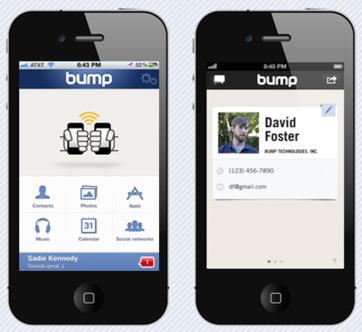
Google has acquired Bump, the app that lets users share contact information, photos, videos, and files simply by bumping two mobile devices together.

The news was announced by both companies on Monday, though neither gave any details regarding how much the deal was worth. However, AllThingsD reported that “a source close to the transaction” said the Web giant paid between $30 million and $60 million for the company.bump
Recommended Videos

“We couldn’t be more thrilled to join Google, a company that shares our belief that the application of computing to difficult problems can fundamentally change the way that we interact with one another and the world,” Bump CEO and co-founder David Lieb said in a post on the start-up’s website.

Lieb said that both Bump and the company’s more recently released Flock app, which allows for easy photo-sharing with friends through privately shared albums, would “continue to work as they always have for now”, and asked users to “stay tuned for future updates”.

The deal comes just days before Apple is set to roll out a similar file-sharing app, AirDrop, with the launch of iOS 7 later this week.

Bump is a long-established company – at least, long-established for the smartphone world – that made quite a splash with its app when it launched for iPhone and Android users in 2009. The idea of ‘magically’ transferring data between handsets by just bumping them together was novel at the time. During recent fourth anniversary celebrations, the company announced the app had been downloaded 125 million times with a billion photos sent between devices. 

Commenting on the acquisition, a Google spokesperson told AllThingsD, “The Bump team has demonstrated a strong ability to quickly build and develop products that users love, and we think they’ll be a great fit at Google.”

It’s not known what plans Google has in store for Bump – it may, for example, decide to shutter the app and use its technology for its own purposes – but no doubt we’ll have a better understanding in the not-too-distant future.

Trevor Mogg
Contributing Editor
Not so many moons ago, Trevor moved from one tea-loving island nation that drives on the left (Britain) to another (Japan)…
Topics
Snapchat Planets Meaning: Order, Rankings, and How Friend Solar System Works
Snapchat Planets turns your best friends list into a solar system, and yes, your orbit says a lot
Snapchat Planets being shown on the Snapchat app on iPhone.

Snapchat+ includes several exclusive features, but few have generated as much curiosity as Snapchat Planets. Part of the app's Friend Solar System, it transforms your Best Friends list into a planetary ranking, assigning each of your top eight friends a planet based on how often you interact.

From Mercury, which represents your closest friend, to Neptune, which represents your eighth closest, the system offers a quick visual snapshot of your interactions. But what do the different planets actually mean, and how does Snapchat decide who gets which one?

Read more
How to use WhatsApp Web
We'll show you how to use WhatsApp on your desktop or laptop
WhatsApp Web

As one of the most popular messaging services, you’ve already heard of WhatsApp. From its humble beginnings in 2009—two years before Apple introduced iMessage—to its acquisition by Facebook (now Meta) in 2014, WhatsApp has become the dominant messaging platform around the globe.

In recent years, it's grown even more potent with new features like video messages, self-destructing voice messages, the ability to edit sent messages, and more. We even finally got an WhatsApp iPad app in May 2025.

Read more
What is WhatsApp? How to use the app, tips, tricks, and more
From setting it up to mastering hidden features, here is your complete guide to WhatsApp.
WhatsApp app store listing open on iPhone

There's no shortage of messaging apps out there. The past decade has given us more options than we know what to do with, largely because smartphones demanded something better than plain old SMS.

Both the App Store and the Play Store are packed with apps that promise to revolutionize the way we communicate. Most of them didn't make it. The truth is, a messaging app is only as good as the number of people using it, and most apps never cross that threshold.

Read more