You think you know your home planet. Then Brad Pitt makes a ravishing Hollywood space odyssey with car chases on the moon, perilous zero-gravity encounters, and rampaging baboons, and no one shows up for it! OK, that’s an exaggeration: Some people did show up to James Gray’s galaxy-spanning melodrama Ad Astra, which more or less broke even when it hit theaters five years ago today. But the public reaction was awfully quiet (like, vacuum of space quiet) for a movie of this genre with this star. What on Earth could have kept so many away?
Some of the blame certainly lies with the suits at Disney, who acquired Ad Astra in the Fox merger and promptly threw its release strategy into disarray. Originally poised to hit theaters in January of 2019, the movie was pushed back to September — theoretically not a bad place for an astronomical object of its gravity (and potential awards appeal) to land. But the Mouse House exhibited little apparent faith in the project’s box office prospects, and launched it without a big marketing push. In as much as it’s possible for a $100-million Brad Pitt science-fiction vehicle to float into multiplexes undetected, Ad Astra did.
To be fair, Gravity numbers were probably always out of reach for Gray’s particular addition to the cosmic-voyage canon. Ad Astra has some of the eye-candy spectacle audiences have come to expect from space blockbusters, along with the splashy attractions teased above, the vehicular and simian mayhem. But it’s a fairly intimate epic — not a 2001-style head trip or a George Lucas-indebted space opera, but the tender story of one emotionally constipated man who crosses the cosmos in search of the father who abandoned him in childhood. You could say, in fact, that Gray is more interested in inner- than outer space, and uses a long trek into the latter as a roundabout wormhole into the former.
The plot is a play on Joseph Conrad’s Heart of Darkness, which of course also makes it a genre-bending riff on Apocalypse Now. (Gray, whose We Own the Night was basically The Godfather with cops instead of criminals, is a Coppola acolyte.) After a series of deadly power surges ripple across space and devastatingly hit Earth, decorated astronaut Roy McBride (Pitt) is called in to help stop the phenomenon. It’s his family name that lands him the assignment: Turns out the rays may be coming from Neptune, where Roy’s famed astronaut father (Tommy Lee Jones) disappeared decades earlier while searching for intelligent life beyond the stars.
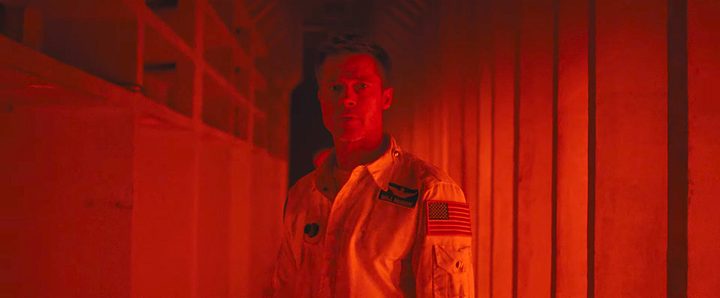
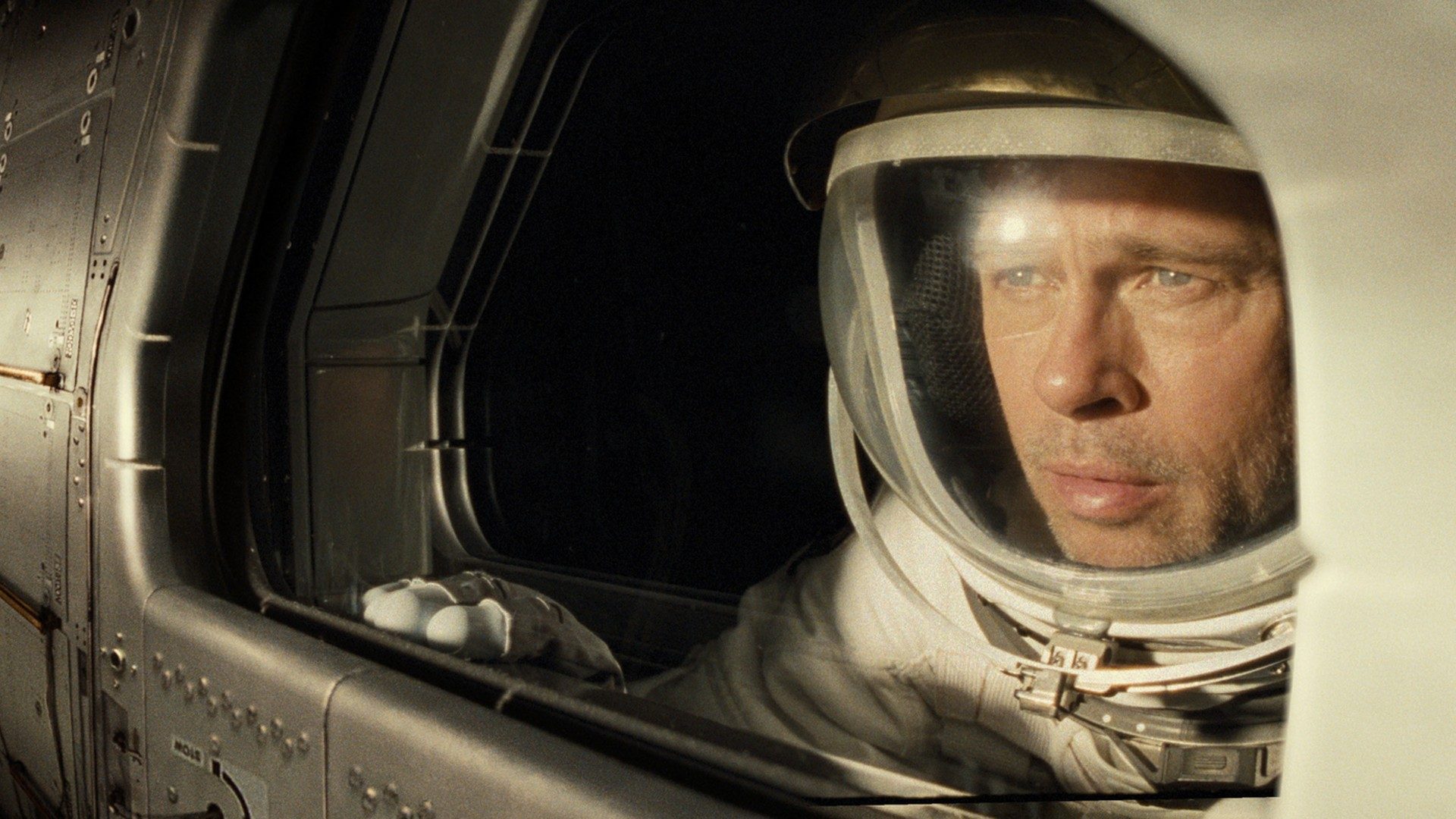
Pitt plays Roy as a stoic professional who’s learned to compartmentalize and repress — a skill set inherited from his very literally distant father and fostered by a military that administers regular, automated psyche exams he passes only by exercising robotic control over his emotions. From Mars, he will send a personal message to the elder McBride, in hopes of receiving a reply that will confirm the old man is alive and possibly responsible for the threat facing humanity. There’s a cruel irony to this protocol: Roy, fatherless since youth, is meant to manipulate his dad’s emotions without expressing any of his own. Ad Astra naturally becomes a therapeutic pilgrimage, a push beyond the stratosphere of suppressive masculinity.
Too much of this is made explicit. Gray, who was eventually locked out of the editing room (the cut of the movie released by Disney is not his), insists he didn’t write the voice over. It’s definitely the clunkiest element of Ad Astra, a running commentary on the psychology and themes, punctuated by explications of subtext (like Roy’s claim that the aforementioned rampaging apes are a mirror of his own anger) that veer dangerously close to self-parody. At the same time, there’s something bluntly moving about the device: Delivered, we eventually learn, to the legend who shaped him, these musings reveal the wounded boy within to the father who never taught him how to feel his feelings. You could even say that the narration, load-bearing though it is, echoes some of the filial self-reflection of The Tree of Life, another Pitt project about the entwined mysteries of family and the universe.
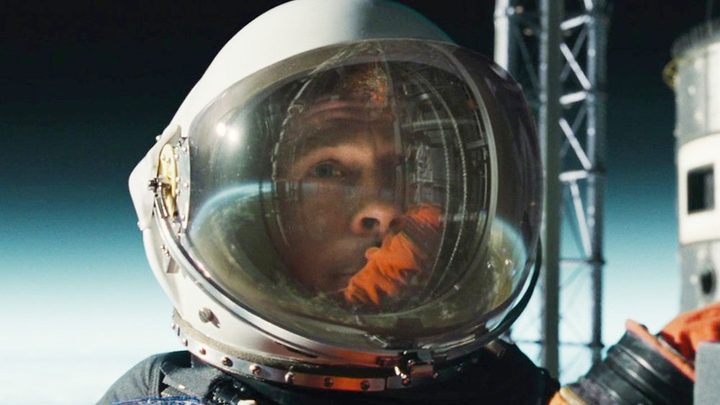
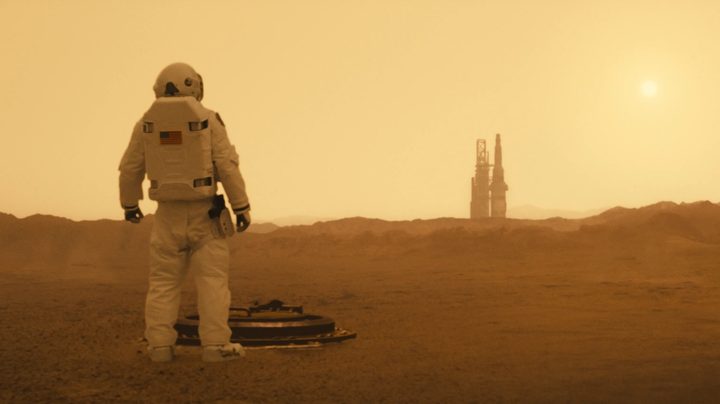
This is soft sci-fi, sentimental to its core. But it’s also gratifyingly unusual and exciting. The downbeat qualities of Ad Astra clash productively with its adventure serial aspects, as Gray thrillingly varies the obstacles Roy faces on his way across the solar system. That chase on the lunar surface, featuring dune-rover pirates, is at once goofy and scary, like a Roy Rogers spin on the chaotic multi-car pursuit of We Own the Night. We also get a discombobulating free fall during a solar storm, close-quarters combat during blast off, and Gray’s brief foray into monster movie territory aboard an orbiting animal research facility. The imagery from cinematographer Hoyte van Hoytema — returning to the inky black after Interstellar — is stunningly majestic. If the film’s NASA-grade daddy issues don’t connect with your heart, its vision of the splendor of space should still dazzle your senses.
During preproduction, Gray boasted that Ad Astra would be the most realistic portrait of space travel ever — an overpromise that predictably made the movie a target for famed pedant Neil deGrasse Tyson. In reality, the film splits the difference between technological realism and fanciful, even poetic bends in the deep-space physics (like a late sequence of Roy passing through the rings of Neptune). It’s more believable as a lightly satirical vision of beyond-Earth colonization, where commercial “flights” to the moon charge $125 for a blanket and the lunar base offers such creature comforts as Subway footlongs. Meanwhile, in a very significant coincidence, Ad Astra world-premiered at the Venice Film Festival on the very same day that Trump announced the revival of U.S. Space Command — the same defunct interstellar military program for which Roy works in the movie.
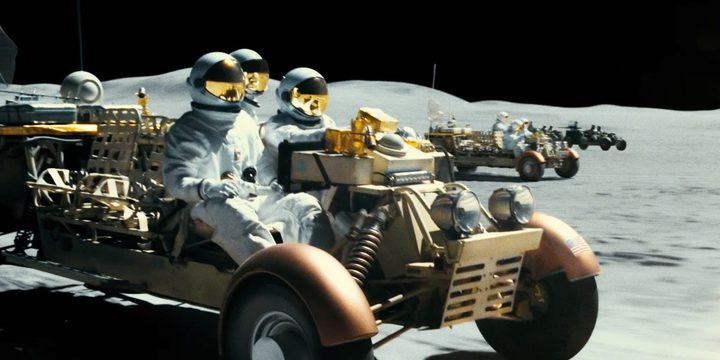
Gray, who would confess a lifelong fascination with space in Armageddon Time, the autobiographical movie he made next, knows that he’s contributing to a rich lineage of science-fiction cinema. He’s following in the footsteps of classics, following the lead of filmmakers who moonwalked so he could moonrun. For all the echoes of past space odysseys, Ad Astra communes perhaps most meaningfully with a landlocked blockbuster that brought space to us, Steven Spielberg’s Close Encounters of the Third Kind. You could even think of the film as a spiritual sequel, wondering about the emotional fallout of a man’s decision to leave behind his family in pursuit of an obsessive fascination with what might be out there.
The climax of Ad Astra is terribly sad. For Roy, it’s a confirmation of what he’s always known about his father’s priorities. For the senior McBride, there is only an eternal question mark, the answers he didn’t find by giving up everything. “We’re all we’ve got,” Roy tells him when they’re finally face to face. What’s a lonelier thought: that there’s nothing out there, that in the entire universe it might just be us? Or that we might not be enough for those we love? Come to think of it, maybe it’s not so surprising that this movie — a family tragedy that conflates the indifference of a father with that of the cosmos — didn’t set the box office on fire.
Ad Astra is available to rent from the major digital services. For more of A.A. Dowd’s writing, visit his Authory page.