1. Home
  2. Space
  3. News

Got a bright idea for a space mission? European Space Agency wants to hear it

Add as a preferred source on Google

If there’s an area of space you’ve always dreamed of exploring, now is your chance to make it happen: The European Space Agency (ESA) is inviting researchers, private companies, and even citizen scientists to submit proposals for future space missions.

Every three years the ESA council meets to decide on new missions for the next years and to consider various proposals for what should be funded. The next meeting is coming up at the end of this year, and proposals for new missions will be accepted up to October 4, 2020.

Recommended Videos

The proposals can be about any area of space, from solving an open scientific question, to gathering new data about our planet from orbit. They can also include proposals for new ways to travel through space.

Examples given by ESA of the kinds of projects it is interested in include the ExoMars Trace Gas Orbiter, an ESA spacecraft currently in orbit around Mars and gathering data on atmospheric composition to understand more about the mystery of methane on Mars, or the Space Rider project which aims to create an uncrewed orbital spaceplane which will make transporting payloads into orbit more affordable.
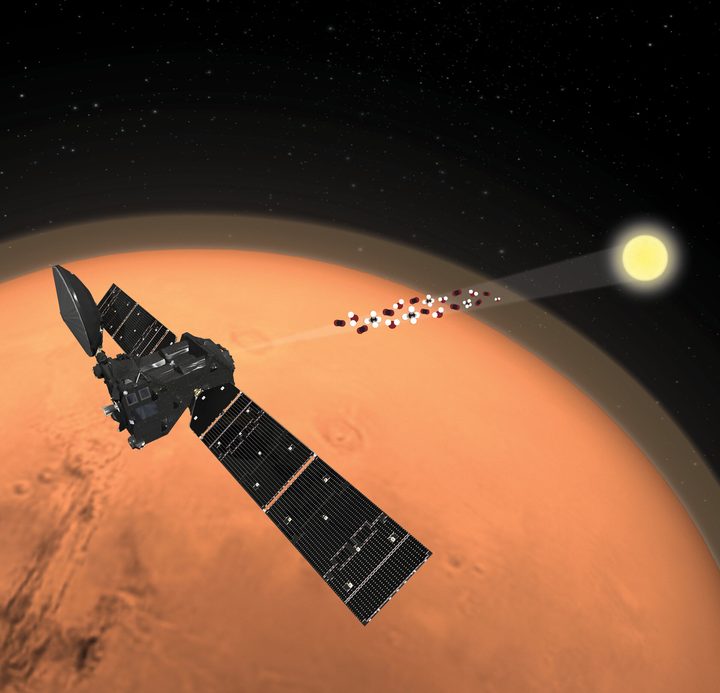
ExoMars Trace Gas Orbiter analyses the martian atmosphere
Visualization of a current ESA mission, ExoMars Trace Gas Orbiter, analyzing the Martian atmosphere ESA/ATG medialab

There are some restrictions: A proposal can’t cover ground already covered by a current ESA space mission. ESA also says it will not consider missions that are purely commercial, missions that aim to launch before 2025, or mission concepts that have already been studied or proposed. But everything else is fair game.

Once mission ideas have been received, the proposals will be whittled down to the top 10 which look most promising and these will be scoped out in more detail with the authors. Then, three to five proposals will be selected to begin missions studies, which should happen early next year.

“It’s time to plant the seeds for new programmatic decisions on new missions and new space projects,” ESA Director General Jan Wörner said in a statement. “This time we’re tapping into the insight, competence, and creativity of industry, academia, and private citizens to identify the best ideas for new space missions beyond our current planning or scope.”

If you’d like to submit a proposal, you can do so through ESA’s Open Space Innovation Platform.

Georgina Torbet
Georgina has been the space writer at Digital Trends space writer for six years, covering human space exploration, planetary…
Amazon’s Starlink rival just crossed a major milestone, but don’t expect perfect internet just yet
Amazon finally showed up to the space internet party
Amazon Leo satellite layout across all launch vehicles

Amazon has taken a significant step toward launching its long-awaited satellite internet service. Following its latest rocket launch, the company now has 396 Project Kuiper satellites in low-Earth orbit, enough to begin offering continuous service across select regions. The milestone keeps Amazon on track for its previously announced goal of launching commercial service by mid-2026.

https://twitter.com/Weber44Chris/status/2072575499461963938?ref_src=twsrc%5Etfw%7Ctwcamp%5Etweetembed%7Ctwterm%5E2072575499461963938%7Ctwgr%5Ed727a1b853cbf519585e7bf2655943afb2f91bb8%7Ctwcon%5Es1_&ref_url=https%3A%2F%2Fwww.theverge.com%2Fscience%2F960563%2Famazon-leo-service-tipping-point

Read more
Amazon’s Starlink rival is set to launch satellite internet later this year
After launching nearly 400 satellites, Amazon says its Leo broadband service will go live later this year.
Atlas V launches 29 Amazon Leo satellites from Cape Canaveral, Florida

Amazon's long-awaited answer to SpaceX's Starlink is finally nearing liftoff. According to an exclusive report from Reuters, the company plans to begin offering its Leo satellite internet service later this year, after its latest rocket launch pushed the constellation to 394 satellites in orbit.

The pieces are finally falling into place for Project Kuiper

Read more
NASA is investing $590 million in private contractors to build humanity’s first Moon outpost
NASA is counting on private companies to land its Moon Base dream.
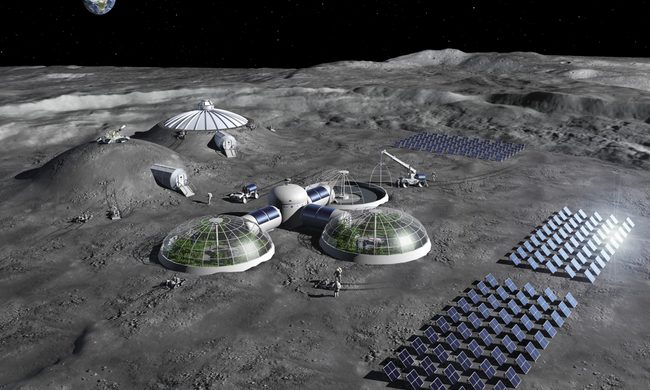
Artist impression of a Moon Base concept, with solar arrays for energy generation, greenhouses for food production, and habitats shielded with regolith.

Building a permanent base on the Moon sounds like science fiction, but NASA is making it feel a lot more real. The agency just handed $590 million in contracts to three private companies for four uncrewed lunar lander missions launching in late 2028.

These missions are part of Phase 1 of NASA's broader $30 billion Moon Base program, which needs to deliver landers, rovers, and scientific cargo up there before astronauts eventually move in. These efforts are closely tied NASA's Artemis program, which sent humans on a lunar flyby in April for the first time since the Apollo era.

Read more