1. Home
  2. Space
  3. News

Hurricane Laura captured in space station photos as it hits Gulf Coast

Add as a preferred source on Google

Communities along the Gulf Coast are about to experience the worst of Hurricane Laura, a weather system that’s strengthened from a Category 1 storm to a Category 4 in the space of just 15 hours.

The huge size of the dangerous hurricane was captured in a set of dramatic images taken by American astronaut Chris Cassidy aboard the International Space Station 250 miles above Earth on Wednesday, August 26.

Recommended Videos

https://twitter.com/Astro_SEAL/status/1298703689960443904

Laura is packing winds of up to 145 mph just ahead of making landfall, with the National Hurricane Center warning that the storm could cause “unsurvivable” storm surges, overwhelming flood defenses from eastern Texas to Louisiana.

Officials in the two states have issued evacuation orders for as many as half a million residents, a process that’s been made more complicated by coronavirus concerns.

For up-to-date information on the storm’s progression, people are advised to check local TV and radio broadcasts, while these apps and web services can also help.

Space station vantage point

Well above any weather systems but close enough to see them in detail, the space station offers an incredible vantage point for astronauts on board the orbiting outpost. NASA’s Chris Cassidy has been capturing dramatic images of recent storms as they bear down on various parts of the Americas, last week posting several pictures of Hurricane Genevieve as the extreme weather system came close to the Baja California peninsula.

Several years back, British astronaut Tim Peake revealed the camera kit that allows the space station crew to capture their amazing images of Earth. It includes five Nikon D4 bodies, as well as numerous lenses such as a Nikkor 14-24mm, f2.8; Nikkor 28mm, f1.4; Sigma 50-500mm, f4.5-6.3; Nikkor 400mm, f2.8; and Nikkor 800mm, f5.6.

Trevor Mogg
Contributing Editor
Not so many moons ago, Trevor moved from one tea-loving island nation that drives on the left (Britain) to another (Japan)…
Getting to Mars may require a pit stop in orbit, and NASA just tested the nozzle to make that happen
A gas pump nozzle for spacecraft sounds simple. It is not, and that's what makes this test worth paying attention to.
Architecture, Building, Factory

Getting a spacecraft to Mars or beyond requires an enormous amount of fuel, most of which has to be hauled from Earth, adding to the overall cost and weight of the spacecraft. NASA has been working on a different approach, one that could be more efficient and effective.

It wants to refuel a spacecraft in orbit before heading out for the mission. What’s even more interesting is that the space agency just finished testing a component that could make that possible: a cryocoupler.

Read more
Elon Musk’ Starlink could soon offer mobile services as a US carrier
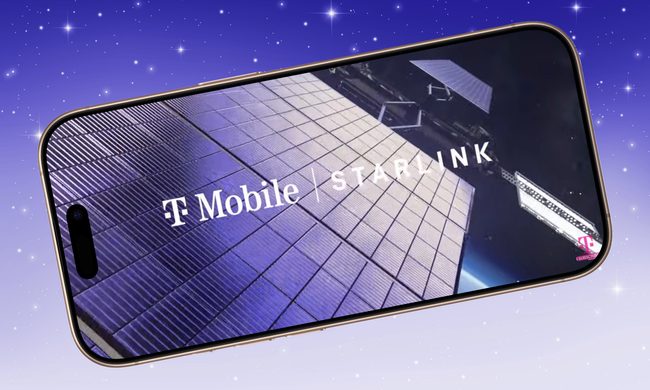
Showcase of T-Mobile Starlink service on an iPhone.

Elon Musk’s Starlink has already changed how millions of people access the internet, especially in places where traditional broadband struggles to reach. Now, the satellite internet service could be preparing for an even bigger leap — becoming your mobile carrier.

According to a Financial Times report, SpaceX has told investors it’s considering launching a retail Starlink mobile service in the US. Instead of simply partnering with wireless carriers, the company could begin selling mobile plans directly to consumers, putting it in direct competition with Verizon, AT&T, and T-Mobile.

Read more
Lightsails have hit another speed bump on the road to interstellar travel
The coolest interstellar travel idea may get betrayed by the light pushing it
LightSail in Earth orbit

Laser-powered lightsails are one of the coolest answers to spaceflight. It might not be as sci-fi-sounding as a warp drive, but now, its practicality has also come under question. Using lightsails, a spacecraft could unfurl an ultra-thin reflective sail and let a powerful laser push it toward another star, without relying on fuel.

The tech was simple and elegant--except it's also more complicated than it sounds. A new preprint from researchers Chao Shen and Jiaze Li of the Harbin Institute of Technology suggests that relativistic lightsails may run into a hidden propulsion problem once they start moving extremely fast.

Read more