  1. Home
  2. Space
  3. News

How to watch the Quadrantid meteor shower tonight

Add as a preferred source on Google

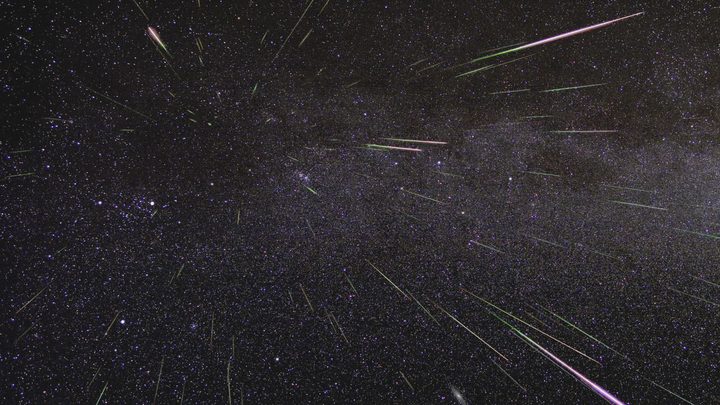
An outburst of Perseid meteors lights up the sky in August 2009 in this time-lapse image.
An outburst of Perseid meteors lights up the sky in August 2009 in this time-lapse image. NASA/JPL

This weekend marks the peak of the first meteor shower of the year, the Quadrantid meteor shower. With between 60 and 200 meteors per hour whipping past at speeds of up to 25 miles per hour, this event is known for its “fireball meteors” which burn brightly and persist for longer than a typical meteor as they are caused by larger than average pieces of material.

Recommended Videos

Meteors are chunks of rock or other substances which have broken off from a larger body like an asteroid and entered Earth’s atmosphere. Meteors are often clustered in showers as they come from a common source — in this case, they originate from asteroid 2003 EH1. As they enter into the Earth’s atmosphere they burn up, which is what causes the bright and sometimes colorful streaks in the sky that we call meteor showers.

The Quadrantid shower is unusual in that, unlike most meteor showers which peak for several days, it peaks for just a few hours. So if you want to catch a glimpse of this event, you need to go and observe it tonight.

Unfortunately, there will be a bright moon tonight though, so the moonlight may outshine the meteors. But depending on where you are on the globe, you may still be able to catch a glimpse of the shower if you look up during the night.

If you want to watch the meteor shower for yourself, then NASA has advice on how best to catch it:

“The Quadrantids are best viewed in the Northern Hemisphere (this shower can also be seen at latitudes north of 51 degrees south) during the night and predawn hours. To view the Quadrantids, find an area well away from city or street lights. Come prepared for winter weather with a sleeping bag, blanket, or lawn chair. Lie flat on your back with your feet facing northeast and look up, taking in as much of the sky as possible. In less than 30 minutes in the dark, your eyes will adapt and you will begin to see meteors. Be patient — the show will last until dawn, so you have plenty of time to catch a glimpse.”

Georgina Torbet
Georgina has been the space writer at Digital Trends space writer for six years, covering human space exploration, planetary…
Elon Musk’ Starlink could soon offer mobile services as a US carrier
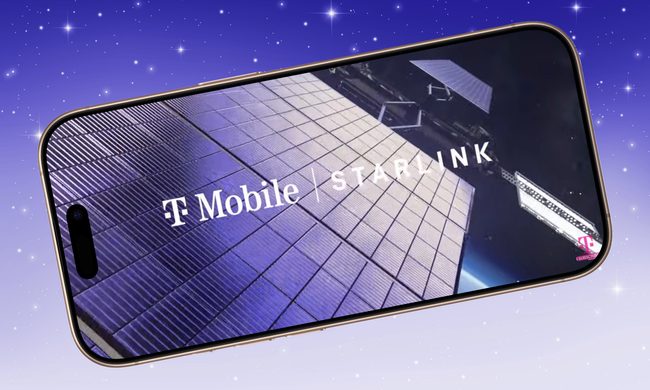
Showcase of T-Mobile Starlink service on an iPhone.

Elon Musk’s Starlink has already changed how millions of people access the internet, especially in places where traditional broadband struggles to reach. Now, the satellite internet service could be preparing for an even bigger leap — becoming your mobile carrier.

According to a Financial Times report, SpaceX has told investors it’s considering launching a retail Starlink mobile service in the US. Instead of simply partnering with wireless carriers, the company could begin selling mobile plans directly to consumers, putting it in direct competition with Verizon, AT&T, and T-Mobile.

Read more
Lightsails have hit another speed bump on the road to interstellar travel
The coolest interstellar travel idea may get betrayed by the light pushing it
LightSail in Earth orbit

Laser-powered lightsails are one of the coolest answers to spaceflight. It might not be as sci-fi-sounding as a warp drive, but now, its practicality has also come under question. Using lightsails, a spacecraft could unfurl an ultra-thin reflective sail and let a powerful laser push it toward another star, without relying on fuel.

The tech was simple and elegant--except it's also more complicated than it sounds. A new preprint from researchers Chao Shen and Jiaze Li of the Harbin Institute of Technology suggests that relativistic lightsails may run into a hidden propulsion problem once they start moving extremely fast.

Read more
The galaxy has an exoplanet size mystery, and NASA’s EVE mission wants to solve it
This planet-hunting mission wants to catch baby worlds before they grow up
Artist’s Illustration of Exoplanets Orbiting Barnard’s Star

Mankind venturing into space ended up creating more questions than it answered, and one of the dilemmas is related to the planet sizes. Astronomers have found plenty of rocky super-Earths and plenty of puffier sub-Neptunes, but far fewer planets with a radius of about 1.8 times Earth’s.

That gap is known as the radius valley, and a proposed mission called the Early eVolution Explorer, or EVE, wants to figure out why it exists. NASA has a simple plan: look at planets while they are still young. The mission concept, detailed in a new arXiv preprint and covered by Phys.org, would focus on newly formed star clusters to see what small planets look like before billions of years of evolution.

Read more