1. Home
  2. Space
  3. News

How to watch Rocket Lab’s first launch since July’s mission failure

Add as a preferred source on Google
Rocket Lab - I Can't Believe It's Not Optical Launch 08/31/2020

Rocket Lab is making the final preparations for its first launch since July 5 when a problem during the second-stage burn caused the loss of seven satellites built by three companies.

Recommended Videos

The mission, called “I Can’t Believe It’s Not Optical,” will aim to deploy a 100kg-class microsatellite for San Francisco-based Capella Space, an information services company providing Earth observation data on demand.

When is the launch?

The launch of the Electron rocket is now scheduled to take place from Rocket Lab’s launch site on New Zealand’s Mahia Peninsula on Sunday, August 30 at 8:05 p.m. PT (3:05 p.m. local time on Monday, August 31).

The launch was originally scheduled for 8:05 p.m. PT on Saturday, August 29 (3:05 p.m. local time on Sunday, August 30), but had to be delayed by 24 hours due to ground winds. Two earlier launch schedules had already been postponed, also due to poor weather conditions.

Be sure to check Rocket Lab’s Twitter feed or Facebook page for the very latest information regarding the launch time.

Launch Update: Ground winds remain high at LC-1 tomorrow, so we're now targeting no earlier than Aug 31 UTC for the #ICantBelieveItsNotOptical mission. 🚀🛰️

Mission info https://t.co/zI36drt64x

Launch timing:
ET: 23:05, Aug 30
PT: 20:05, Aug 30
NZT: 15:05, Aug 31 pic.twitter.com/2RRwpxhDSl

— Rocket Lab (@RocketLab) August 28, 2020

How to watch

You can watch the launch via Rocket Lab’s livestream on the company’s website or YouTube channel. The webcast offers not only the best views of the launch, but also useful commentary about the event as it unfolds. The livestream will become available around 15-20 minutes before the launch attempt. Rocket Lab says it will post links to the webcast on Twitter and Facebook when the webcast starts.

After July’s loss, which was put down to an “anomalous electrical connection,” space fans are rooting for Rocket Lab with this week’s launch attempt. Last month’s mission failure hit the team hard and prompted Rocket Lab CEO Peter Beck to post a personal video message in which he apologized to the customers who had satellites on board. He also expressed his determination to make a swift return to the launchpad.

Oh, and if you’re curious about where the mission name came from, according to Rocket Lab it’s a nod to Capella’s Synthetic’s Aperture Radar technology that provides high-quality images of the Earth day or night and in any weather conditions.

Update 29 August: Added information about delay to launch.

Trevor Mogg
Contributing Editor
Not so many moons ago, Trevor moved from one tea-loving island nation that drives on the left (Britain) to another (Japan)…
Space is becoming Bezos and Musk’s next data center site, and we have every reason to worry
The AI boom is coming for the night sky
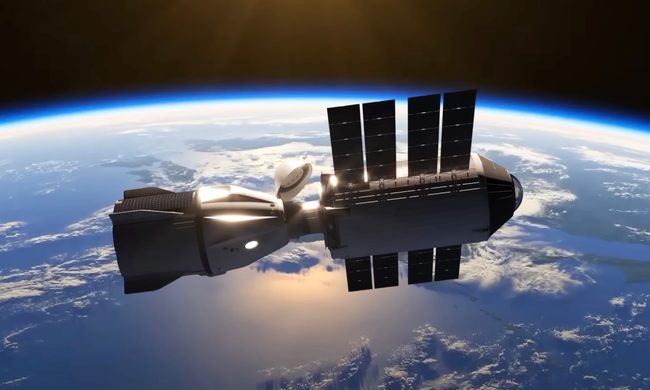
How Vast's space station will look in orbit.

AI data centers already consume vast amounts of electricity and water on Earth, so Silicon Valley has begun looking somewhere considerably more spacious... literally.

Elon Musk's SpaceX and Jeff Bezos' Blue Origin, along with several other companies, have proposed enormous constellations of satellites designed to operate as orbital data centers. However, environmental groups and former space officials are now warning that putting them into orbit at the proposed scale could have severe consequences for Earth's atmosphere and the night sky.

Read more
The first possible exomoon is here, and it makes our Moon look hilariously tiny
Scientists may have found the first exomoon, except this one is the size of Jupiter
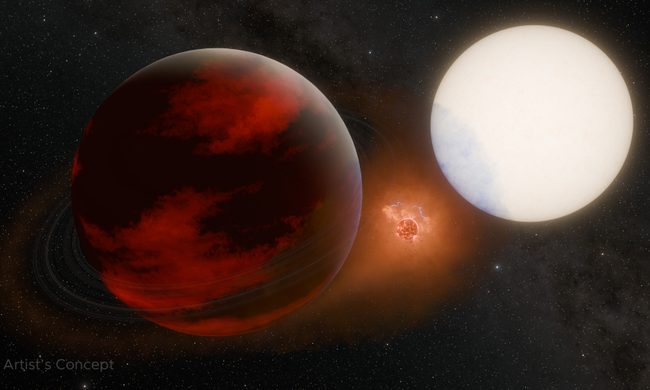
This artist’s concept depicts a potential volcanic moon between the exoplanet WASP-49 b, left, and its parent star. New evidence indicating that a massive sodium cloud observed near WASP-49 b is produced by neither the planet nor the star has prompted researchers to ask if its origin could be an exomoon.

We have already discovered more than 6,000 planets outside of our immediate neighborhood. Yet, finding a moon orbiting one of those distant worlds has proved considerably harder. Astronomers may finally have something close to the real deal, but this particular object stretches the word “moon” almost beyond recognition.

Using the European Southern Observatory’s Very Large Telescope in Chile, researchers detected strong evidence for a moon-like object in the CD-35 2722 system. Further observations are still necessary to confirm the discovery, but it could become the first confidently detected natural satellite outside our solar system. There is still one tiny complication though. This moon is apparently massive.

Read more
China’s answer to SpaceX’s reusable rockets literally catches boosters in a net
SpaceX catches boosters on legs. China just used a net.
Ammunition, Missile, Weapon

SpaceX's playbook for recovering a rocket booster generally involves legs, a precisely controlled vertical landing, and either a concrete pad or a drone ship. 

China just managed to pull off something similar, but in a slightly different way, and on July 10, it tested the method as well.

Read more