  1. Home
  2. Space
  3. News

FAA investigation finds SpaceX explosion ‘did not endanger the public’

Add as a preferred source on Google
spaceX starship
SpaceX

The Federal Aviation Authority (FAA) has closed its investigation into SpaceX and found that a recent explosion during testing of the company’s Starship rocket prototype did not put the public in danger, space.com reports.

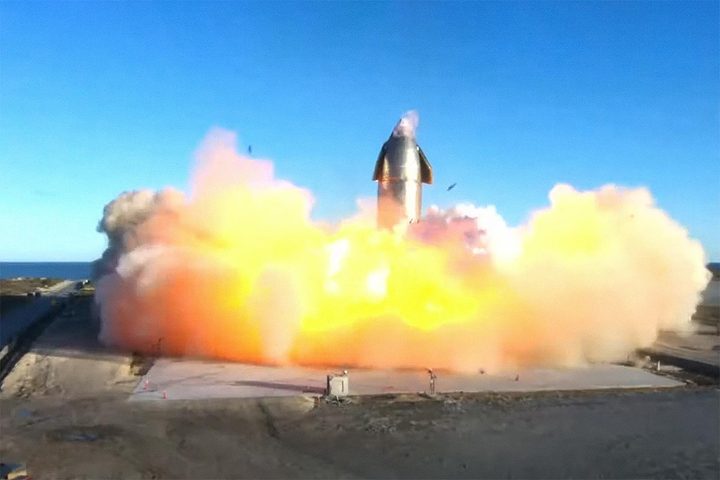
The investigation was into the February 2 high-altitude test flight of the Starship SN9 prototype. During the test, the prototype lifted into the air successfully and performed its “belly flop” flip maneuver to position it for an upright landing. But as the prototype came down to Earth, it hit the ground hard and exploded in a fireball.

Recommended Videos

This was the second explosive ending to a recent high-altitude Starship test, following a similar outcome to the test of the previous SN8 prototype in December 2020.

“The FAA closed the investigation of the Feb. 2 SpaceX Starship SN9 prototype mishap today, clearing the way for the SN10 test flight pending FAA approval of license updates,” an FAA spokesperson said in an emailed statement, as reported by space.com. “The FAA provided oversight of the SN9 mishap investigation conducted by SpaceX. The SN9 vehicle failed within the bounds of the FAA safety analysis.

“Its unsuccessful landing and explosion did not endanger the public or property. All debris was contained within the designated hazard area. The FAA approved the final mishap report, including the probable causes and corrective actions.”

Reports that the FAA was investigating SpaceX surfaced at the end of last month, accompanied by CEO Elon Musk tweeting negatively about the agency and saying its space division has “a fundamentally broken regulatory structure.” There were also apparent disagreements between the FAA and the company over the scheduling of test flights.

It wasn’t clear exactly what the FAA thought might be wrong with SpaceX’s launch license, nor why the SN9 test failure was under investigation but seemingly not the SN8 test failure, which was a very similar event. But with the FAA investigation now closed, SpaceX will be looking ahead to the high-altitude test flight of its next prototype, the SN10, which is expected to take place soon.

Georgina Torbet
Georgina has been the space writer at Digital Trends space writer for six years, covering human space exploration, planetary…
NASA is investing $590 million in private contractors to build humanity’s first Moon outpost
NASA is counting on private companies to land its Moon Base dream.
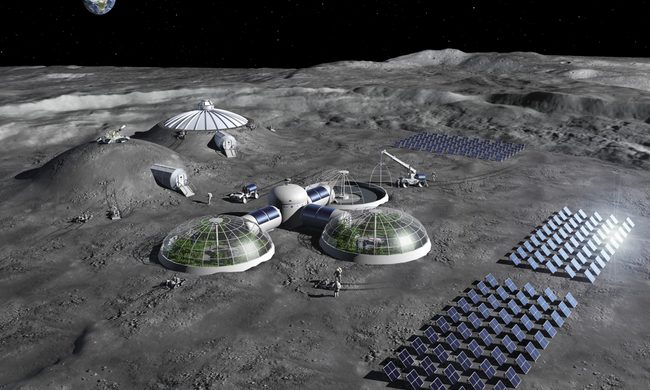
Artist impression of a Moon Base concept, with solar arrays for energy generation, greenhouses for food production, and habitats shielded with regolith.

Building a permanent base on the Moon sounds like science fiction, but NASA is making it feel a lot more real. The agency just handed $590 million in contracts to three private companies for four uncrewed lunar lander missions launching in late 2028.

These missions are part of Phase 1 of NASA's broader $30 billion Moon Base program, which needs to deliver landers, rovers, and scientific cargo up there before astronauts eventually move in. These efforts are closely tied NASA's Artemis program, which sent humans on a lunar flyby in April for the first time since the Apollo era.

Read more
Getting to Mars may require a pit stop in orbit, and NASA just tested the nozzle to make that happen
A gas pump nozzle for spacecraft sounds simple. It is not, and that's what makes this test worth paying attention to.
Architecture, Building, Factory

Getting a spacecraft to Mars or beyond requires an enormous amount of fuel, most of which has to be hauled from Earth, adding to the overall cost and weight of the spacecraft. NASA has been working on a different approach, one that could be more efficient and effective.

It wants to refuel a spacecraft in orbit before heading out for the mission. What’s even more interesting is that the space agency just finished testing a component that could make that possible: a cryocoupler.

Read more
Elon Musk’ Starlink could soon offer mobile services as a US carrier
Showcase of T-Mobile Starlink service on an iPhone.

Elon Musk’s Starlink has already changed how millions of people access the internet, especially in places where traditional broadband struggles to reach. Now, the satellite internet service could be preparing for an even bigger leap — becoming your mobile carrier.

According to a Financial Times report, SpaceX has told investors it’s considering launching a retail Starlink mobile service in the US. Instead of simply partnering with wireless carriers, the company could begin selling mobile plans directly to consumers, putting it in direct competition with Verizon, AT&T, and T-Mobile.

Read more