1. Home
  2. Space
  3. News

Virgin Galactic wants to reach Mach 3 with its new commercial aircraft design

Add as a preferred source on Google

Virgin Galactic doesn’t only have designs on commercial suborbital flights, taking paying space tourism customers to the edge of space — it also wants to create a high-speed commercial aircraft to whisk passengers high above the clouds to take them to their destinations on Earth.

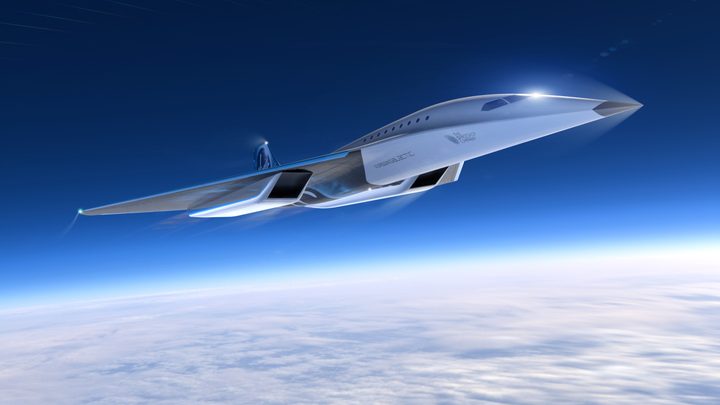
The company has unveiled its new aircraft design, which will travel at speeds of up to Mach 3, or three times the speed of sound. The craft will flight at a very high altitude of over 60,000 feet — considerably higher than standard commercial aircraft, which typically fly at altitudes of between 30,000 and 40,000 feet.
Virgin Galactic Unveils Mach 3 Aircraft Design for High Speed Travel Image 5
Virgin Galactic unveils Mach 3 aircraft design for high-speed travel Virgin Galactic 2020

The aircraft will be able to carry between nine and 19 people, and Virgin Galactic says it will have options for custom cabin layouts which could include business class or first-class seating. There is no indication of what kind of prices customers might expect to pay for a ticket, but given the high-status appeal of the aircraft, we can bet it won’t be cheap.

Recommended Videos

Virgin Galactic says it will work with Rolls-Royce to develop the propulsion systems for the aircraft, which the company’s chief space officer, George Whitesides, says will be sustainable and cutting-edge. Rolls-Royce pointed to its history of high-speed aircraft propulsion, including creating the turbo jet, which powered the groundbreaking but ultimately ill-fated faster-than-sound jet Concorde.

In the last few years, Virgin Galactic has made it known that it intends to put on super fast commercial city-to-city flights, and earlier this year the company signed a deal with NASA to collaborate on high-speed vehicles. Now, it has completed its Mission Concept Review for the craft, which included NASA representatives, which means it can now move on to the next stage of Federal Aviation Authority (FAA) authorization.

NASA has experience of its own with designing and building new aircraft, such as its supersonic X-59 plane or its experimental Maxwell X-57 plane which the agency showed off last year. The X-57 is powered by an electric cruise motor rather than the traditional combustion engine which should make it more environmentally friendly as well as being more efficient and quieter.

Georgina Torbet
Georgina has been the space writer at Digital Trends space writer for six years, covering human space exploration, planetary…
Amazon’s Starlink rival just crossed a major milestone, but don’t expect perfect internet just yet
Amazon finally showed up to the space internet party
Amazon Leo satellite layout across all launch vehicles

Amazon has taken a significant step toward launching its long-awaited satellite internet service. Following its latest rocket launch, the company now has 396 Project Kuiper satellites in low-Earth orbit, enough to begin offering continuous service across select regions. The milestone keeps Amazon on track for its previously announced goal of launching commercial service by mid-2026.

https://twitter.com/Weber44Chris/status/2072575499461963938?ref_src=twsrc%5Etfw%7Ctwcamp%5Etweetembed%7Ctwterm%5E2072575499461963938%7Ctwgr%5Ed727a1b853cbf519585e7bf2655943afb2f91bb8%7Ctwcon%5Es1_&ref_url=https%3A%2F%2Fwww.theverge.com%2Fscience%2F960563%2Famazon-leo-service-tipping-point

Read more
Amazon’s Starlink rival is set to launch satellite internet later this year
After launching nearly 400 satellites, Amazon says its Leo broadband service will go live later this year.
Atlas V launches 29 Amazon Leo satellites from Cape Canaveral, Florida

Amazon's long-awaited answer to SpaceX's Starlink is finally nearing liftoff. According to an exclusive report from Reuters, the company plans to begin offering its Leo satellite internet service later this year, after its latest rocket launch pushed the constellation to 394 satellites in orbit.

The pieces are finally falling into place for Project Kuiper

Read more
NASA is investing $590 million in private contractors to build humanity’s first Moon outpost
NASA is counting on private companies to land its Moon Base dream.
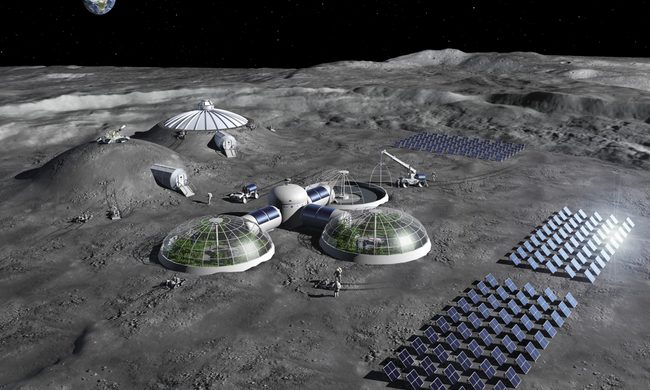
Artist impression of a Moon Base concept, with solar arrays for energy generation, greenhouses for food production, and habitats shielded with regolith.

Building a permanent base on the Moon sounds like science fiction, but NASA is making it feel a lot more real. The agency just handed $590 million in contracts to three private companies for four uncrewed lunar lander missions launching in late 2028.

These missions are part of Phase 1 of NASA's broader $30 billion Moon Base program, which needs to deliver landers, rovers, and scientific cargo up there before astronauts eventually move in. These efforts are closely tied NASA's Artemis program, which sent humans on a lunar flyby in April for the first time since the Apollo era.

Read more